


Taipei Mayor Chiang Wan-an (蔣萬安) has authorized a policy to encourage business to adopt a seven-hour workday for employees with children aged 12 or younger, starting from Sunday, the Taipei City Government said yesterday.
The policy would encourage businesses to reduce work hours, with the city paying for 80 percent of the eligible employees’ loss in wages, assuming employers do not reduce salaries, he was quoted as saying in a statement.
The Taipei Department of Labor based the policy on an initiative in Gwanju, South Korea, to create flexible working hours to improve families’ quality of life and make it easier to raise children, Chiang said.
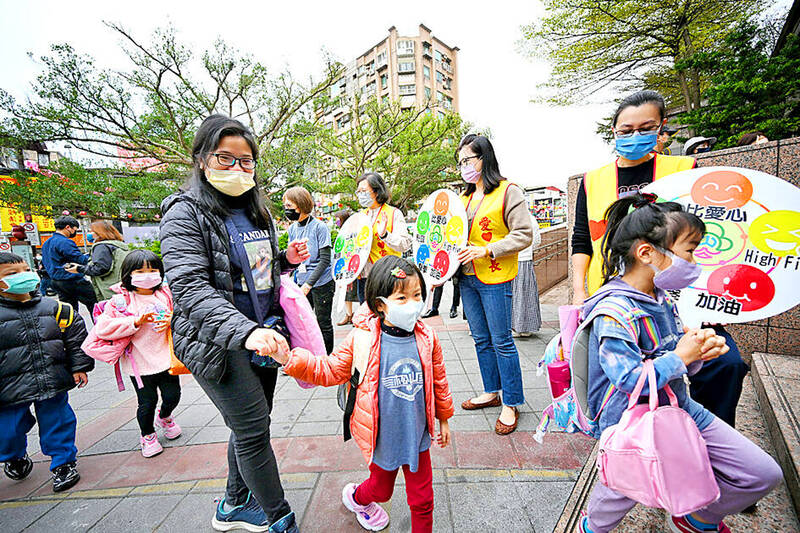
Photo: Fang Pin-chao, Taipei Times
Taipei envisions employers giving workers a choice to start work late or leave early so that parents can more easily take or pick up their children from school, he said.
Schools open and close earlier than most workplaces, meaning many parents might find leaving work earlier more convenient, he added.
Making the workplace friendlier for families would aid companies’ efforts to retain talent and fulfill their environmental, social and governance responsibilities, Chiang said.
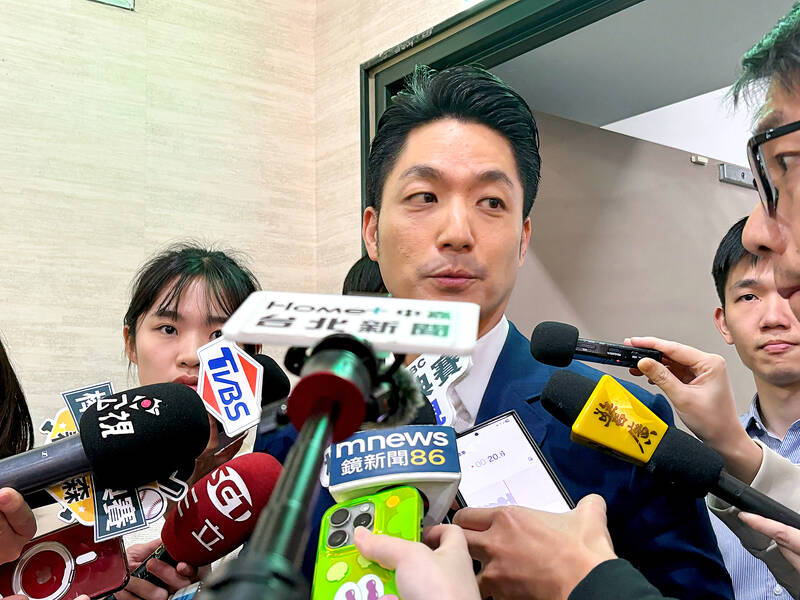
Photo: CNA
He urged Taipei labor officials to promote the policy to businesses throughout the city.
Businesses registered in Taipei can apply for subsidies if they adopt family-friendly measures for eligible employees, the labor department said.
To qualify, companies must offer reduced daily working hours without cutting pay, it said, adding that the policy applies to parents who are registered residents of Taipei, have children aged 12 or younger and need to personally drop off or pick up their children.
Eligible children must be attending elementary school, or enrolled with a registered childcare center or home-based childcare service, it said.
Subsidy applications would be accepted from Sunday through June 30, it added.
However, some people have calculated that with the maximum subsidy of NT$15,000, once an employee’s monthly salary exceeds NT$55,000, they hit the ceiling.
Added to the complicated administrative processes and application procedures, and plus the total subsidy is only NT$100,000, "it’s essentially a ’ticket-selling’ policy meant to make it look good without delivering real benefits," they said.
The New Taipei City Department of Labor Affairs said yesterday that adopting a similar policy would cost an estimated NT$7.8 billion (US$248.88 million) annually.
Citing concerns over fiscal sustainability and New Taipei City’s large population, officials said the proposal would require careful assessment before it could be considered.
The Taoyuan City Government said it has been in contact with Taipei officials, but have no plans to implement a similar policy.
The Taichung City Government said it would carefully assess the policy’s feasibility, taking into account fiscal constraints and budget priorities, while exploring potential directions for future planning.
The Kaohsiung City Government said that differences in industrial structure between Taipei and Kaohsiung, as well as variations in work patterns, make the labor situations in the cities distinct.
Kaohsiung has already rolled out initiatives aimed at protecting labor rights, while supporting industrial development, it added.
The Tainan City Government was not available for comment as of press time last night.
Additional reporting by Cheng Shu-ting, Wang Jung-hsiang, Lai Hsiao-tung and Tsai Shu-yuan

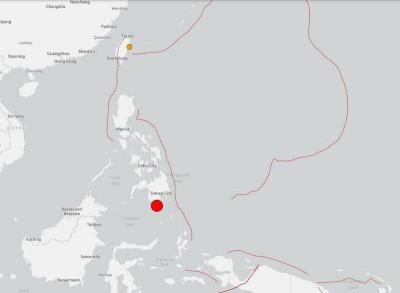
A magnitude 7.8 earthquake struck off the southern coast of Mindanao in the Philippines at 7:38am today, prompting the US Tsunami Warning System to issue an alert for neighboring countries, including Taiwan. The system issued a purple alert indicating a "tsunami threat." The potential threat zone includes Taiwan, the Philippines, Papua New Guinea, Yap and Palau. A spokesperson for Indonesia disaster mitigation agency said there were no reports of damage so far. Arlene Hollero, disaster chief of Maasim town in the Philippines' Sarangani Province, said their evacuation was underway in coastal villages and there were no reported casualties so far. DZBB radio, broadcasting from the

RESILIENCE: Taiwan plays a key role in semiconductors, energy, information infrastructure and advanced manufacturing, AIT Director Raymond Greene said Taiwan’s continued investment in deterrence and resilience remains vital, especially in uncrewed systems and other emerging technologies, American Institute in Taiwan (AIT) Director Raymond Greene said yesterday. Greene made the remarks at the annual National Strategic Summit on Supply Chain Resilience held by the Research Institute for Democracy, Society and Emerging Technology (DSET), a government-backed think tank. As Taiwan last year became the US’ fourth-largest trading partner and supply chain security is becoming more important, cooperation in emerging technologies continues to deepen between the two countries, he said. The US is committed to accelerating innovation, building key infrastructure, strengthening cooperation

The National Chungshan Institute of Science and Technology yesterday showcased its locally developed variants of the Vision 60 robotic patrol dog, which it plans to deploy on the nation’s outlying territories in the South China Sea. The variants were produced under the Joint Lab project — created by the institute and domestic companies — and assembled with domestically produced motors, lenses and artificial intelligence (AI) systems alongside licensed tech from the US, Missile and Rocket Systems Research Division deputy director Jen Kuo-kang (任國光) told the media event at a military base in Taipei’s Dazhi (大直) area. Taiwan has built up its strengths

RIGHT DIRECTION: Taiwan’s efforts to prevent forced labor include a proposal to ‘fully prohibit’ employers from withholding workers’ documents, an official said Taiwan is to establish a mechanism to restrict imports of goods linked to forced labor, the Executive Yuan said yesterday, after the US proposed imposing additional tariffs on Taiwanese goods over labor concerns. “The Ministry of Labor and the Ministry of Economic Affairs are to establish an interministerial review procedure,” Executive Yuan spokesperson Michelle Lee (李慧芝) said at a news briefing in Taipei. “The government is to use the Foreign Trade Act [貿易法] as the legal basis to restrict imports of goods produced with forced labor” and bring its supply chain governance more in line with international standards on human rights, resilience


 RSS
RSS