


The Cabinet yesterday unveiled draft revisions to the Animal Protection Act (動物保護法) that would tighten regulations on when owners can place their pets in shelters, while increasing the maximum fine for abandoning animals.
Among the draft provisions is one that says pet owners can place animals in certified shelters only after meeting “certain conditions” to relinquish ownership, with unauthorized placement classified as abandonment.
The conditions would be defined by the Ministry of Agriculture in supplementary rules if the legislature approves the amendment.
Photo: CNA
In addition, the draft amendments say that if an animal shelter asks an owner to reclaim an animal, the owner must do so within seven days or be deemed to have abandoned it.
The maximum fine for abandonment would be increased to NT$100,000 to NT$1 million (US$3,168 to US$31,676) — up from NT$30,000 to NT$150,000.
Pet owners who lose a microchipped animal have five days to report the incident to local authorities, after which they are also deemed to have abandoned the animal, they say.
Other draft revisions would more clearly define when a pet can be euthanized while in a shelter, replacing “sick beyond cure” among conditions for when an animal can be put down with “in a physical condition in which it cannot eat, drink or excrete unaided.”
Department of Animal Welfare Director Chiang Wen-chuan (江文全) told a Cabinet news conference that the changes to the rules regarding euthanasia would reduce ambiguity in decisionmaking for veterinarians on when to put an animal down.
Other scenarios that would justify euthanasia are: animals with legally notifiable infectious diseases; animals with incurable serious illnesses; animals that are seriously affecting the environment; and other emergency situations, Chiang said.
Meanwhile, the sterilization system for cats and dogs still has blind spots that the draft changes aim to fix, he said.
Fines for disabling an animal or killing a dog, cat or other animals specified by the ministry would be increased to between NT$300,000 and NT$3 million from NT$200,000 and NT$2 million, while the range of the jail term for such acts would rise to six months to five years, up from a maximum of two years, the proposed amendments say.
In severe cases of animal killings, such as those involving firearms, drugs, violence or torture, the prison terms would be increased by a factor of 1.5, they say.
Pet owners must be adults, they say, adding that in situations in which a minor is the primary caregiver, their legal representatives, conservators or care provider would be deemed the owner.

Conflict with Taiwan could leave China with “massive economic disruption, catastrophic military losses, significant social unrest, and devastating sanctions,” a US think tank said in a report released on Monday. The German Marshall Fund released a report titled If China Attacks Taiwan: The Consequences for China of “Minor Conflict” and “Major War” Scenarios. The report details the “massive” economic, military, social and international costs to China in the event of a minor conflict or major war with Taiwan, estimating that the Chinese People’s Liberation Army (PLA) could sustain losses of more than half of its active-duty ground forces, including 100,000 troops. Understanding Chinese
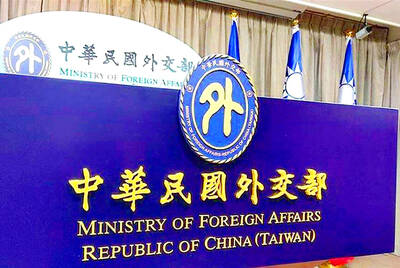
The Ministry of Foreign Affairs (MOFA) yesterday said it is closely monitoring developments in Venezuela, and would continue to cooperate with democratic allies and work together for regional and global security, stability, and prosperity. The remarks came after the US on Saturday launched a series of airstrikes in Venezuela and kidnapped Venezuelan President Nicolas Maduro, who was later flown to New York along with his wife. The pair face US charges related to drug trafficking and alleged cooperation with gangs designated as terrorist organizations. Maduro has denied the allegations. The ministry said that it is closely monitoring the political and economic situation

UNRELENTING: China attempted cyberattacks on Taiwan’s critical infrastructure 2.63 million times per day last year, up from 1.23 million in 2023, the NSB said China’s cyberarmy has long engaged in cyberattacks against Taiwan’s critical infrastructure, employing diverse and evolving tactics, the National Security Bureau (NSB) said yesterday, adding that cyberattacks on critical energy infrastructure last year increased 10-fold compared with the previous year. The NSB yesterday released a report titled Analysis on China’s Cyber Threats to Taiwan’s Critical Infrastructure in 2025, outlining the number of cyberattacks, major tactics and hacker groups. Taiwan’s national intelligence community identified a large number of cybersecurity incidents last year, the bureau said in a statement. China’s cyberarmy last year launched an average of 2.63 million intrusion attempts per day targeting Taiwan’s critical

‘SLICING METHOD’: In the event of a blockade, the China Coast Guard would intercept Taiwanese ships while its navy would seek to deter foreign intervention China’s military drills around Taiwan this week signaled potential strategies to cut the nation off from energy supplies and foreign military assistance, a US think tank report said. The Chinese People’s Liberation Army (PLA) conducted what it called “Justice Mission 2025” exercises from Monday to Tuesday in five maritime zones and airspace around Taiwan, calling them a warning to “Taiwanese independence” forces. In a report released on Wednesday, the Institute for the Study of War said the exercises effectively simulated blocking shipping routes to major port cities, including Kaohsiung, Keelung and Hualien. Taiwan would be highly vulnerable under such a blockade, because it


 RSS
RSS