


The Internet is abuzz over the sudden and unexplained removal of most of Taiwanese Hakka singer-songwriter Lin Sheng-hsiang’s (林生祥) works from China-based Web sites over the past three days.
There have been discussions since Sunday regarding the removal of Lin’s music, followed by further discussion on Chinese social media platforms Sina Weibo and Xiaohongshu, known as RedNote in English.
On China’s major music streaming service, NetEase Cloud Music, Lin’s recent work has been removed, leaving only work dating to the early 2000s, when Lin was with other bands.

Photo: Chen Yi-kuan, Taipei Times
Lin and his band have visited China many times, with their most recent tour, “Planting Trees and Growing up Wild,” conducted only last year.
People online expressed confusion about why Lin’s music — based on his observations of farming villages, the relationship between the city and the countryside, and environmental issues — have been taken down.
Some Chinese commenters on Sina Weibo said that the truth would eventually come out.
Lin’s work has won multiple Golden Melody Awards and Golden Indie Music Awards.
His band’s composition for the 2017 dark comedy The Great Buddha+ (大佛普拉斯) won him the Best Original Film Score at the Taipei Golden Horse Film Festival that year.
Lin and his band also composed songs for the three-part documentary Eyes on Democracy (民主之眼) released last year, which documents Taiwan’s democratic transition and social transformations from 1980 to 2000.
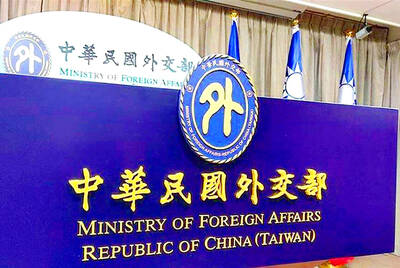
The Ministry of Foreign Affairs (MOFA) yesterday said it is closely monitoring developments in Venezuela, and would continue to cooperate with democratic allies and work together for regional and global security, stability, and prosperity. The remarks came after the US on Saturday launched a series of airstrikes in Venezuela and kidnapped Venezuelan President Nicolas Maduro, who was later flown to New York along with his wife. The pair face US charges related to drug trafficking and alleged cooperation with gangs designated as terrorist organizations. Maduro has denied the allegations. The ministry said that it is closely monitoring the political and economic situation

Conflict with Taiwan could leave China with “massive economic disruption, catastrophic military losses, significant social unrest, and devastating sanctions,” a US think tank said in a report released on Monday. The German Marshall Fund released a report titled If China Attacks Taiwan: The Consequences for China of “Minor Conflict” and “Major War” Scenarios. The report details the “massive” economic, military, social and international costs to China in the event of a minor conflict or major war with Taiwan, estimating that the Chinese People’s Liberation Army (PLA) could sustain losses of more than half of its active-duty ground forces, including 100,000 troops. Understanding Chinese

UNRELENTING: China attempted cyberattacks on Taiwan’s critical infrastructure 2.63 million times per day last year, up from 1.23 million in 2023, the NSB said China’s cyberarmy has long engaged in cyberattacks against Taiwan’s critical infrastructure, employing diverse and evolving tactics, the National Security Bureau (NSB) said yesterday, adding that cyberattacks on critical energy infrastructure last year increased 10-fold compared with the previous year. The NSB yesterday released a report titled Analysis on China’s Cyber Threats to Taiwan’s Critical Infrastructure in 2025, outlining the number of cyberattacks, major tactics and hacker groups. Taiwan’s national intelligence community identified a large number of cybersecurity incidents last year, the bureau said in a statement. China’s cyberarmy last year launched an average of 2.63 million intrusion attempts per day targeting Taiwan’s critical
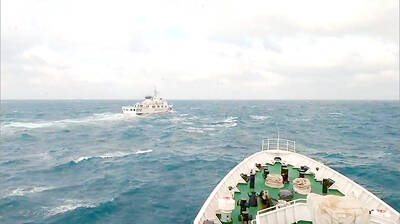
‘SLICING METHOD’: In the event of a blockade, the China Coast Guard would intercept Taiwanese ships while its navy would seek to deter foreign intervention China’s military drills around Taiwan this week signaled potential strategies to cut the nation off from energy supplies and foreign military assistance, a US think tank report said. The Chinese People’s Liberation Army (PLA) conducted what it called “Justice Mission 2025” exercises from Monday to Tuesday in five maritime zones and airspace around Taiwan, calling them a warning to “Taiwanese independence” forces. In a report released on Wednesday, the Institute for the Study of War said the exercises effectively simulated blocking shipping routes to major port cities, including Kaohsiung, Keelung and Hualien. Taiwan would be highly vulnerable under such a blockade, because it


 RSS
RSS