


Russian President Vladimir Putin yesterday held talks with Indian Prime Minister Narendra Modi at an annual summit and agreed to diversify mutual economic ties, as the US presses India to revise its decades-old partnership with Russia.
The 23rd Russia-India Summit comes at a pivotal moment, as the US pushes for a Ukraine peace deal while seeking global cooperation.
After the talks, Putin and Modi announced that India and Russia have finalized an economic cooperation program until 2030, which would help diversify mutual businesses to boost annual trade to US$100 billion by 2030.
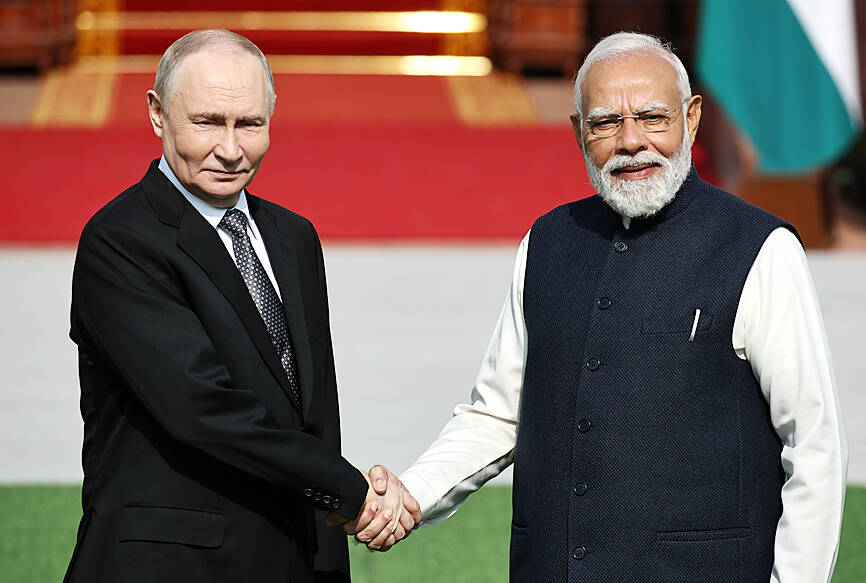
Photo: Mikhail Tereshchenko, Sputnik, EPA
They also emphasized strong energy ties.
Bilateral trade between the two countries was US$68.7 billion in the fiscal year which ended in March, with trade heavily skewed in favor of Russia and deep deficits for India, which it is looking to bridge by pushing exports.
Putin said work is underway on an agreement for India to establish a free-trade zone with the Eurasian Economic Union, a Moscow-dominated economic grouping of several former Soviet nations, adding that it could help increase trade.
“Russia is a reliable supplier of energy resources and everything necessary for the development of India’s energy sector,” Putin said. “We are ready to continue ensuring the uninterrupted supply of fuel for the rapidly growing Indian economy.”
Modi said the two countries would work toward early conclusion of a free-trade agreement with the Eurasian Economic Union, and announced that India would soon start issuing free electronic visas for Russian tourists and groups visiting the country.
Energy security has long anchored India-Russia ties, with civil nuclear cooperation spanning decades, Modi said, adding that such cooperation would continue, alongside collaboration in clean energy, shipbuilding, fertilizers and labor mobility.
Indian officials earlier said that Modi would push for faster delivery of two further Russian S-400 surface-to-air missile systems. It has already received three under a 2018 deal worth about US$5.4 billion. The delay has been tied to supply chain disruptions linked to the war in Ukraine.
India is also expecting to upgrade its Russian-made Su-30MKI fighter jets and accelerate deliveries of military hardware.
India is keen to increase exports of pharmaceuticals, agriculture and textiles to Russia, and is seeking the removal of non-tariff barrier as well as long-term supplies of fertilizers from Moscow.
Another key area where the two countries hoped to finalize an agreement is the safety and regulation of migration of Indian skilled workers to Russia.
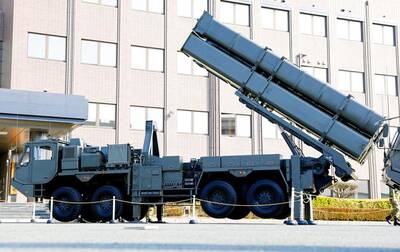
Japan has deployed long-range missiles in a southwestern region near China, the Japanese defense minister said yesterday, at a time when ties with Beijing are at their lowest in recent years. The missiles were installed in Kumamoto in the southern region of Kyushu, as Japan is attempting to shore up its military capacity as China steps up naval activity in the East China Sea. “Standoff defense capabilities enable us to counter the threat of enemy forces attempting to invade our country ... while ensuring the safety of our personnel,” Japanese Minister of Defense Shinjiro Koizumi said. “This is an extremely important initiative for

The nation’s fastest supercomputer, Nano 4 (晶創26), is scheduled to be launched in the third quarter, and would be used to train large language models in finance and national defense sectors, the National Center for High-Performance Computing (NCHC) said. The supercomputer, which would operate at about 86.05 petaflops, is being tested at a new cloud computing center in the Southern Taiwan Science Park in Tainan. The exterior of the server cabinet features chip circuitry patterns overlaid with a map of Taiwan, highlighting the nation’s central position in the semiconductor industry. The center also houses Taiwania 2, Taiwania 3, Forerunner 1 and
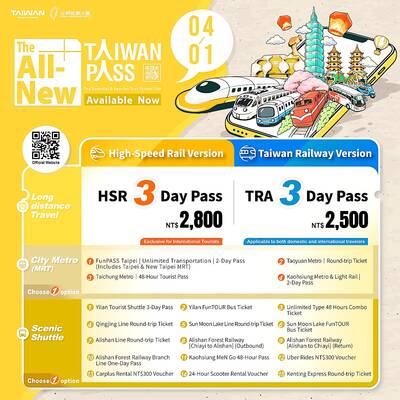
MORE POPULAR: Taiwan Pass sales increased by 59 percent during the first quarter compared with the same period last year, the Tourism Administration said The Tourism Administration yesterday said that it has streamlined the Taiwan Pass, with two versions available for purchase beginning today. The tourism agency has made the pass available to international tourists since 2024, allowing them to access the high-speed rail, Taiwan Railway Corp services, four MRT systems and four Taiwan Tourist Shuttles. Previously, five types of Taiwan Pass were available, but some tourists have said that the offerings were too complicated. The agency said only two types of Taiwan Pass would be available, starting from a three-day pass with the high-speed rail and a three-day pass with Taiwan Railway Corp. The former costs NT$2,800
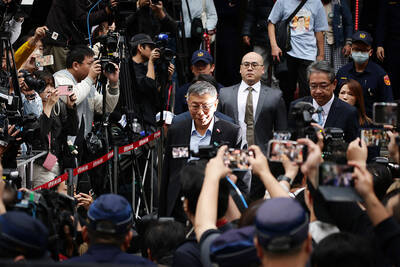
FIRST TRIAL: Ko’s lawyers sought reduced bail and other concessions, as did other defendants, but the bail judge denied their requests, citing the severity of the sentences Former Taipei mayor Ko Wen-je (柯文哲) was yesterday sentenced to 17 years in prison and had his civil rights suspended for six years over corruption, embezzlement and other charges. Taipei prosecutors in December last year asked the Taipei District Court for a combined 28-year, six-month sentence for the four cases against Ko, who founded the Taiwan People’s Party (TPP). The cases were linked to the Core Pacific City (京華城購物中心) redevelopment project and the mismanagement of political donations. Other defendants convicted on separate charges included Chinese Nationalist Party (KMT) Taipei City Councilor Angela Ying (應曉薇), who was handed a 15-year, six-month sentence; Core Pacific


 RSS
RSS