

Major heat waves across southern Europe have pushed temperatures above 40°C in countries including Italy, Spain and Greece, as local authorities issued fresh warnings against the risk of wildfires.
Experts link the rising frequency and intensity of these heatwaves to climate change, warning that such extreme weather events are becoming increasingly common across Europe’s southern region.
Severe heat waves were recorded in Italy, Greece, Spain and Portugal before the weekend, with locals and tourists alike taking shelter from the sweltering conditions.

Photo: EPA-EFE
Two-thirds of Portugal were on high alert yesterday for extreme heat, with temperatures expected to top 42°C in Lisbon.
In Italy, a few regions — Lazio, Tuscany, Calabria, Puglia and Umbria — were planning to ban some outdoor work activities during the hottest hours of the day in response to the record-high temperatures. Italian trade unions pushed the government to expand such measures to a national level.
The Italian Ministry of Health yesterday placed 21 out of 27 monitored cities under its highest heat alert, including holiday destinations such as Rome, Milan and Naples.
In Rome, tourists tried to seek shade near popular spots like the Colosseum and Trevi Fountain, using umbrellas and drinking from public water fountains to stay cool.
Similar scenes were reported in Milan and Naples, where street vendors sold lemonade to tourists and residents to offer some refreshment from the heat.
Greece was again on high wildfire alert because of extreme weather.
A large wildfire broke out south of Athens on Thursday, forcing evacuations and road closures near the ancient Temple of Poseidon. Strong winds spread the flames, damaging homes and sending smoke across the sky.
Greek authorities deployed 130 firefighters, 12 planes and 12 helicopters to battle the blaze, while police evacuated 40 people, with five areas under evacuation orders.
In Spain, locals and tourists were desperately trying to keep cool over the weekend, as the country sizzled in temperatures as high as 42°C in the southern city of Seville along with other locations in southern and central parts of the country.

Taiwan, which accounts for more than half of the global outsourced semiconductor assembly and testing market, is well-positioned to develop copackaged optics (CPO) and manufacture precision silicon photonics chips, the Ministry of Economic Affairs said yesterday. Silicon photonics are emerging as a mainstream optical communications technology and is seen as key to overcoming bottlenecks in AI computing power. The technology is a key project under the government’s New 10 Major AI Infrastructure Projects, with industry, government, academia and research institutions working to overcome critical technological hurdles and build a self-reliant silicon photonics supply chain, the ministry said. Nvidia Corp in March invested US$4
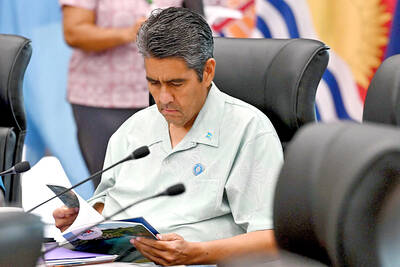
Palau’s president yesterday called for a “unified” Pacific response to a missile test by China in July, while Taiwan and its Pacific allies a day earlier at the Pacific Islands Forum (PIF) reaffirmed their commitment to peace, stability and prosperity. China gave only a handful of nations short notice before test-firing an intercontinental ballistic missile in July, sparking condemnation from several Pacific leaders. The 18-member PIF being held in Palau was expected to release a communique after press time last night, with a formal response to the test possibly included. Palau, which invited Taiwan to attend sideline events as an aid partner, urged
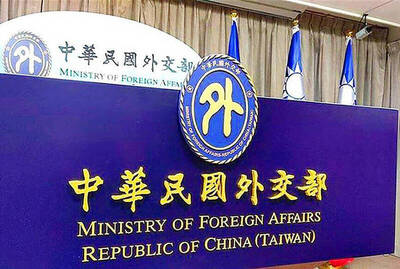
China’s continued efforts to inject geopolitical rivalry into the region and disrupt Pacific nations’ discussions of regional issues warrant greater international attention, a foreign affairs official said yesterday. Minister of Foreign Affairs Lin Chia-lung (林佳龍) last week led a delegation to diplomatic ally Palau to attend events related to the 55th Pacific Islands Forum (PIF) summit. However, the absence of some member-state leaders has been interpreted by some people as a sign of fracturing in Pacific unity. Thirteen PIF members were represented by their heads of state or government, while Fiji, New Caledonia, Vanuatu and Samoa sent ministerial-level representatives, a diplomatic official

STATE DEPARTMENT: A US official said that Washington would provide more than US$150m for Pacific island nations, with Minister Lin Chia-lung welcoming the plans The US Department of State has announced partnerships with Taiwan on two Palau projects after Washington pledged more than US$150 million for Pacific island nations. Following the opening of the 55th Pacific Islands Forum (PIF) Leaders Meeting in Palau on Sunday, the department on Tuesday issued a statement titled “Promoting Pacific Prosperity: US Engagement at the Pacific Islands Forum,” which said that the US’ commitment to the security and prosperity of Pacific island nations “is steadfast and enduring, and remains a core pillar of its ‘America first’ foreign policy.” Meanwhile, US Deputy Secretary of State Christopher Landau announced at the PIF Partners


 RSS
RSS