


The National Health Insurance Administration (NHIA) yesterday detailed newly extended coverage for cancer drugs and treatments for other diseases, including infant respiratory distress syndrome (IRDS).
The NHIA has allocated NT$160 million (US$4.96 million) for the cancer drugs and NT$230 million for the other medications.
The policy package for novel medication to treat cancer or cancer-related illnesses would benefit 3,085 people with cancer and 52,000 people with Helicobacter pylori infection, a disease linked to stomach cancer, NHIA Medical Review and Pharmaceutical Benefits Division head Huang Yu-wen (黃育文) said.

Photo: Chiu Chih-jou, Taipei Times
From October, elotuzumab and pomalidomide would be approved for use in third-line treatment of bone marrow cancer in conjunction with dexamethasone, benefiting 190 to 260 people, Huang said.
Extending coverage to the so-called “triple therapy” for people with late-stage bone marrow cancer would bring the nation’s medical practices surrounding treatment in line with the latest oncological guidelines, he said.
Starting the same month, insurance coverage would be approved for drugs containing denosumab, which is used to treat colorectal, bladder, kidney, cervix, ovary, esophageal, stomach and pancreatic cancers that affect the bones, he said.
The drugs would reduce the risk of fractures and other skeletal-related events, with 1,500 people expected to benefit, Huang said.
This month, medications containing trastuzumab emtansine — previously reserved for treating metastasized breast cancer — were approved for people with early-stage breast cancer, reducing mortality by 34 percent, he said.
The expansion is expected to benefit 551 to 755 people, he added.
Also this month, the NIHA broadened use approval for hormonal drugs for pancreatic cancer, lengthening the insurance-covered treatment period from 24 months to 36 months, Huang said.
Coverage for the enzalutamide-abiraterone drug combination, as well as apalutamide, is expected to benefit 150 to 170 people and 200 to 220 people respectively, he said, adding that the policy change reflected shifts in global cancer standards.
Starting this month, coverage has been approved to use antibacterials to treat people with Helicobacter pylori infections who were diagnosed via a breath test, fecal test or post-endoscopic biopsy, instead of being limited to those diagnosed by an endoscopic test or X-rays, Huang said.
A separate policy package would approve insurance payments for IRDS, generalized pustular psoriasis and Crohn’s disease, in addition to relaxing limits on eligibility for coverage for medicine to treat spinal muscular atrophy, he said.
Starting next month, a new drug brand named Curosurf would be covered for use treating IRDS, while the use of surfactants would be approved for newborns who are not intubated, Huang said.
Starting in October, risankizumab would be covered to treat people with Cohn’s disease who have had two consecutive post-therapy recurrences of the disease, he said.
Coverage for continuous use of the drug would be authorized for people who had a second recurrence within three months of the therapy wearing off, Huang said.
This month, medical coverage for drugs to treat spinal muscular atrophy — including injectables containing nusinersen and orally administered doses containing risdiplam — was expended to encompass a border range of patients, he said.
This means that anyone who became symptomatic before age 18 is eligible for the medicine, instead of only those who first had symptoms before they were three, he said, adding that some restrictions based on disease severity have been removed.
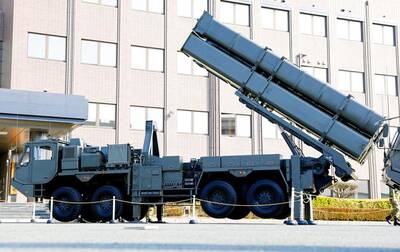
Japan has deployed long-range missiles in a southwestern region near China, the Japanese defense minister said yesterday, at a time when ties with Beijing are at their lowest in recent years. The missiles were installed in Kumamoto in the southern region of Kyushu, as Japan is attempting to shore up its military capacity as China steps up naval activity in the East China Sea. “Standoff defense capabilities enable us to counter the threat of enemy forces attempting to invade our country ... while ensuring the safety of our personnel,” Japanese Minister of Defense Shinjiro Koizumi said. “This is an extremely important initiative for

The nation’s fastest supercomputer, Nano 4 (晶創26), is scheduled to be launched in the third quarter, and would be used to train large language models in finance and national defense sectors, the National Center for High-Performance Computing (NCHC) said. The supercomputer, which would operate at about 86.05 petaflops, is being tested at a new cloud computing center in the Southern Taiwan Science Park in Tainan. The exterior of the server cabinet features chip circuitry patterns overlaid with a map of Taiwan, highlighting the nation’s central position in the semiconductor industry. The center also houses Taiwania 2, Taiwania 3, Forerunner 1 and

MORE POPULAR: Taiwan Pass sales increased by 59 percent during the first quarter compared with the same period last year, the Tourism Administration said The Tourism Administration yesterday said that it has streamlined the Taiwan Pass, with two versions available for purchase beginning today. The tourism agency has made the pass available to international tourists since 2024, allowing them to access the high-speed rail, Taiwan Railway Corp services, four MRT systems and four Taiwan Tourist Shuttles. Previously, five types of Taiwan Pass were available, but some tourists have said that the offerings were too complicated. The agency said only two types of Taiwan Pass would be available, starting from a three-day pass with the high-speed rail and a three-day pass with Taiwan Railway Corp. The former costs NT$2,800

FIRST TRIAL: Ko’s lawyers sought reduced bail and other concessions, as did other defendants, but the bail judge denied their requests, citing the severity of the sentences Former Taipei mayor Ko Wen-je (柯文哲) was yesterday sentenced to 17 years in prison and had his civil rights suspended for six years over corruption, embezzlement and other charges. Taipei prosecutors in December last year asked the Taipei District Court for a combined 28-year, six-month sentence for the four cases against Ko, who founded the Taiwan People’s Party (TPP). The cases were linked to the Core Pacific City (京華城購物中心) redevelopment project and the mismanagement of political donations. Other defendants convicted on separate charges included Chinese Nationalist Party (KMT) Taipei City Councilor Angela Ying (應曉薇), who was handed a 15-year, six-month sentence; Core Pacific


 RSS
RSS