


Ukrainian President Volodymyr Zelenskiy yesterday secured Turkey’s backing for Ukraine’s NATO aspirations after winning a US pledge for cluster munitions.
Zelenskiy’s talks in Turkey were being watched closely by the Kremlin, which has tried to break its international isolation by cultivating strong relations with Turkish President Recep Tayyip Erdogan.
While reaffirming his call for both sides to enter peace talks, Erdogan delivered unequivocal support for Ukraine’s NATO aspiration.
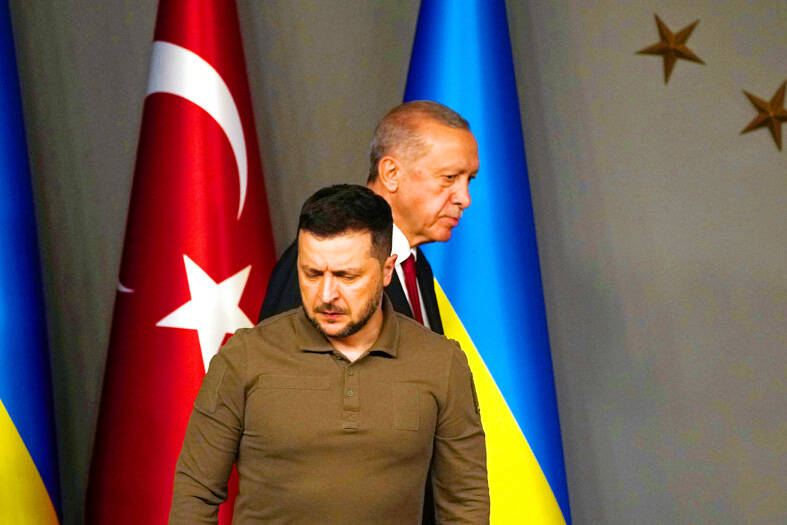
Photo: AP
“There is no doubt that Ukraine deserves membership of NATO,” Erdogan told reporters in Istanbul.
Erdogan said that he would brief Russian President Vladimir Putin on the negotiations when Putin next month makes his first visit to Turkey since the invasion began.
The Turkish leader said that he and Putin would discuss possible prisoner swaps, as well as a possible extension of a deal brokered last year under which Ukraine shipped grain to the global market.
The deal expires on July 17 unless Russia agrees to its renewal.
However, While Zelenskiy is pressing for NATO membership “now,” the White House has urged restraint and said it would not happen at next week’s summit in the Lithuanian capital, Vilnius.
Meanwhile, Washington’s decision to deliver the cluster weapons — which are banned across a large part of the world, but not in Russia or Ukraine — increases the stakes in the war, which entered its 500th day yesterday.
Zelenskiy has been traveling across Europe to secure bigger and better weapons for his army, which has launched a counteroffensive that is progressing less swiftly than Ukraine’s allies had hoped.
He called the latest US arms package “timely, broad and much-needed,” in a message on Twitter, adding that it “will provide new tools for the de-occupation of our land.”
US President Joe Biden said that that supplying Ukraine with weapons that can cover large areas with hundreds of small explosives was “a difficult decision.”
“And by the way, I discussed this with our allies,” Biden told CNN. “The Ukrainians are running out of ammunition.”
Humanitarian groups strongly condemned the decision to supply cluster munitions, which can go undetonated and potentially pose a danger for civilians for years.
As the war passed the 500-day mark, the UN condemned the civilian cost.
More than 9,000 civilians, including more than 500 children, have been killed since Russia’s invasion on Feb. 24 last year, the UN’s Human Rights Monitoring Mission in Ukraine said on Friday.
That toll went up yesterday as authorities in the Donetsk region said six people were killed by Russian rocket fire in Lyman.
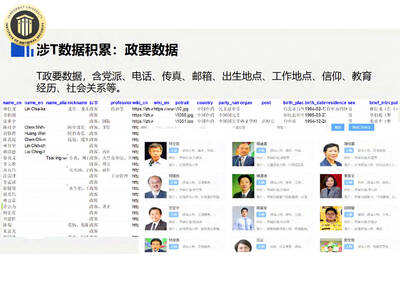
NETWORK-MAPPING PROJECT: The database contains 170 detailed files of Taiwanese politicians and about 23 million records of household registration data in Taiwan China has developed a network-mapping project targeting political figures and parties in Taiwan to monitor public opinion during elections and to craft tailored influence campaigns aimed at dividing Taiwanese society, according to documents leaked by Chinese technology firm GoLaxy (中科天璣). The documents, collected by Taipei-based Doublethink Lab, showed a database was specifically created to gather detailed information on Taiwanese political figures, including their political affiliations, job histories, birthplaces, residences, education, religion and a brief biography about them. Several notable Taiwanese politicians are in the database, including President William Lai (賴清德), former president Tsai Ing-wen (蔡英文), Minister of Foreign Affairs Lin Chia-lung (林佳龍),
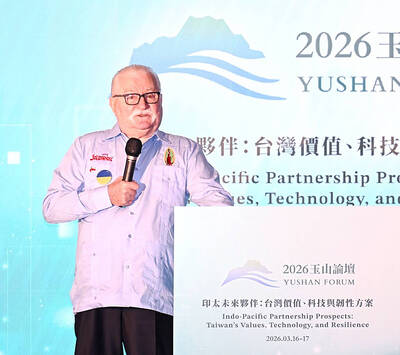
RECOGNITION: Former Fijian prime minister Mahendra Chaudhry said that Taiwan’s New Southbound Policy serves as a stabilizing force in the Indo-Pacific region Taiwan can lead the unification of the Chinese people, Nobel Peace Prize laureate and former Polish president Lech Walesa said in Taipei yesterday, adding that as the world order is changing, peaceful discussion would find good solutions, and that the use of force and coercion would always fail. Walesa made the remarks during his keynote address at a luncheon of the Yushan Forum in Taipei, titled “Indo-Pacific Partnership Prospects: Taiwan’s Values, Technology and Resilience,” organized by the Taiwan-Asia Exchange Foundation with the Ministry of Foreign Affairs. Walesa said that he had been at the forefront of a big peaceful revolution and “if
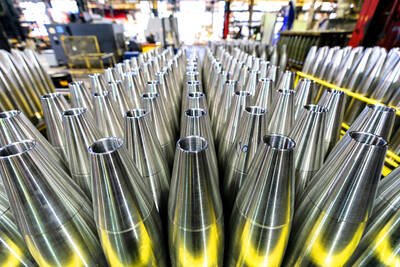
UPGRADED MISSILE: The Chungshan Institute of Science and Technology is reportedly to conduct a live-fire test of the Hsiung Feng III anti-ship missile on Thursday next week The US Army is planning to build new facilities to boost explosives production and strengthen its supply chain, a move aimed at addressing munitions shortages and supporting obligations to partners including Taiwan, Ukraine and Israel, Defense News reported. The army has issued a sources sought notice for a proposed Center of Excellence at the Blue Grass Army Depot in Kentucky, the report said. The facility would serve as a hub within the US industrial base for the production of key military explosives, including research department explosives (RDX) and high melting explosives (HMX), while also supporting research and development of next-generation materials. The proposed
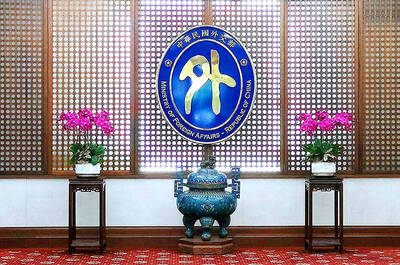
SOUTH KOREA DISPUTE: If Seoul continues to ignore its request, Taiwan would change South Korea’s designation on its arrival cards, the foreign ministry said If South Korea does not reply appropriately to a request to correct Taiwan’s name on its e-Arrival card system before March 31, the government would take corresponding measures to change how South Korea is labeled on the online Taiwan Arrival Card system, the Ministry of Foreign Affairs said yesterday. South Korea’s e-Arrival card system lists Taiwan as “China (Taiwan)” in the “point of departure” and “next destination” fields. Taipei has asked Seoul to change the wording. Since March 1, South Koreans who hold government-issued Alien Resident Certificates (ARC) have been identified as from “South Korea” rather than the “Republic of Korea,” the


 RSS
RSS