


The government on Friday scrapped a plan to cap patient’s out-of-pocket expenses for some medical devices, saying that it would instead focus on offering price comparisons and using non-legislative mechanisms to “persuade” healthcare providers who charge significantly more than industry norms to change their pricing.
The plan, which was announced on June 8 and was scheduled to take effect on Saturday next week, would have set a maximum price for out-of-pocket copayments for 352 items in eight medical device categories, ranging from pacemakers to intraocular lenses, offered by the National Health Insurance Administration (NHIA).
For devices in those categories, the NHIA generally only covers the cost of a basic version, meaning that people have to cover the excess if they require a product that is more advanced or has additional features.
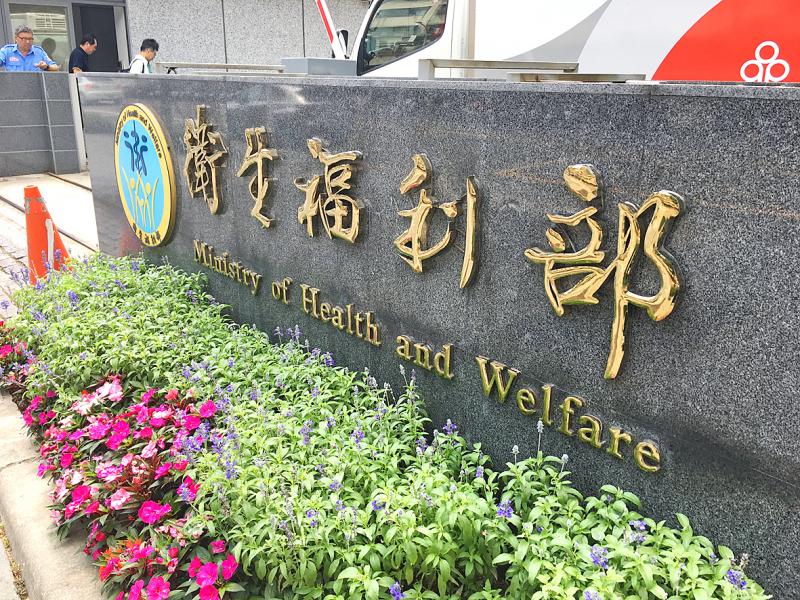
Photo: Lin Hui-chin, Taipei Times
However, Minister of Health and Welfare Chen Shih-chung (陳時中) on June 13 suspended the plan after a meeting with representatives from the medical sector, who said that the policy would prevent high-quality medical devices from entering the market and ignored the differences in medical quality, techniques and technology used at different hospitals and clinics.
The representatives also said that it would mainly benefit private insurance companies, saving them from high reimbursement costs.
Meanwhile, proponents of the policy said that many people in Taiwan do not have private health insurance, while those with limited healthcare access, such as low-income earners or people in rural areas, are often unable to shop around for better prices.
After hearing from both sides, the NHIA announced in a news release that it was withdrawing the plan.
In the absence of formal price caps, the NHIA would instead focus on monitoring how the devices are priced industrywide and responding to complaints about prices, Medical Review and Pharmaceutical Benefits Division Deputy Director Huang Chao-chieh (黃兆杰) said.
It would also take into consideration factors such as clinical technologies and techniques to refine its range of normal pricing for each type of device, Huang said.
Hospitals and clinics whose prices exceed those norms would not be allowed to log their products on the NHIA’s medical device comparison Web site, he said.
The NHIA would also “communicate with” and try to “persuade” institutions with excessively high prices to offer more affordable prices, he said.
The eight device categories are: intraocular lenses, prosthetic heart valves, artificial hip joints, drug-eluting coronary artery stents, pacemakers, drug-eluting stents used in superficial femoral artery treatment, ablation catheters for treatment of complicated cardiac arrhythmia and programmable valve systems.

OPTIMISTIC: The DGBAS sharply upgraded its GDP growth estimate from 3.54 percent to 7.71 percent after the Taiwan-US trade agreement signing and given AI optimism The US imported more from Taiwan than China for the first time in decades, as US President Donald Trump’s tariffs reshape trade flows while a global boom in artificial intelligence (AI) fuels demand for tech products. US purchases of goods from China plunged almost 44 percent in December last year from 2024 to US$21.1 billion, US Department of Commerce data showed on Thursday. By contrast, shipments from Taiwan more than doubled during the same period to US$24.7 billion. The soaring Taiwanese shipments to the US reflect the huge expansion in supplies of chips and servers for AI companies, which has completely changed
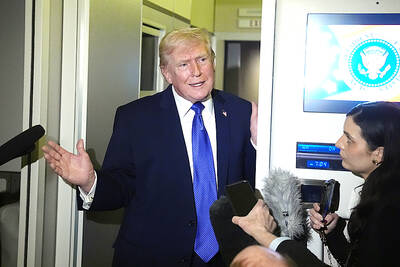
NON-NEGOTIABLE: The US president’s action ran counter to one of the US’ ‘six assurances’ on not consulting China about arms sales to Taiwan, US lawmakers said US President Donald Trump’s admission that he is discussing arms sales to Taiwan with Chinese President Xi Jinping (習近平) is “alarming and a blatant violation of US policy and the six assurances,” US Representative Ro Khanna said on Tuesday. Trump on Monday said he would decide soon on whether to send more weapons to Taiwan, after Xi warned him not to do so. “I’m talking to him about it. We had a good conversation, and we’ll make a determination pretty soon,” Trump told reporters aboard Air Force One when asked about warnings raised by Beijing during a phone call with Xi over
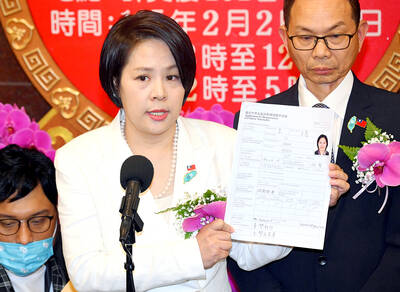
The Central Election Commission has amended election and recall regulations to require elected office candidates to provide proof that they have no Chinese citizenship, a Cabinet report said. The commission on Oct. 29 last year revised the Measures for the Permission of Family-based Residence, Long-term Residence and Settlement of People from the Mainland Area in the Taiwan Area (大陸地區人民在台灣地區依親居留長期居留或定居許可辦法), the Executive Yuan said in a report it submitted to the legislature for review. The revision requires Chinese citizens applying for permanent residency to submit notarial documents showing that they have lost their Chinese household record and have renounced — or have never
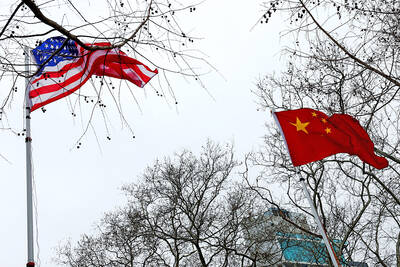
US and Chinese fighter jets briefly faced off above waters near the Korean Peninsula this week, Yonhap News agency reported, marking a rare confrontation in that area between the two superpowers. About 10 US fighter jets on Wednesday departed an airbase in Pyeongtaek, South Korea, for drills above international waters off South Korea’s western coast, the news outlet cited unidentified military sources as saying. While the US planes did not enter China’s air defense identification zone, Beijing scrambled planes as they neared that region, the report said. “The Chinese People’s Liberation Army organized naval and air forces to monitor and effectively respond


 RSS
RSS