


The Central Epidemic Command Center (CECC) yesterday reported three new imported cases of COVID-19, marking the end of six consecutive days with zero cases confirmed in Taiwan.
The three cases are a woman in her 60s (case No. 430), a woman in her 30s (case No. 431) and a man in his 40s (case No. 432), said Minister of Health and Welfare Chen Shih-chung (陳時中), who heads the center.
Case No. 430 on Feb. 22 traveled solo to Australia and on March 24 continued on to Japan, where she had a recurring fever, coughing and vomiting from April 9, before reporting her symptoms to the airport quarantine center upon arriving in Taiwan on Thursday, he said.

Photo provided by Uni-President Lion
Cases No. 431 and No. 432, a married couple, on Feb. 11 began work in Senegal, experienced virus symptoms including fatigue and coughing on April 26 and 27, and were tested after they still had a cough when returning on Friday, Chen said.
The couple was accompanied by their two children, whose tests were negative, he said, adding that the children are staying with a relative under a 14-day home quarantine.
Of the nation’s 432 confirmed cases, 324 have left isolation after being treated, he said.
The 14-day quarantine for the more than 700 crew members from three navy vessels making up a “Friendship Flotilla” — including the supply ship Panshih (磐石), whose crew had a cluster of 31 confirmed cases — is due to end today, Chen said.
Even though the cluster had little effect on nearby communities and is thought to be under control, the crew members are staying in the centralized quarantine facilities one more day so that they can all be retested, just to be safe, he added.
If the results are negative, they would be allowed to leave, but might be asked to perform self-health management, he said.
While the nation’s most popular attractions have not been too crowded during the three-day weekend, some people have not been wearing masks, Chen said.
“No domestic cases have been reported for 20 consecutive days, so if people can consistently take personal precautions — including wearing a mask, frequently washing their hands and practicing social distancing — then even if there are sporadic cases of local transmission, it would fall within an acceptable range of risk,” he said.
Health authorities can handle the treatment and contact tracing for sporatic cases, Chen said.
“However, it is unacceptable if local infections occur because people fail to perform personal protection measures. That would involve unnecessary risk that could have been prevented,” he said.
The center’s decisions about easing disease prevention regulations would be based on whether people are practicing personal protection measures, not on how many consecutive days of no domestic cases have passed, he added.
From 12am tomorrow, travelers returning to Taiwan must confirm that their residence is suitable for home quarantine — that they do not live with people aged 65 or older, children aged six or younger, or people with a chronic disease, and that the room they stay in has a separate bathroom, Chen said.
If their residence is not suitable, they would need to stay at a quarantine hotel for 14 days, and if they make a false declaration about the suitability of their home, they would face a fine of up to NT$150,000, he said.

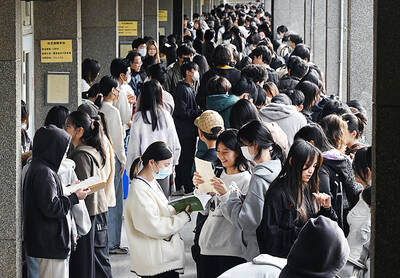
A global survey showed that 60 percent of Taiwanese had attained higher education, second only to Canada, the Ministry of the Interior said. Taiwan easily surpassed the global average of 43 percent and ranked ahead of major economies, including Japan, South Korea and the US, data from the Organisation for Economic Co-operation and Development (OECD) for 2024 showed. Taiwan has a high literacy rate, data released by the ministry showed. As of the end of last year, Taiwan had 20.617 million people aged 15 or older, accounting for 88.5 percent of the total population, with a literacy rate of 99.4 percent, the data

CCP ‘PAWN’? Beijing could use the KMT chairwoman’s visit to signal to the world that many people in Taiwan support the ‘one China’ principle, an academic said Chinese Nationalist Party (KMT) Chairwoman Cheng Li-wun (鄭麗文) yesterday arrived in China for a “peace” mission and potential meeting with Chinese President Xi Jinping (習近平), while a Taiwanese minister detailed the number of Chinese warships currently deployed around the nation. Cheng is visiting at a time of increased Chinese military pressure on Taiwan, as the opposition-dominated Legislative Yuan stalls a government plan for US$40 billion in extra defense spending. Speaking to reporters before going to the airport, Cheng said she was going on a “historic journey for peace,” but added that some people felt uneasy about her trip. “If you truly love Taiwan,

NEW LOW: The council in 2024 based predictions on a pessimistic estimate for the nation’s total fertility rate of 0.84, but last year that rate was 0.69, 17 percent lower An expected National Development Council (NDC) report expects the nation’s population to drop below 12 million by 2065, with the old-age dependency ratio to top 100 percent sooner than 2070, sources said yesterday. The council is slated to release its latest population projections in August, using an ultra-low fertility model, the sources said. The previous report projected that Taiwan’s population would fall to 14.37 million by 2070, but based on a new estimate of the total fertility rate (TFR) — the average number of children born to a woman over her lifetime — the population is expected to reach 12 million by
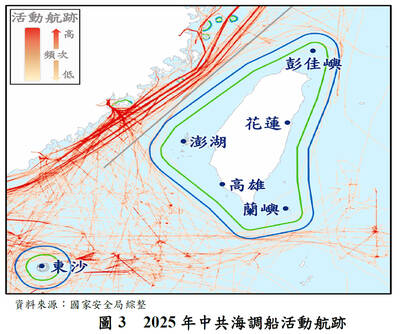
INTENSIFYING THREATS: Beijing’s tactics include massive attacks on the government service network, aircraft and naval vessel incursions and damaging undersea cables China is prepared to interfere in November’s nine-in-one local elections by launching massive attacks on the Taiwanese government’s service network (GSN), a report published by the National Security Bureau showed. The report was submitted to the Legislative Yuan ahead of the bureau’s scheduled briefing at the Foreign Affairs and National Defense Committee tomorrow. The national security team has identified about 13,000 suspicious Internet accounts and 860,000 disputed messages, the bureau said of China’s cognitive warfare against Taiwan. The disputed messages focus on major foreign affairs, national defense and economic issues, which were produced using generative artificial intelligence (AI) and distributed through Chinese


 RSS
RSS