


Germany and other parts of Europe yesterday took tentative steps to ease lockdown measures, but officials warned that the battle against the COVID-19 pandemic was far from over.
Some shops reopened in Germany and parents dropped their children off at nurseries in Norway as restrictions in place for weeks were lifted in parts of the continent.
After being hit hard by the virus, Europe has seen encouraging signs in recent days, with death rates dropping in Italy, Spain, France and the UK.

Photo: AP
The hope is tempered by fears of new waves of infections, warnings that life will not be back to normal for many months and deep concern over the devastating impact the pandemic is having on the global economy.
However, even the smallest return to normality was welcome.
In the German city of Leipzig, fashion store owner Manuela Fischer said she was “incredibly happy” to be welcoming shoppers again.

Photo: Reuters
In Norway, Silje Skifjell dropped off her boys Isaak and Kasper at a nursery in the north of the capital, Oslo.
“He was so excited we had to leave the house early to come here and see the other children,” she said of four-year-old Isaak, her eldest. “I almost cried, he was so happy to see his friends.”
Governments around the world are mulling how and when to ease lockdowns that have kept more than half of humanity confined to their homes.

Photo: Reuters
The virus has so far infected more than 2.3 million people globally and killed about 165,000, with nearly two-thirds of the victims in Europe, according to an Agence France-Presse tally.
Germany, which has been hailed for keeping fatalities low despite a significant number of cases, was allowing smaller shops to reopen in some regions as of yesterday.
Larger shops and those in major German cities are to open later as part of an attempted phased return to a more normal existence that will also see some students go back to school from May 4.
However, officials are keeping a watchful eye, with German Chancellor Angela Merkel saying yesterday that she is “greatly concerned” that virus-fighting discipline among the German public may ebb.
Spain, where a nationwide lockdown has been extended, also said it would ease some restrictions to allow children time outside.
Yesterday it listed 399 COVID-19 deaths in the past 24 hours, its lowest daily count in weeks.
France also said a nationwide lockdown in force for a month was beginning to bear fruit.
In Australia, authorities in Sydney reopened three beaches for walking, running, swimming or surfing, while New Zealand announced that it will ease a nationwide lockdown next week.

Auckland rang in 2026 with a downtown fireworks display launched from New Zealand’s tallest structure, Sky Tower, making it the first major city to greet the new year at a celebration dampened by rain, while crowds in Taipei braved the elements to watch Taipei 101’s display. South Pacific countries are the first to bid farewell to 2025. Clocks struck midnight in Auckland, with a population of 1.7 million, 18 hours before the famous ball was to drop in New York’s Times Square. The five-minute display involved 3,500 fireworks launched from the 240m Sky Tower. Smaller community events were canceled across New Zealand’s

The Ministry of Foreign Affairs (MOFA) yesterday said it is closely monitoring developments in Venezuela, and would continue to cooperate with democratic allies and work together for regional and global security, stability, and prosperity. The remarks came after the US on Saturday launched a series of airstrikes in Venezuela and kidnapped Venezuelan President Nicolas Maduro, who was later flown to New York along with his wife. The pair face US charges related to drug trafficking and alleged cooperation with gangs designated as terrorist organizations. Maduro has denied the allegations. The ministry said that it is closely monitoring the political and economic situation

UNRELENTING: China attempted cyberattacks on Taiwan’s critical infrastructure 2.63 million times per day last year, up from 1.23 million in 2023, the NSB said China’s cyberarmy has long engaged in cyberattacks against Taiwan’s critical infrastructure, employing diverse and evolving tactics, the National Security Bureau (NSB) said yesterday, adding that cyberattacks on critical energy infrastructure last year increased 10-fold compared with the previous year. The NSB yesterday released a report titled Analysis on China’s Cyber Threats to Taiwan’s Critical Infrastructure in 2025, outlining the number of cyberattacks, major tactics and hacker groups. Taiwan’s national intelligence community identified a large number of cybersecurity incidents last year, the bureau said in a statement. China’s cyberarmy last year launched an average of 2.63 million intrusion attempts per day targeting Taiwan’s critical
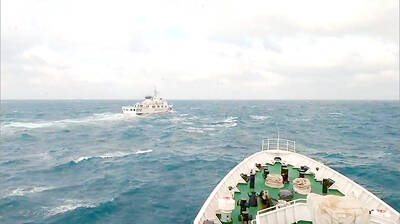
‘SLICING METHOD’: In the event of a blockade, the China Coast Guard would intercept Taiwanese ships while its navy would seek to deter foreign intervention China’s military drills around Taiwan this week signaled potential strategies to cut the nation off from energy supplies and foreign military assistance, a US think tank report said. The Chinese People’s Liberation Army (PLA) conducted what it called “Justice Mission 2025” exercises from Monday to Tuesday in five maritime zones and airspace around Taiwan, calling them a warning to “Taiwanese independence” forces. In a report released on Wednesday, the Institute for the Study of War said the exercises effectively simulated blocking shipping routes to major port cities, including Kaohsiung, Keelung and Hualien. Taiwan would be highly vulnerable under such a blockade, because it


 RSS
RSS