


A plan to increase fines for Taiwanese who work for political organizations in China advanced at the legislature in Taipei yesterday, when a draft amendment to the Act Governing Relations Between the People of the Taiwan Area and the Mainland Area (台灣地區與大陸地區人民關係條例) passed its first reading.
The draft was proposed by Democratic Progressive Party (DPP) Legislator Michelle Lin (林楚茵) after Chang Ching-yi (張經義) — a Taiwanese reporter who works for a Chinese state-run agency — on April 9 did not tell a White House news conference about his company, instead saying: “I am from Taiwan” during his question time with US President Donald Trump.
Chang is a Taiwanese-born employee at Shanghai Media Group (上海文化廣播影視集團), a state-owned mouthpiece of the Chinese Communist Party (CCP).
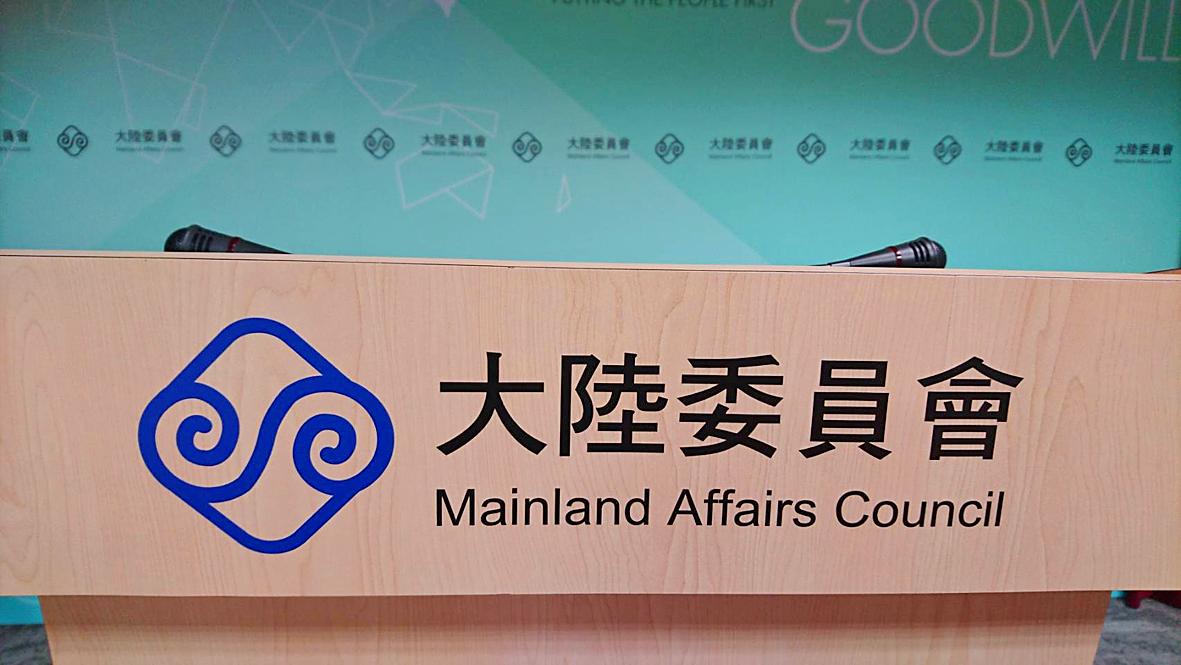
Photo: Chung Li-hua, Taipei Times
Mainland Affairs Council (MAC) Deputy Minister Chiu Chui-cheng (邱垂正) on Thursday said Chang broke the law and could be fined between NT$100,000 and NT$500,000 (US$3,322 and US$16,610).
Article 33 of the act states that “any individual, juristic person, organization, or other institution of the Taiwan Area shall not hold any position or become any member of the agencies, institutions or organizations of the Mainland Area which are political parties, the military, the administration or of any political nature and which are prohibited with public notices by the Mainland Affairs Council, Executive Yuan in consultation with each competent authorities concerned.”
The amendment would boost the maximum fine to NT$1 million.
China has used multiple means to “buy off” Taiwanese, having them hired at Chinese organizations and agencies of a political nature, Lin said yesterday, adding that a maximum fine of NT$500,000 was too small to be a deterrent.
Separately yesterday, Chinese Nationalist Party (KMT) Legislator Yeh Yu-lan (葉毓蘭) protested the decision to pass the amendment, saying that all Chinese media firms have state-ownership backgrounds, so the change to the law would in effect be a ban on Taiwanese working for any Chinese media firm.
It is a restriction of people’s right to work, an extremely unwise move in Taiwan, which advocates freedom of speech, Yeh said.
KMT Legislator Hung Meng-kai (洪孟楷) called on the DPP government not to oppose everything China-related.
Chang, who grew up in Yunlin County and has the chance to ask the US president questions, should be applauded, Hung said.

Right-wing political scientist Laura Fernandez on Sunday won Costa Rica’s presidential election by a landslide, after promising to crack down on rising violence linked to the cocaine trade. Fernandez’s nearest rival, economist Alvaro Ramos, conceded defeat as results showed the ruling party far exceeding the threshold of 40 percent needed to avoid a runoff. With 94 percent of polling stations counted, the political heir of outgoing Costa Rican President Rodrigo Chaves had captured 48.3 percent of the vote compared with Ramos’ 33.4 percent, the Supreme Electoral Tribunal said. As soon as the first results were announced, members of Fernandez’s Sovereign People’s Party
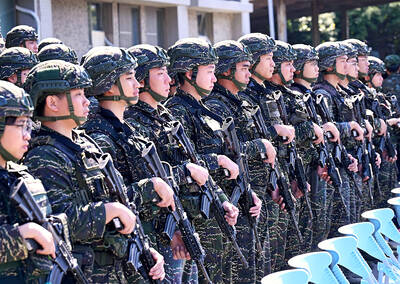
MORE RESPONSIBILITY: Draftees would be expected to fight alongside professional soldiers, likely requiring the transformation of some training brigades into combat units The armed forces are to start incorporating new conscripts into combined arms brigades this year to enhance combat readiness, the Executive Yuan’s latest policy report said. The new policy would affect Taiwanese men entering the military for their compulsory service, which was extended to one year under reforms by then-president Tsai Ing-wen (蔡英文) in 2022. The conscripts would be trained to operate machine guns, uncrewed aerial vehicles, anti-tank guided missile launchers and Stinger air defense systems, the report said, adding that the basic training would be lengthened to eight weeks. After basic training, conscripts would be sorted into infantry battalions that would take
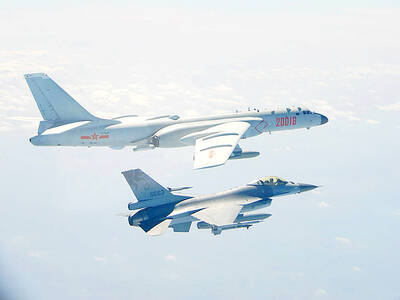
GROWING AMBITIONS: The scale and tempo of the operations show that the Strait has become the core theater for China to expand its security interests, the report said Chinese military aircraft incursions around Taiwan have surged nearly 15-fold over the past five years, according to a report released yesterday by the Democratic Progressive Party’s (DPP) Department of China Affairs. Sorties in the Taiwan Strait were previously irregular, totaling 380 in 2020, but have since evolved into routine operations, the report showed. “This demonstrates that the Taiwan Strait has become both the starting point and testing ground for Beijing’s expansionist ambitions,” it said. Driven by military expansionism, China is systematically pursuing actions aimed at altering the regional “status quo,” the department said, adding that Taiwan represents the most critical link in China’s
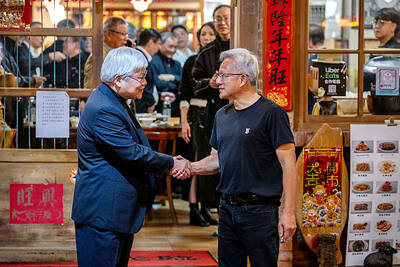
‘REALLY PROUD’: Nvidia would not be possible without Taiwan, Huang said, adding that TSMC would be increasing its capacity by 100 percent Nvidia Corp CEO Jensen Huang (黃仁勳) on Saturday praised and lightly cajoled his major Taiwanese suppliers to produce more to help power strong demand for artificial intelligence (AI), capping a visit to the country of his birth, where he has been mobbed by adoring fans at every step. Speaking at an impromptu press conference in the rain outside a Taipei restaurant, where he had hosted suppliers for a “trillion-dollar dinner,” named after the market capitalization of those firms attending, Huang said this would be another good year for business. “TSMC needs to work very hard this year because I need a lot


 RSS
RSS