


The Chinese ambassador to Estonia last month accused the Baltic nation’s intelligence service of having a “Cold War mindset” for labeling China a threat, warning that its “distorted” conclusions damaged bilateral relations.
Four weeks later, Estonian officials took part in a videoconference hosted by the Chinese Ministry of Foreign Affairs, in which the Asian country’s health officials shared their experience in fighting the COVID-19 pandemic.
The Estonians found the materials “very professional and targeted,” and sought to distribute them widely, an account of the call posted by the Chinese embassy in Tallinn said.
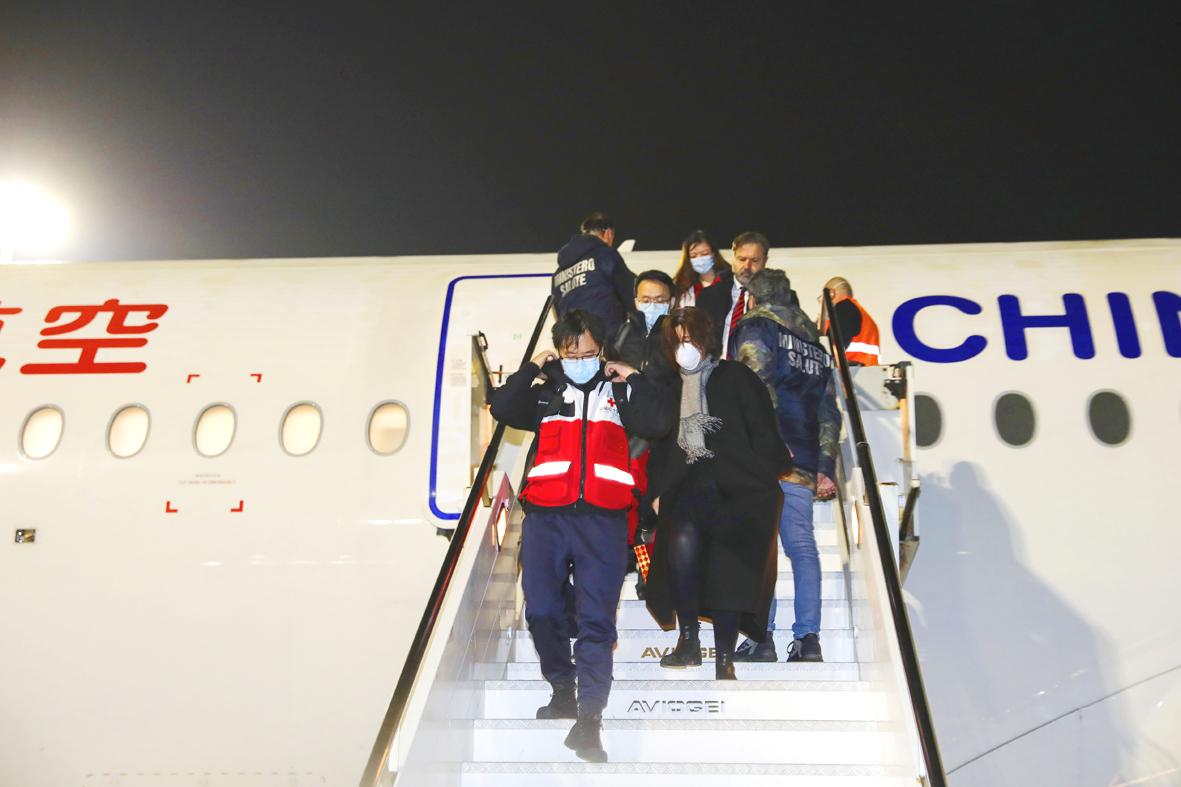
Photo: AP
“Estonia hopes to strengthen exchanges and cooperation with China to fight against COVID-19,” it said.
As Europe becomes the epicenter of the coronavirus, Beijing is stepping up its outreach to individual governments there.
That is coming at the very moment that the US — and in some cases the EU — is seen to be turning away. The result is a battle for hearts and minds that China seems to be winning, at least for the moment.
“It’s great that China has this availability and that it is currently in a position to offer this kind of help,” Berlin-based Mercator Institute for China Studies analyst Lucrezia Poggetti said.
Aid is much needed, but in supplying it, China is consciously exercising its soft power, she said.
“There is a major propaganda push at play on the side of the Chinese with some willing enablers on the European side,” Poggetti said.
For China, the outreach to Europe is part of an effort to claw back an international leadership role after early cover-ups helped the virus spread well beyond its borders.
Chinese President Xi Jinping’s (習近平) government has sought to silence critics, including reporters and online commentators, and it has also spread conspiracy theories about where the virus originated.
Xi this week described China’s mass deployment of medical aid to Europe as an effort to further a “Health Silk Road,” stretching his Belt and Road Initiative.
Along with state help for stricken countries such as Italy, aid is being channeled across the continent by private companies in the name of Beijing, helping to burnish China’s image from France to Ukraine.
China’s ambassador in Athens on Wednesday delivered more than 50,000 protective masks to the Greek minister of health.
The Chinese embassy in Paris has said that help is coming to France, while Bulgaria and Slovenia are also to receive aid.
Xi told Spanish Prime Minister Pedro Sanchez in a call on Tuesday that China would provide support to combat the epidemic.
That same day, an aircraft carrying medical aid from China’s Alibaba Group Holding Ltd (阿里巴巴) and Jack Ma’s (馬雲) foundation arrived at Spain’s Zaragoza Airport, the Chinese embassy said on Twitter.
Alibaba and the Jack Ma Foundation have also been involved in airlifting aid to Belgium and Ukraine, which needs express test kits to detect the coronavirus.
“We agreed with China and we are grateful to them, especially grateful to Jack Ma, as he helped us by financing the US$80 million” cost of the medical kits, Ukrainian President Volodymyr Zelenskiy said on Monday.
Others are turning to China out of desperation. Cyprus, Luxembourg and even Norway, which has the world’s largest sovereign wealth fund, have called on Beijing for support or are considering doing so.
In Lithuania — another Baltic state that fell out with China over a critical security assessment — Lithuanian Minister of Health Aurelijus Veryga said that his government was reaching out to China to buy “several hundred” lung ventilators.
“We don’t want to wait” for joint EU medical supply purchases, Veryga said on Wednesday.
That kind of dependence on China is a warning sign for some.
“This crisis has showed how exposed we in Romania and in Europe are to imports from China,” Romanian Minister of Economy, Energy and the Business Environment Virgil Popescu said this week, adding that the government in Bucharest aims to encourage domestic production of healthcare products as a result.
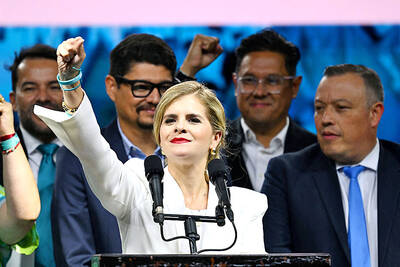
Right-wing political scientist Laura Fernandez on Sunday won Costa Rica’s presidential election by a landslide, after promising to crack down on rising violence linked to the cocaine trade. Fernandez’s nearest rival, economist Alvaro Ramos, conceded defeat as results showed the ruling party far exceeding the threshold of 40 percent needed to avoid a runoff. With 94 percent of polling stations counted, the political heir of outgoing Costa Rican President Rodrigo Chaves had captured 48.3 percent of the vote compared with Ramos’ 33.4 percent, the Supreme Electoral Tribunal said. As soon as the first results were announced, members of Fernandez’s Sovereign People’s Party
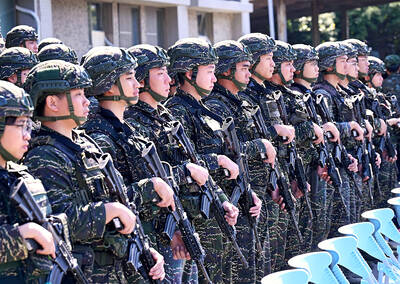
MORE RESPONSIBILITY: Draftees would be expected to fight alongside professional soldiers, likely requiring the transformation of some training brigades into combat units The armed forces are to start incorporating new conscripts into combined arms brigades this year to enhance combat readiness, the Executive Yuan’s latest policy report said. The new policy would affect Taiwanese men entering the military for their compulsory service, which was extended to one year under reforms by then-president Tsai Ing-wen (蔡英文) in 2022. The conscripts would be trained to operate machine guns, uncrewed aerial vehicles, anti-tank guided missile launchers and Stinger air defense systems, the report said, adding that the basic training would be lengthened to eight weeks. After basic training, conscripts would be sorted into infantry battalions that would take
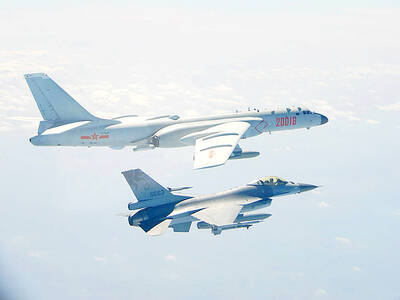
GROWING AMBITIONS: The scale and tempo of the operations show that the Strait has become the core theater for China to expand its security interests, the report said Chinese military aircraft incursions around Taiwan have surged nearly 15-fold over the past five years, according to a report released yesterday by the Democratic Progressive Party’s (DPP) Department of China Affairs. Sorties in the Taiwan Strait were previously irregular, totaling 380 in 2020, but have since evolved into routine operations, the report showed. “This demonstrates that the Taiwan Strait has become both the starting point and testing ground for Beijing’s expansionist ambitions,” it said. Driven by military expansionism, China is systematically pursuing actions aimed at altering the regional “status quo,” the department said, adding that Taiwan represents the most critical link in China’s
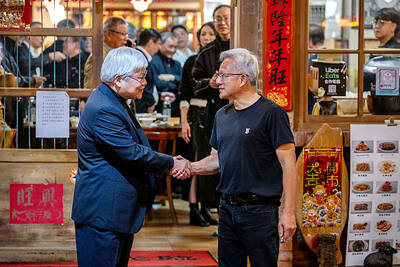
‘REALLY PROUD’: Nvidia would not be possible without Taiwan, Huang said, adding that TSMC would be increasing its capacity by 100 percent Nvidia Corp CEO Jensen Huang (黃仁勳) on Saturday praised and lightly cajoled his major Taiwanese suppliers to produce more to help power strong demand for artificial intelligence (AI), capping a visit to the country of his birth, where he has been mobbed by adoring fans at every step. Speaking at an impromptu press conference in the rain outside a Taipei restaurant, where he had hosted suppliers for a “trillion-dollar dinner,” named after the market capitalization of those firms attending, Huang said this would be another good year for business. “TSMC needs to work very hard this year because I need a lot


 RSS
RSS