


A group yesterday warned of the political repercussions of China International Trust and Investment Corp (CITIC, 中國中信) becoming the third-largest shareholder of Taiwan’s CTBC Financial Holding Co Ltd (中信金控), saying that, if the deal goes through, it would be more serious than the media monopoly attempt orchestrated by the Want Want China Times Group (旺旺中時) in 2012.
The Economic Democracy Union gave a presentation for CTBC Financial investors, urging them to protest CITIC’s proposed investment at the general meeting of CTBC Financial shareholders scheduled for next Monday.
If the deal goes through, CITIC would hold a 3.8 percent stake in CTBC Financial, becoming its third-largest shareholder and enabling it to influence the firm’s management, the union said.
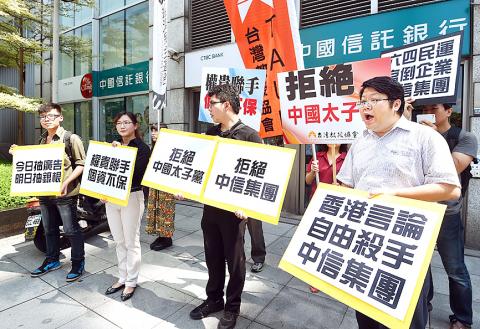
Photo: Fang Pin-chao, Taipei Times
The union’s convener and lawyer-activist, Lai Chung-chiang (賴中強), said CITIC’s investment is the first case of Chinese investment in Taiwan’s financial industry, which could be considered the “Want Want China Times’ media monopolization attempt of the financial industry.”
However, while Want Want China Times is a Taiwanese firm “heavily influenced” by Beijing, CITIC is a corporation controlled by the State Council of the People’s Republic of China, Lai said.
“Its establishment was personally endorsed by Deng Xiaoping (鄧小平) in 1979. It was founded by then-Chinese vice president Rong Yiren (榮毅仁), who was frequently referred to as the ‘Red Capitalist,’ and its current chairman is Chang Zhenming (常振明), a Chinese People’s Political Consultative Conference member and secretary of the CITIC Group party committee,” Lai said.
CITIC topped the 1989 democratic movement in China’s list of top 10 “official profiteers” (guandao, 官倒), according to the union.
“It is a corporation closely affiliated with the Chinese national security, intelligence and military apparatuses,” the union said.
According to the union, CITIC’s strategic actions to date include, but are not restricted to: working with Japanese businesses to establish the China Orient Leasing Co Ltd (中國東方租賃公司) in 1980, when China needed foreign investment to “reform and open up” its market; obtaining a 10 percent stake in Australia’s Portland Aluminum Shelter in 1988 to expand to the aerospace and arms industries through Asia Satellite Telecommunications Holdings Ltd (亞洲衛星控股); and signing a contract in 1995 with Iran for cooperation on building the Tehran Metro to secure a stable source of oil for China during the first Gulf War.
Most recently, in 2013 CITIC pulled its ads from independent media outlets in Hong Kong due to political motives, the union said.
“Chinese media have reported that CITIC is to acquire [shares of] Taiwan’s ‘greatest privately owned bank.’ We can let the public judge whether that is to be considered part of the Chinese government’s strategic plans,” the union said.
Lai said that repercussions would be felt on four fronts: The erosion of press freedom, the abuse of personal information, the exploitation of a loophole in the nation’s Joint Credit Information Center and political intervention in loan reviews.
Press freedom might be compromised by the withdrawal of advertisements, as CTBC Group has a marketing budget of as much as NT$2.98 billion (US$95.9 million), and, as CTBC Bank is the nation’s biggest credit card-issuing bank, it exposes millions of Taiwanese to abuse of their personal information, the union said.
The Joint Credit Information Center “monopolizes the records of interactions between Taiwanese, businesses and banks, and the operation relies on the self-discipline of its members [bank] with no clear legal regulations and effective external supervision,” the union said.
The center has not dared approve the membership of several Chinese banks, but CITIC, if it secures a seat on CTBC Financial’s board, would be able to obtain information from the center through CTBC Bank, the union said.
“Ads could be pulled, and so could the money,” Lai said.
The union urged the CTBC shareholders to protest CITIC’s investment, and, should their opposition go unheeded, a demonstration would be staged to pressure the Ministry of Economic Affairs’ Investment Commission to veto the investment.
If the deal goes through, the union plans to demand the Financial Supervisory Commission block CITIC’s representatives from becoming CTBC Financial board members to “safeguard democracy.”
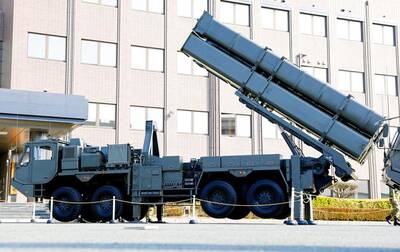
Japan has deployed long-range missiles in a southwestern region near China, the Japanese defense minister said yesterday, at a time when ties with Beijing are at their lowest in recent years. The missiles were installed in Kumamoto in the southern region of Kyushu, as Japan is attempting to shore up its military capacity as China steps up naval activity in the East China Sea. “Standoff defense capabilities enable us to counter the threat of enemy forces attempting to invade our country ... while ensuring the safety of our personnel,” Japanese Minister of Defense Shinjiro Koizumi said. “This is an extremely important initiative for

The nation’s fastest supercomputer, Nano 4 (晶創26), is scheduled to be launched in the third quarter, and would be used to train large language models in finance and national defense sectors, the National Center for High-Performance Computing (NCHC) said. The supercomputer, which would operate at about 86.05 petaflops, is being tested at a new cloud computing center in the Southern Taiwan Science Park in Tainan. The exterior of the server cabinet features chip circuitry patterns overlaid with a map of Taiwan, highlighting the nation’s central position in the semiconductor industry. The center also houses Taiwania 2, Taiwania 3, Forerunner 1 and
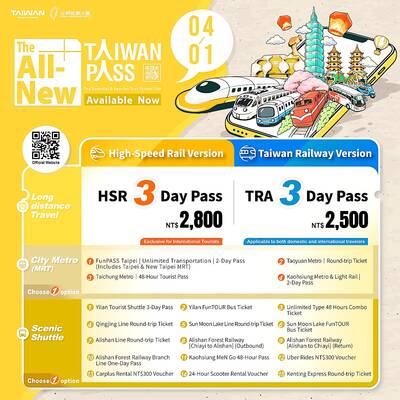
MORE POPULAR: Taiwan Pass sales increased by 59 percent during the first quarter compared with the same period last year, the Tourism Administration said The Tourism Administration yesterday said that it has streamlined the Taiwan Pass, with two versions available for purchase beginning today. The tourism agency has made the pass available to international tourists since 2024, allowing them to access the high-speed rail, Taiwan Railway Corp services, four MRT systems and four Taiwan Tourist Shuttles. Previously, five types of Taiwan Pass were available, but some tourists have said that the offerings were too complicated. The agency said only two types of Taiwan Pass would be available, starting from a three-day pass with the high-speed rail and a three-day pass with Taiwan Railway Corp. The former costs NT$2,800
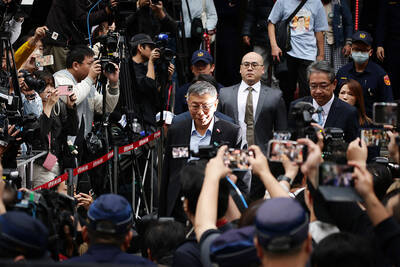
FIRST TRIAL: Ko’s lawyers sought reduced bail and other concessions, as did other defendants, but the bail judge denied their requests, citing the severity of the sentences Former Taipei mayor Ko Wen-je (柯文哲) was yesterday sentenced to 17 years in prison and had his civil rights suspended for six years over corruption, embezzlement and other charges. Taipei prosecutors in December last year asked the Taipei District Court for a combined 28-year, six-month sentence for the four cases against Ko, who founded the Taiwan People’s Party (TPP). The cases were linked to the Core Pacific City (京華城購物中心) redevelopment project and the mismanagement of political donations. Other defendants convicted on separate charges included Chinese Nationalist Party (KMT) Taipei City Councilor Angela Ying (應曉薇), who was handed a 15-year, six-month sentence; Core Pacific


 RSS
RSS