


Foreign diplomats and aid workers in Myanmar said yesterday they had not seen enough on a government tour in the cyclone-hit south to fully assess the damage caused by a cyclone two weeks ago.
A day after the regime said the official toll from the disaster had doubled to around 78,000 dead and 56,000 missing, they took diplomats on three flights into the zone, which has been mostly closed off to foreigners.
“What they showed us looked very good, but they are not showing us the whole picture,” said Chris Kaye, Myanmar director for the UN’s World Food Program, one of many agencies helping take part in the emergency relief effort.
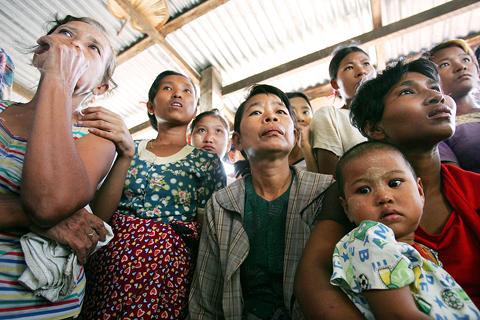
PHOTO: AP
“I went to the three locations and there were [at] maximum 250 people at each one,” he said. “They showed that they can put together the package — there were tents, water, basic supplies.”
An Asian diplomat who went on the tour said they had been shown around by helicopter.
“The ambassadors themselves looked around the affected Irrawaddy delta area in the morning hours,” he said on condition of anonymity. “It was not good enough to get a clear picture of the damage in the area.”
The international community has been turning up the pressure on the country’s military rulers, who have been criticized for holding up visas for foreign disaster experts and insisting on managing the relief effort alone.
With up to 2.5 million people facing dire shortages of food, water, shelter and medical care, according to international agencies, there have been signs that the junta is easing some constraints on the operation.
Two shipments of US aid were for the first time given directly to relief groups rather than handled by the regime, US State Department spokesman Sean McCormack said, adding that nine more flights were set for this weekend.
Thirty Thai medics flew into the country early yesterday, part of a group of more than 100 Asian medical workers who the junta is allowing to treat victims of the storm, a Thai health official said.
But Louis Michel, the EU’s humanitarian aid commissioner, said on Friday after two days of talks that the junta had refused to open an airport in the delta to aid flights, currently going to the main city Yangon.
The military, which has ruled since 1962, is deeply suspicious of the outside world and has appeared to fear the influx of anything that could weaken its control.

The nation’s fastest supercomputer, Nano 4 (晶創26), is scheduled to be launched in the third quarter, and would be used to train large language models in finance and national defense sectors, the National Center for High-Performance Computing (NCHC) said. The supercomputer, which would operate at about 86.05 petaflops, is being tested at a new cloud computing center in the Southern Taiwan Science Park in Tainan. The exterior of the server cabinet features chip circuitry patterns overlaid with a map of Taiwan, highlighting the nation’s central position in the semiconductor industry. The center also houses Taiwania 2, Taiwania 3, Forerunner 1 and
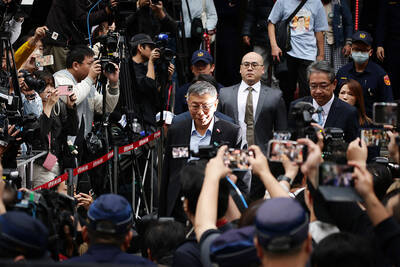
FIRST TRIAL: Ko’s lawyers sought reduced bail and other concessions, as did other defendants, but the bail judge denied their requests, citing the severity of the sentences Former Taipei mayor Ko Wen-je (柯文哲) was yesterday sentenced to 17 years in prison and had his civil rights suspended for six years over corruption, embezzlement and other charges. Taipei prosecutors in December last year asked the Taipei District Court for a combined 28-year, six-month sentence for the four cases against Ko, who founded the Taiwan People’s Party (TPP). The cases were linked to the Core Pacific City (京華城購物中心) redevelopment project and the mismanagement of political donations. Other defendants convicted on separate charges included Chinese Nationalist Party (KMT) Taipei City Councilor Angela Ying (應曉薇), who was handed a 15-year, six-month sentence; Core Pacific
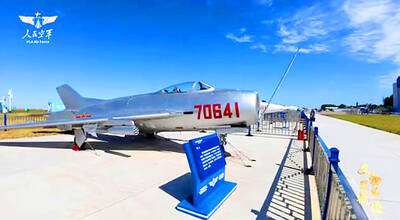
J-6 REMODEL: The converted drones are part of Beijing’s expanding mix of airpower weapons, including bombers with stand-off missiles and UAV swarms, the report said China has stationed obsolete supersonic fighters converted to attack drones at six air bases close to the Taiwan Strait, a report published this month by the Arlington, Virginia-based Mitchell Institute for Aerospace Studies said. Satellite imagery of the airfields from the institute’s “China Airpower Tracker” shows what appear to be lines of stubby, swept-winged aircraft matching the shape of J-6 fighters that first flew with the Chinese People’s Liberation Army (PLA) Air Force in the 1960s. Since their conversion to drones, the aircraft have been identified at five bases in China’s Fujian Province and one in Guangdong Province, the report said. J.

China used fake LinkedIn profiles to harvest sensitive data from NATO and EU institutions by soliciting information from staff, a European security source said on Friday. The operation, allegedly orchestrated by the Chinese Ministry of State Security, targeted dozens of employees at the military alliance or EU organizations through fictitious accounts, the source said, confirming reports in French and Belgian media. Posing as recruiters on the online professional networking platform, Chinese spies would initially request paid reports before later soliciting non-public or even classified information. One particularly active fake profile used the name “Kevin Zhang,” claiming to be the head


 RSS
RSS