


Without directly declaring his stance, Taiwan's premier industrialist, Wang Yung-ching (
"His [Lien's] economic and environmental stances will promote peace and mutual growth. These are the most important factors," said Wang, head of the Formosa Plastics Group, Taiwan's biggest private-sector employer.
Wang tried to play down his comments while speaking to a room packed full of local and foreign journalists at Formosa Plastics headquarters yesterday.
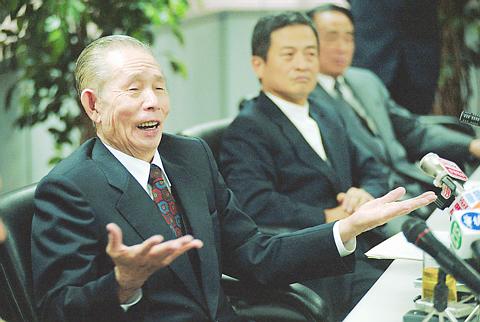
PHOTO: GEORGE TSORNG, TAIPEI TIMES
Wang dubbed the press conference a "discussion with reporters" and added that his comments were just those of a "concerned member of society."
A 13-page press release, entitled "Standing at the cross-roads, making a crucial choice," contained 10 pages of extracts taken from Lien's own book, Lien Chan's Stance.
"Lien's stances, as laid out in his book, are the same as mine," Wang said.
The excerpts included portions on the environment and the economy, as well as a large section on cross-strait relations.
"Peace and coexistence [with China] is what we need, so everyone can profit from it," Wang said.
Prolonged stagnation in cross-strait ties "will only have a negative impact on Taiwan," he added.
"Complex factors are involved in improving bilateral ties and the interests of the people and dignity of the country come as a priority," Wang said.
Wang has already pumped US$3 billion into a thermal power plant in China and is also studying the possibility of investing in herbal medicine and the biotechnology industry there.
Taiwan is the leading foreign investor in China, with official figures quoting some 40,000 enterprises pouring an estimated US$40 billion into various projects. Actual figures are suspected to be much larger.
Wang also said Taipei should lift a five decades' old ban on direct communication, trade and transportation links with China, and revise a policy restricting local businessmen from making major investments on the mainland.
In 1996 President Lee Teng-hui (
When asked what he thought of the comparable policies of DPP candidate Chen Shui-bian (
Wang, who prides himself on the distance he keeps from politics, said he was prompted to make his comments only after the stock market plunged over 600 points on Monday.
According to Wang's press release, the Formosa Plastics' chief said that where he directed his support wouldn't shake the stock market -- an apparent dig at one of his competitors, Chi Mei President Shi Wen-lung (
Wang was quoted as saying: "Whoever I support is a common thing, but why is it that when some people meet with candidates it causes the market to tumble?"

PROVOCATIVE: Chinese Deputy Ambassador to the UN Sun Lei accused Japan of sending military vessels to deliberately provoke tensions in the Taiwan Strait China denounced remarks by Japan and the EU about the South China Sea at a UN Security Council meeting on Monday, and accused Tokyo of provocative behavior in the Taiwan Strait and planning military expansion. Ayano Kunimitsu, a Japanese vice foreign minister, told the Council meeting on maritime security that Tokyo was seriously concerned about the situation in the East China and South China seas, and reiterated Japan’s opposition to any attempt to change the “status quo” by force, and obstruction of freedom of navigation and overflight. Stavros Lambrinidis, head of the EU delegation to the UN, also highlighted South China Sea
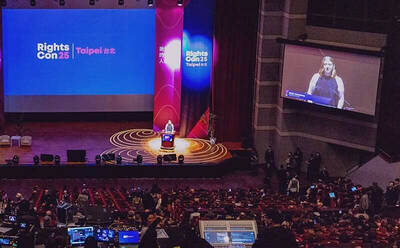
SILENCING CRITICS: In addition to blocking Taiwan, China aimed to prevent rights activists from speaking out against authoritarian states, a Cabinet department said The Ministry of Foreign Affairs (MOFA) yesterday condemned transnational repression by Beijing after RightsCon, a major digital human rights conference scheduled to be held in Zambia this week, was abruptly canceled due to Chinese pressure over Taiwanese participation. This year’s RightsCon, the world’s largest conference discussing issues “at the intersection of human rights and technology,” was scheduled to take place from tomorrow to Friday in Lusaka, and expected to draw 2,600 in-person attendees from 150 countries, along with 1,100 online participants. However, organizers were forced to cancel the event due to behind-the-scenes pressure from China, the ministry said, expressing its “strongest condemnation”
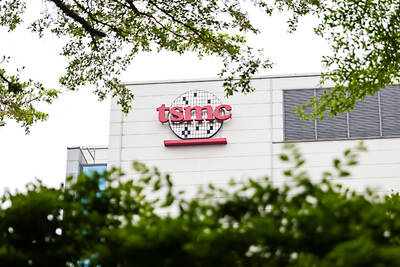
Taiwan Semiconductor Manufacturing Co (TSMC, 台積電), the world’s largest contract chipmaker, said it expects its 2-nanometer (2nm) chip capacity to grow at a compound annual rate of 70 percent from this year to 2028. The projection comes as five fabs begin volume production of 2-nanometer chips this year — two in Hsinchu and three in Kaohsiung — TSMC senior vice president and deputy cochief operating officer Cliff Hou (侯永清) said at the company’s annual technology symposium in Silicon Valley, California, last week. Output in the first year of 2-nanometer production, which began in the fourth quarter of last year, is expected to
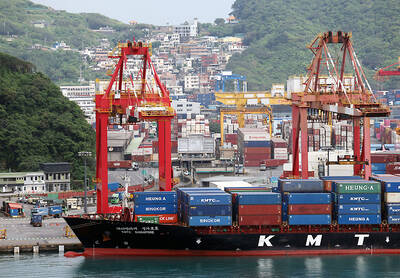
Taiwan’s economy grew far faster than expected in the first quarter, as booming demand for artificial intelligence (AI) applications drove a surge in exports, spilling over into investment and consumption, the Directorate-General of Budget, Accounting and Statistics (DGBAS) said yesterday. GDP growth was 13.69 percent year-on-year during the January-to-March period, beating the DGBAS’ February forecast by 2.23 percentage points and marking the most robust growth in nearly four decades, DGBAS senior official Chiang Hsin-yi (江心怡) told a news conference in Taipei. The result was powered by exports, which remain the backbone of Taiwan’s economy, Chiang said. Outbound shipments jumped 51.12 percent year-on-year to


 RSS
RSS