


From famine to nuclear war, North Koreans have had plenty to worry about over the years. Now, the upwardly mobile residents of Pyongyang face a more prosaic concern: Finding a parking spot.
North Korea’s capital is experiencing a surge in passenger cars, creating traffic jams for the first time and necessitating new parking lots and EV charging infrastructure to accommodate the influx of vehicles, according to three recent visitors and satellite imagery reviewed by Reuters.
That a car culture is flourishing at all in one of the world’s most heavily sanctioned and economically underdeveloped states is striking enough. Yet the signs are everywhere. At several hotels in Pyongyang, cars now fill parking spaces and spill into adjacent streets. Vehicles surround the Gold Lane bowling alley and Rakrang Market, a suburban hub for groceries. North Korean leader Kim Jong-un nodded to the trend last month by visiting an auto-service center where he inspected various vehicles, their make and model concealed conspicuously under silver cloth.
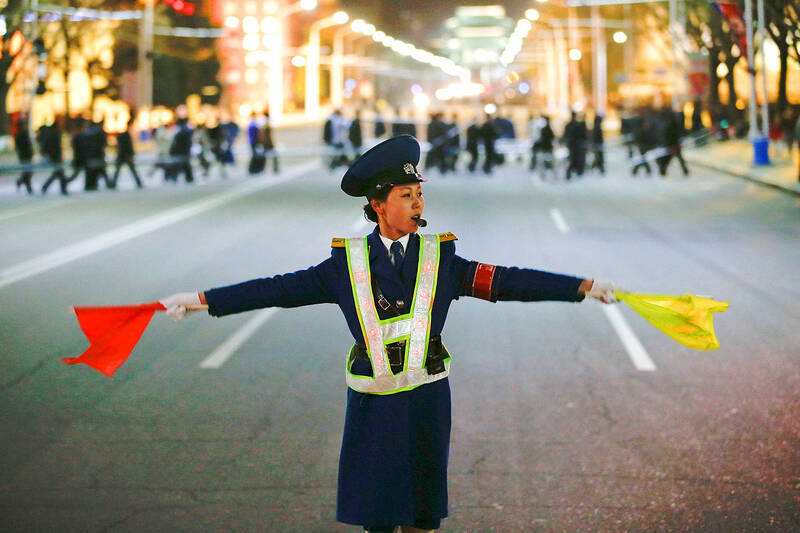
Photo: Reuters
The burgeoning auto trade doesn’t show up directly in official statistics because exporting cars to North Korea is prohibited under UN sanctions. But shipments of related goods such as tires, mirrors and lubricants from China are soaring, Chinese customs data show, revealing growing demand for parts and other essentials as more North Koreans get behind the wheel.
The boom follows changes to North Korean law that formalized private car ownership over the past two years, allowing licensed drivers to buy one vehicle per household through state-certified dealers. Owning a car is still mostly the preserve of the elite and the entrepreneurial class known as donju, analysts say.
Pyongyang’s newfound love of the automobile is transforming the city, and the role of China in satisfying the demand. Reporters examined dozens of satellite images and verified social media content showing increased traffic and foreign-brand vehicles in North Korea, and spoke with more than 10 sources, including businesspeople, diplomats and recent visitors to the country.
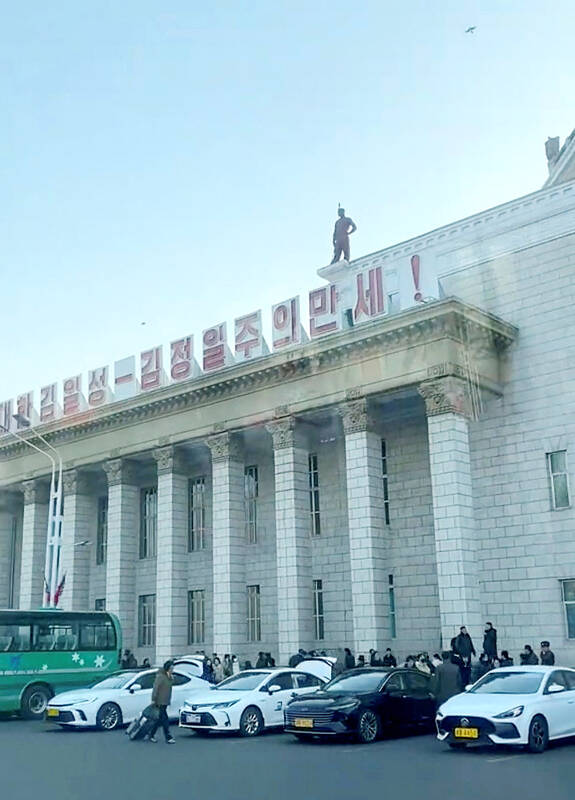
Photo: Reuters
Peter Ward, a research fellow at the Sejong Institute, a non-partisan think tank in Seoul, said North Korea’s automotive policy is part of a broader push to bring private economic activity under state control. Kim, he said, has allowed personal car ownership because it channels consumption through state firms — cars sold by state dealers, maintained by state service providers, refueled at state gas stations.
“It thus stimulates consumption, and also regularizes what previously was a burgeoning black-market trade,” he said.
North Koreans’ enthusiasm for driving is reshaping more than just Pyongyang’s streetscape. Some analysts say it is also deepening ties to China, North Korea’s main trading partner and the source of most of the vehicles now crowding its roads.
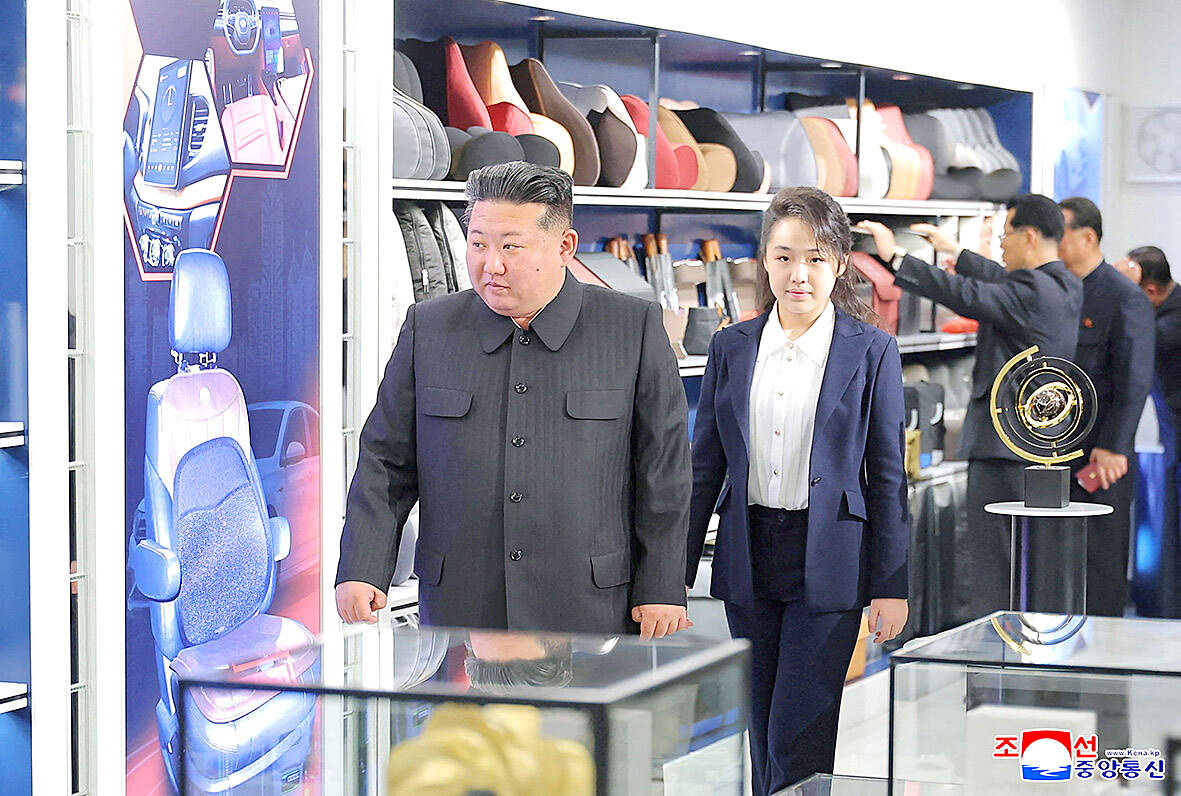
Photo: Reuters
The Chinese foreign ministry said that China and North Korea are friendly neighbors that maintain normal trade exchanges. The ministry didn’t directly address the flow of Chinese-made vehicles to North Korea, but said China requires companies to engage in trade “lawfully and compliantly.”
North Korea’s embassy in Beijing and its mission to the UN in New York didn’t respond to questions about the surge in vehicles in the country.
YELLOW PLATES
License plates in Pyongyang were traditionally blue or black, indicating state or military ownership. But yellow plates for private cars are becoming ubiquitous, two recent visitors said.
Aram Pan, a Singaporean photographer said he was stunned to find himself caught in a traffic jam in Pyongyang in October during his 20th visit to the country.
“Main roads have become bottleneck points simply because there are now too many cars,” he said. “I definitely saw over a hundred yellow-plated cars.”
Most of the cars Pan saw were Chinese brands, he said.
A foreign businessman who visits North Korea regularly said parking in central Pyongyang has become difficult, with many spaces managed informally by attendants charging fees. In October, state media showed Kim touring a new hospital that had an underground parking garage — a feature the businessman said was uncommon in the capital.
EV infrastructure is limited but charging stations for electric taxis have begun to appear, the businessman and a diplomat said.
It’s unclear how many private cars are on North Korean roads. But license plates with five digits have emerged recently. One video and one image posted on Chinese social media since March by foreigners in North Korea, and verified by Reuters, show vehicles with yellow plates and registration numbers in the 10,000s.
Jung Chang-hyun, a North Korea analyst and director of the Korean Peace and Economy Institute think tank in Seoul, said the total number of private cars in North Korea could reach more than 20,000 over the next year.
A MARKET FUELED BY CHINA
UN sanctions on North Korea over its nuclear and missile programs have have banned the supply of vehicles to the country since December 2017. Officially, China exported just two vehicles to North Korea last year, customs data show, compared with more than 3,200 in the year the ban took effect.
But Chinese exports of car-related goods to North Korea have risen sharply compared with pre-pandemic levels. Shipments of new tires for passenger cars rose to nearly 193,000 units last year, up 88 percent from pre-COVID averages, while exports of rear-view mirrors nearly quadrupled. Lubricating oil and grease shipments rose more than 150 percent.
Cars continue to enter North Korea through informal channels along the 1,400-kilometer border with China, many of the sources said. That is despite a Chinese crackdown on smuggling in recent months, according to two of the people.
Lu Ming, a used-car dealer in China’s northeastern Jilin province, said vehicles destined for North Korea change hands multiple times before crossing the border, with a small number of experienced smugglers handling final delivery. Lu said some of the cars he has sold have ended up in North Korea but he doesn’t trade directly with the importers. Once a car on his lot is sold, he said, he has no control over its resale or the end user.
Footage and photos posted on social media between late 2024 and early this year by almost a dozen Pyongyang residents and visitors, and verified by Reuters, show foreign-brand vehicles at a service center and on city streets. Among the cars are models from Chinese automakers Changan, Chery and Geely, as well as European brands such as BMW and Audi.
“In the past, you could point to a particular brand” as the most popular in North Korea, said Joung Eun-lee, a researcher at the Korea Institute for National Unification, a think tank funded by South Korea’s government. “But recently, the variety has become so wide that it is difficult to identify a single dominant one.”
Prices range from US$5,000 to US$30,000 for all manner of new and used, gasoline and electric models, Joung said, citing information from traders in the border region. She displayed photos she took from the Chinese side last year, showing more than 30 vehicles parked along the North Korean border in the city of Hyesan, one of several entry points.
Audi and BMW said they have no business activities in North Korea and that their importers and dealers are contractually obliged to comply with sanctions. Both German automakers said they were unaware of their vehicles operating in Pyongyang. Audi added that it has no influence over used cars in private ownership.
Changan, Chery and Geely didn’t respond to requests for comment about the presence of their vehicles in North Korea and the steps they take to adhere to sanctions.
On the increasingly busy streets of Pyongyang, the cumulative effect of all the imported cars is impossible to miss.
“It’s crazy how dense traffic has become,” said the foreign businessman. “Yellow plates are everywhere.”
Taiwan’s English education system is being pulled apart by three opposing forces. Bilingual Nation 2030 pulls students toward English and global communication. Artificial Intelligence (AI) readiness pulls them toward digital judgment, verification and AI-mediated work. But Taiwan’s old exam culture pulls them back toward memorization, grammar drills, timed reading and correct answers. If the education system keeps using old exams to define success, it risks producing graduates who are neither genuinely bilingual nor genuinely AI-ready, but trained for tasks machines can already perform. The first force is Bilingual Nation 2030. Launched in 2018, the policy aimed to “help Taiwan’s workforce connect
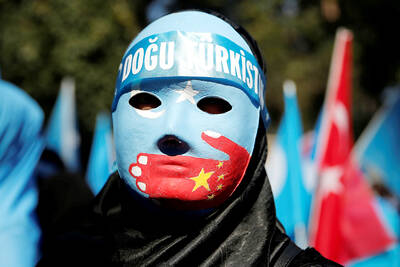
It seems every few days one bumps into one of those “real man” comments in which Taiwan is urged to “face reality” or similar, and “make a deal,” with the speaker implying that soon it will be too late. “Deal” advocates always present themselves as having a superior grip on reality, and the manly ability to make the “hard choice.” Their testosterone-laden language often echoes that of Taiwan sellout advocates. Note that such commentary always specifies a process (“make a deal, work with, make progress”), never the end state of what occupation by a violent authoritarian colonialist state will entail. In

“Taiwan’s Opposition Leader Comes to US With a Message Straight Out of Beijing” read a May 31 headline in the Wall Street Journal. Top US administration officials and members of Congress almost certainly read the WSJ, and if there was a bullet point takeaway that people in Washington should absorb ahead of Chinese Nationalist Party (KMT) Chair Cheng Li-wun’s (鄭麗文) arrival in DC on June 9, that headline is it. The last few columns have discussed this very topic, and the timing is not coincidental. While those top officials likely do not read the Taipei Times, judging by the number
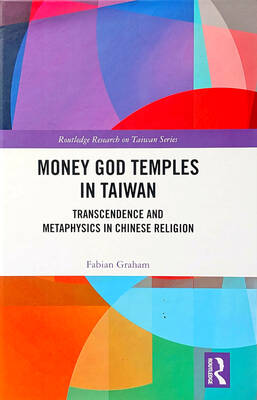
As someone who normally steers clear of books with “transcendence” or “metaphysics” in their subtitles, this reviewer — a casual observer of local belief systems since the 1990s — found Fabian Graham’s Money God Temples in Taiwan a challenging read. Those who’ve only dipped their toes into temple culture will likely need to parse several sections with special care if they’re to keep up with the author, a British ethnographic researcher whose previous books have investigated religious practices among ethnic Chinese in Southeast Asia. This scholarly volume examines a facet of Taiwan’s religious landscape that didn’t exist a century ago, and


 RSS
RSS