


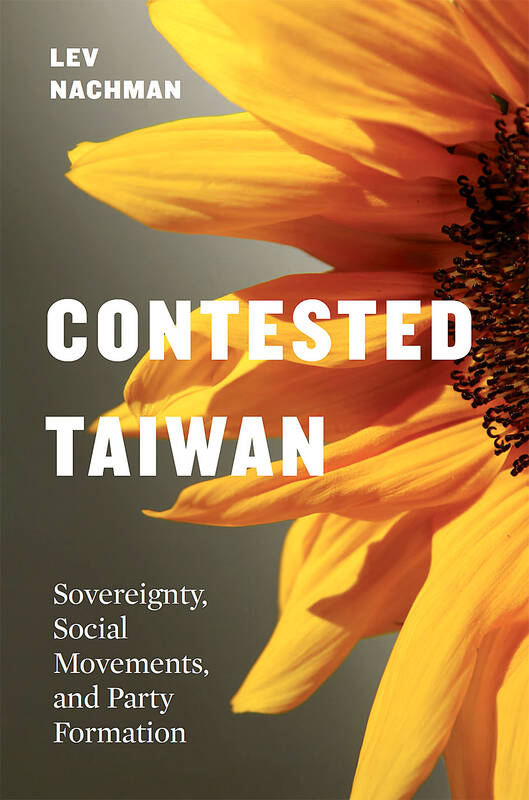
In a recent essay in China Books Review, Columbia University professor and China expert Andrew Nathan cited a new book by Lev Nachman, Contested Taiwan, as proof that Taiwan has a “remarkably fragmented political system.” This is a poor characterization of both Taiwanese politics and Nachman’s book.
Taiwanese politics can be described as contentious, nuanced and, on key issues like Taiwan-China relations, polarized. But “fragmented” implies a system with so many competing parties and views that it is effectively broken.
Taiwan, however, has in the 30 years of its democratic era only ever had two main political camps, the unification-leaning blue camp led by the Chinese Nationalist Party (KMT) and the independence-leaning green camp led by the Democratic Progressive Party (DPP).
Despite the presence of third parties and many small parties, Taiwan’s voters have regularly forced politicians to respect their will on the nation’s major issues. This is especially true when it comes to cross-strait relations, where 60 percent of Taiwanese favor the status quo, 28 percent favor independence now or eventually and 7 percent favor unification now or eventually, according to the most recent data from National Chengchi University.
Taiwan’s elected governments from both parties have, with a bit of push-pull, followed the public’s mandate and stuck to the status quo. As far as political systems go, it’s hard to call this particularly “fragmented.”
SUNFLOWER MOVEMENT
Nachman, a professor in political science at National Taiwan University, does not in fact use the word “fragmented” at all in his book. Contested Taiwan is instead about the emergence of the “movement parties” following the 2014 Sunflower movement, an event with major implications for Taiwan’s political landscape today.
Nachman’s major argument is that the Sunflower protests, which included a 23-day takeover of the legislature and by some estimates brought half a million people to the streets of Taipei, served as a grass-roots correctional mechanism for the DPP.
Though the DPP has gone on to win all three presidential elections since that time, in the leadup to the protests, the party saw its support flagging. Taiwan’s large contingent of swing voters were put off by the DPP’s corruption, especially following the 2008 conviction of outgoing DPP president Chen Shui-bian (陳水扁) on bribery charges. Die-hard supporters of Taiwanese independence were also unhappy that the party had moderated its stance on independence.
By 2014, DPP centrism had even reached a point where some party legislators actually favored the KMT-proposed trade bill, the cross-strait service trade pact, that caused the public to erupt in protest. It was only when the KMT skipped standard legislative debate and passed the bill in what’s become known as the “30-second incident” that the DPP staged a symbolic walkout of the legislative chamber. But that was it.
The actions that eventually killed the bill did not originate from political parties but rather from civil society groups.
Nachman details a string of civil society movements from 2008 to 2012 that, firstly, arose out of a desire to safeguard national sovereignty in response to forms of co-option by China and, secondly, were neither started nor led by the DPP.
In 2008, the Wild Strawberries movement rallied against a visit by a high-ranking Chinese Communist Party (CCP) official, Chen Yunlin (陳雲林). Taiwanese were not only angered by the unknown substance of the talks between the CCP and the KMT-led government. The KMT also removed Taiwan’s national flags during the visit and implemented a zero tolerance policy on protests. For protesters, the underlying issue was the importation of authoritarian People’s Republic of China standards into democratic Taiwan.
Four years later, in 2012, many of the same activists returned as part of the anti-media monopoly movement to oppose the buyout of one of Taiwan’s leading newspapers, The China Times, by an openly pro-Beijing Taiwanese businessman Tsai Eng-meng (蔡衍明). Their fear was of Chinese influence in Taiwanese media.
NEW POLITICAL PARTIES
These were followed in 2014 by the Sunflower movement, which opposed — successfully — a trade bill that would have allowed direct Chinese ownership of Taiwanese media and other key business sectors. By this time, support for this string of civil society movements was so strong that it pushed the formation of new political parties.
The most important among these was the New Power Party (NPP), which took over the DPP’s old position as torchbearer for Taiwanese independence. In the 2016 elections, the NPP won five legislative seats and looked like it would become a new “third force” in Taiwanese politics.
The NPP, however, only really managed to stay a force for a single election cycle. The question that broke it was whether or not to endorse the DPP — which by the second term of KMT president Ma Ying-jeou (馬英九) had regained its footing — in the 2020 presidential elections.
The question created a schism among the NPP’s leadership, a group of activists-turned-politicians who continue to be important political figures today, though in opposing camps. These included Lin Fei-fan (林飛帆) and the heavy metal singer Freddy Lim (林昶佐), who have both gone on to prominent roles in the DPP. There was also Huang Kuo-chang (黃國昌), who has become chairman of the KMT-aligned Taiwan People’s Party (TPP).
In the 2020 elections, Lin and Lim were for endorsing the DPP candidate, Tsai Ying-wen (蔡英文). They saw her platform of Taiwanese sovereignty as the overriding issue.
Huang however thought it was more important to remain an independent third force.
Huang won that battle and took control of the NPP, but his victory shattered the party. One further election cycle later, he too would abandon ship in 2024. Having fallen into the orbit of former Taipei mayor Ko Wen-je (柯文哲), Huang joined Ko’s TPP, supported Ko’s failed bid for the presidency and then, after Ko was jailed for corruption, stepped in as the TPP’s new leader.
Nachman gives us a glimpse of this chain of events through a book that, at its core, is a case study of the NPP from 2014 to 2024 and fairly limited in scope. For political junkies, this still holds some pretty interesting material. But to get to it, you will have to dig through a flabbiness of contextual padding and some very longwinded theoretical arguments. I feel the book would’ve been better at a tight 70 pages rather than a fluffed up 200 pages.
Still, Contested Taiwan has a couple of useful takeaways.
First, Taiwan’s political system has room for influential third parties, and these can swing the balance between blue and green. Before the TPP in the 2020s and the NPP in the 2010s, you had the People’s First Party and Taiwan Solidarity Union in the 2000s. But this is not what you’d call particularly “fragmented.”
Second, don’t accuse Taiwan’s public of ignorance or ambivalence to China’s threats. The international media frequently points a finger at the Taiwanese, saying: China threatens you with its military! And yet you go on living normally!
Nachman reminds us that we should look instead to how Taiwanese civil society reacts when tangible threats — things like trade pacts, media and industry co-option, and secret negotiations with Beijing — enter into their political system. That’s where Taiwanese civil society has agency. And that’s where ordinary Taiwanese citizens have become a major force both for safeguarding their nation’s sovereignty and keeping its politicians in check.
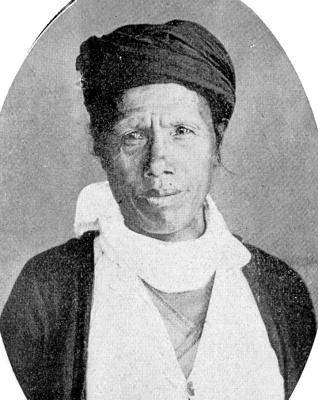
May 11 to May 17 Traversing the southern slopes of the Yushan Range in 1931, Japanese naturalist Tadao Kano knew he was approaching the last swath of Taiwan still beyond colonial control. The “vast, unknown territory,” protected by the “fierce” Bunun headman Dahu Ali, was “filled with an utterly endless jungle that choked the mountains and valleys,” Kano wrote. He noted how the group had “refused to submit to the measures of our authorities and entrenched themselves deep in these mountains … living a free existence spent chasing deer in the morning and seeking serow in the evening,” even describing them as

As a different column was being written, the big news dropped that Chinese Nationalist Party (KMT) caucus whip Fu Kun-chi (傅?萁) announced that negotiations within his caucus, with legislative speaker Han Kuo-yu (韓國瑜) of the KMT, party Chair Cheng Li-wun (鄭麗文), Taichung Mayor Lu Shiow-yen (盧秀燕) and Taiwan People’s Party (TPP) Chair Huang Kuo-chang (黃國昌) had produced a compromise special military budget proposal. On Thursday morning, prior to meeting with Cheng over a lunch of beef noodles, Lu reiterated her support for a budget of NT$800 or NT$900 billion — but refused to comment after the meeting. Right after Fu’s

Yesterday, the Democratic Progressive Party (DPP) nominated legislator Puma Shen (沈伯洋) as their Taipei mayoral candidate, the Chinese Nationalist Party (KMT) put their stamp of approval on Wei Ping-cheng (魏平政) as their candidate for Changhua County commissioner and former legislator Tsai Pi-ru (蔡壁如) of the Taiwan People’s Party (TPP) has begun the process to also run in Changhua, though she has not yet been formally nominated. All three news items are bizarre. The DPP has struggled with settling on a Taipei nominee. The only candidate who declared interest was Enoch Wu (吳怡農), but the party seemed determined to nominate anyone
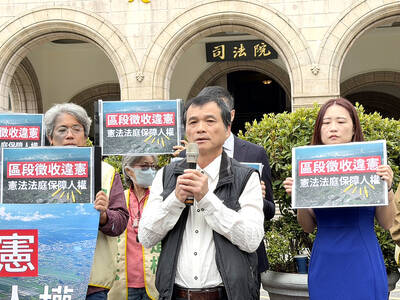
What government project has expropriated the most land in Taiwan? According to local media reports, it is the Taoyuan Aerotropolis, eating 2,500 hectares of land in its first phase, with more to come. Forty thousand people are expected to be displaced by the project. Naturally that enormous land grab is generating powerful pushback. Last week Chen Chien-ho (陳健和), a local resident of Jhuwei Borough (竹圍) in Taoyuan City’s Dayuan District (大園) filed a petition for constitutional review of the project after losing his case at the Taipei Administrative Court. The Administrative Court found in favor of nine other local landowners, but


 RSS
RSS