


Critics of President William Lai (賴清德) and his ruling Democratic Progressive Party (DPP) frequently use terms like “dictator” and “authoritarian,” despite scant evidence of this being the case.
Many, particularly on the pan-green (DPP-aligned ideologically) side, simply roll their eyes. The Chinese Nationalist Party (KMT) has been using terms like “green terror” since the dawn of the Chen Shui-bian (陳水扁) presidency. After years in power, the KMT just could not accept losing it, projected their own party’s impulses on the DPP and turned to hyperbolic language to vent their frustration.
That explanation is true to a point. It explains why hardcore KMT supporters — whose families often have supported the party for generations — might resort to this type of language.
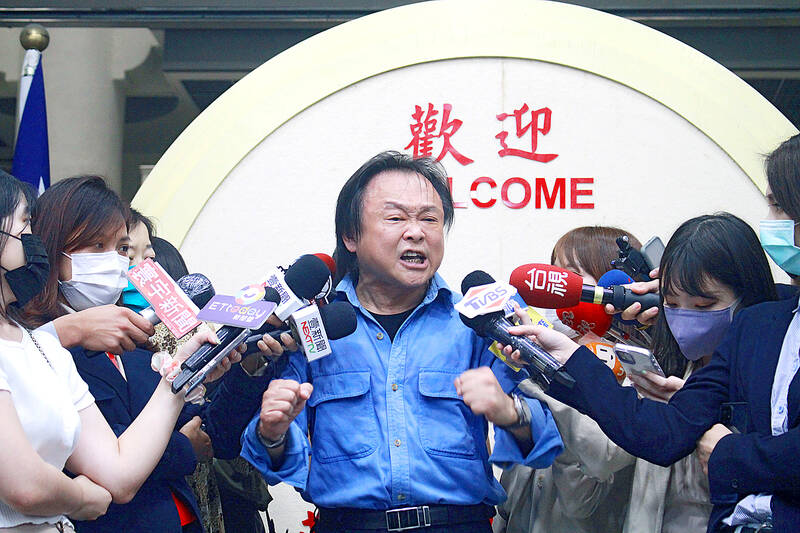
Photo: Yang Hsin-hui, Taipei Times
The problem is that it does not explain why so many other people outside the KMT either believe this language or are attracted to politicians who use it.
The Taiwan People’s Party (TPP) has only existed since 2019, but now uses similar language. No one has been following them for generations, and their supporters chose them independently. In the latest Formosa Poll, 25.8 percent expressed approval of the party.
It also does not explain why so many voters came out during last year’s recall elections to reject the campaigns to unseat KMT lawmakers, which the DPP began openly supporting and campaigning for about a month prior. Clearly, many voters feared overreach by the DPP.
That recent elections — including the recalls — have gone badly for the DPP proves Taiwan is not in the grip of authoritarianism. The TPP and KMT hold massive rallies expressing their free speech by decrying the “dictator” Lai with the Presidential Office Building right behind them.
There are many legitimate reasons why voters may dislike, distrust and feel disappointed with the last 10 years of DPP rule. There have been corruption scandals, hypocrisy and flip-flopping on positions and plenty of broken campaign promises.
Still, the DPP has had many successes, and can quite rightly point to their economic performance. The stock market passed the UK’s in market capitalization, exports are booming and Taiwan’s GDP per capita has inched past regional rivals South Korea and Japan.
The DPP can also point to housing prices finally beginning to fall and wages inching up in real terms. The problem is that housing prices had reached such astronomical heights that they remain out of reach for most people, and wages outside of the tech industry have barely budged.
The DPP remains the most popular by a fair margin, with 43.6 percent approval. Satisfaction with President Lai is a respectable 47.1 percent.
But there are clearly people who feel unhappy, frustrated and left behind and have reasons to be attracted to other parties. They could use many negative adjectives to criticize the DPP, from “they suck” on up.
This does not explain, however, why so many are sympathetic to, condone or agree with politicians using terms like “dictator.”
There must be something else going on for this to be so widespread.
THE DPP IS THE PROBLEM
The problem is within the DPP itself, and much of the problem can be traced to decisions made by Tsai Ing-wen (蔡英文), former party chair and president.
Today’s DPP is culturally stifling, with rigid message discipline and almost zero tolerance for internal dissent. It is an opaque party, with infighting taking place behind closed doors and dominated by shadowy factions.
Contrast this with the KMT, a much more freewheeling and fractious party. Take media personality Jaw Shaw-kong (趙少康), while unequivocally deep blue (KMT-aligned ideologically), has never been shy to criticize the KMT. They made him their vice presidential candidate in 2024.
The last KMT chair race was divisive and opinions varied widely. One candidate, Chang Ya-chung (張亞中), was unsparing in his criticism and skewered any perceived hypocrisy in his opponents with such sharp insight that it was delightful to watch.
From campaign strategy to the current debates over the special military budget, many KMT politicians take rival public positions at odds with the party line. Voters have a much clearer idea of who stands for what in the party.
There is some discipline in the KMT. Opinions need to be broadly within the pan-blue sphere and personal attacks are expected to stop and amends made after the proximate issue has been settled, such as Hsu Chiao-hsin’s (徐巧芯) previous heated and pointed attacks on Fu Kun-chi (傅崐萁) for being re-admitted to the party after leaving jail. She is now a lawmaker and Fu is the party’s caucus convener, so they are now expected to get along publicly. Similarly, while disagreements over policy can become heated, the party caucus is expected to toe the party line when voting time comes.
None of that open dissent would be tolerated in the DPP. Even minor infractions are considered intolerable by many — never mind the personal attacks and policy debates that animate the KMT.
In 2022, DPP politicians Kao Chia-yu (高嘉瑜) and Wang Shih-chien (王世堅) dared to question the party’s campaign choices. Their analysis was spot on, and the DPP went on to their worst local election result in their history.
Despite being absolutely correct and with intentions of helping the party, in a party meeting Kao faced shouts of “step down,” “leave,” and “be quiet,” and was labelled a “traitor” by some. Leading that same meeting was then-vice president Lai, who coldly told her, “If it’s useless words, it’s better to say less,” which was met with applause.
Wang was called a “Communist sympathizer” among other things. Both are distrusted by many in the party to this day.
These were well-meaning criticisms on electoral strategy and tactics that contained no personal attacks on the leadership, or came even close to challenging the party on policy or ideology.
No one would dare do that.
Similarly, then-DPP caucus convener Ker Chien-ming (柯建銘) pushed for the party to openly support last year’s recall campaigns in opposition to Lai’s early refusal to get the party involved. Lai’s instincts were correct, but he eventually buckled and gave in and supported the recalls.
After that turned to disaster, the knives were not out for Lai, but for Ker. Ker kept his position as caucus convener for the rest of his term for procedural reasons, but his political career now appears over. He was made the scapegoat.
BUT WHY?
It was not always like this. In the 2000s, the DPP was a fractious mess riven with internal division and factional infighting. It was ugly and damaging to the party as it all played out in public.
The factions were officially banned by the party in 2006, but that only drove them underground. Despite everyone knowing they still exist, this only made them far more opaque and shadowy. Lai promised to leave his New Tide faction after becoming party chair in 2024, but now that they no longer have an office or issue membership cards, there is no way to confirm this.
When Tsai Ing-wen took over the party, she brought this under control. She apportioned power to the factions in a set formula to tamp down infighting. Infighting moved from the front pages to behind closed doors.
She also brought message discipline and unified the party’s stances. This was initially a much-needed reform, and the newly energized and unified party started winning elections in landslides starting in 2014.
The problem is that this has hardened into intolerance for genuine public debate within the party.
Combined with the opaque infighting and shadowy factions, it is not hard to see why the party is perceived as undemocratic, or even internally dictatorial.
Not everyone differentiates clearly between this party culture and their behavior in government, with their impressions of one carrying over to their impressions of the other.
The DPP needs to loosen up.
Donovan’s Deep Dives is a regular column by Courtney Donovan Smith (石東文) who writes in-depth analysis on everything about Taiwan’s political scene and geopolitics. Donovan is also the central Taiwan correspondent at ICRT FM100 Radio News, co-publisher of Compass Magazine, co-founder Taiwan Report (report.tw) and former chair of the Taichung American Chamber of Commerce. Follow him on X: @donovan_smith.
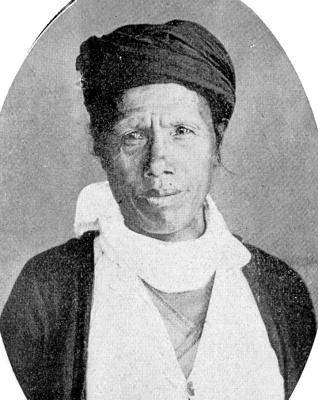
May 11 to May 17 Traversing the southern slopes of the Yushan Range in 1931, Japanese naturalist Tadao Kano knew he was approaching the last swath of Taiwan still beyond colonial control. The “vast, unknown territory,” protected by the “fierce” Bunun headman Dahu Ali, was “filled with an utterly endless jungle that choked the mountains and valleys,” Kano wrote. He noted how the group had “refused to submit to the measures of our authorities and entrenched themselves deep in these mountains … living a free existence spent chasing deer in the morning and seeking serow in the evening,” even describing them as
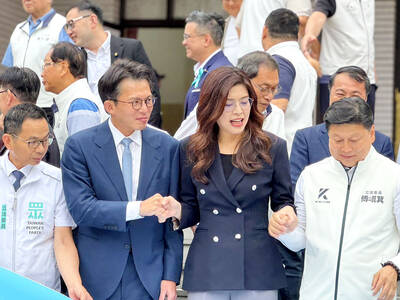
As a different column was being written, the big news dropped that Chinese Nationalist Party (KMT) caucus whip Fu Kun-chi (傅?萁) announced that negotiations within his caucus, with legislative speaker Han Kuo-yu (韓國瑜) of the KMT, party Chair Cheng Li-wun (鄭麗文), Taichung Mayor Lu Shiow-yen (盧秀燕) and Taiwan People’s Party (TPP) Chair Huang Kuo-chang (黃國昌) had produced a compromise special military budget proposal. On Thursday morning, prior to meeting with Cheng over a lunch of beef noodles, Lu reiterated her support for a budget of NT$800 or NT$900 billion — but refused to comment after the meeting. Right after Fu’s
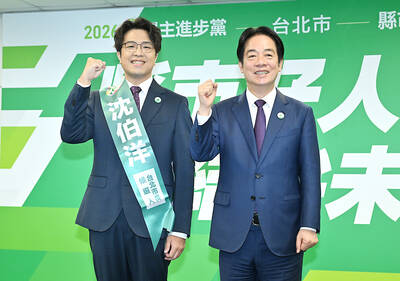
Yesterday, the Democratic Progressive Party (DPP) nominated legislator Puma Shen (沈伯洋) as their Taipei mayoral candidate, the Chinese Nationalist Party (KMT) put their stamp of approval on Wei Ping-cheng (魏平政) as their candidate for Changhua County commissioner and former legislator Tsai Pi-ru (蔡壁如) of the Taiwan People’s Party (TPP) has begun the process to also run in Changhua, though she has not yet been formally nominated. All three news items are bizarre. The DPP has struggled with settling on a Taipei nominee. The only candidate who declared interest was Enoch Wu (吳怡農), but the party seemed determined to nominate anyone
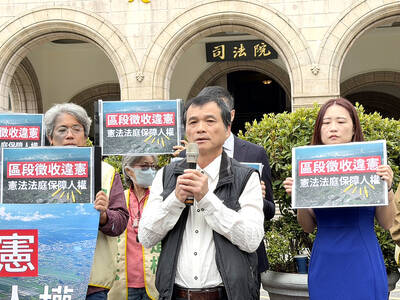
What government project has expropriated the most land in Taiwan? According to local media reports, it is the Taoyuan Aerotropolis, eating 2,500 hectares of land in its first phase, with more to come. Forty thousand people are expected to be displaced by the project. Naturally that enormous land grab is generating powerful pushback. Last week Chen Chien-ho (陳健和), a local resident of Jhuwei Borough (竹圍) in Taoyuan City’s Dayuan District (大園) filed a petition for constitutional review of the project after losing his case at the Taipei Administrative Court. The Administrative Court found in favor of nine other local landowners, but


 RSS
RSS