


Sergei Loznitsa’s Two Prosecutors is a nightmare of government corruption so perfectly composed that, by the time it reaches its chilling conclusion, you feel nearly as entrapped as its young protagonist.
Alexander Kornyev (Aleksandr Kuznetsov) is a fresh-faced prosecutor who arrives at the Soviet prison in Bryansk in 1937. This is not, you might be thinking, where anyone new to the job should be in a rush to get to. Yet before even the news of his appointment has reached this penal outpost, Alexander turns up with a note, written in blood, from a prisoner he wishes to speak with.
That this note has reached Alexander is nearly as surprising to the prison warden as Alexander’s unexpected presence in his office. The first scenes of Two Prosecutors, where a pile of prisoner letters all attesting to brutality and injustice are burned, only hint at how the note has made its unlikely way to the prosecutor.
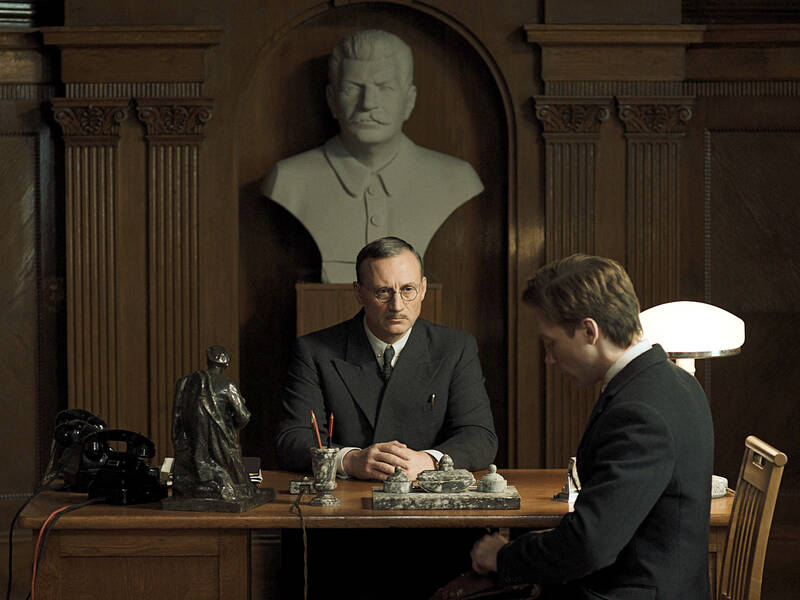
Photo: AP
This is the height of Josef Stalin’s Great Purge, when suspected dissenters and Bolsheviks were rounded up by the NKVD, the secret police, and sent to prison, to the gulag or to death. It was not exactly an opportune time for a young lawyer hardly out of college to stroll into the belly of Stalin’s bureaucratic beast and start asking questions.
Where could such an intriguing idea for a story come from? A prisoner, himself. Two Prosecutors is based on a novella by Georgy Demidov, a physician imprisoned for 14 years in Soviet labor camps. He wrote the book in 1969, but it wasn’t published until 2009, posthumously.
Loznitsa, a leading Ukrainian filmmaker, is also not unfamiliar with Russian state violence. The director, who has lived in Berlin since 2001, is best known for stark documentaries about his native country (including 2024’s The Invasion and 2014’s Maiden) as well as films about Stalinist Russia (2021’s State Funeral and 2019’s The Trial). The cast also includes several Russian actors, including Kuznetsov, who left their country after speaking out against Vladimir Putin’s war with Ukraine.
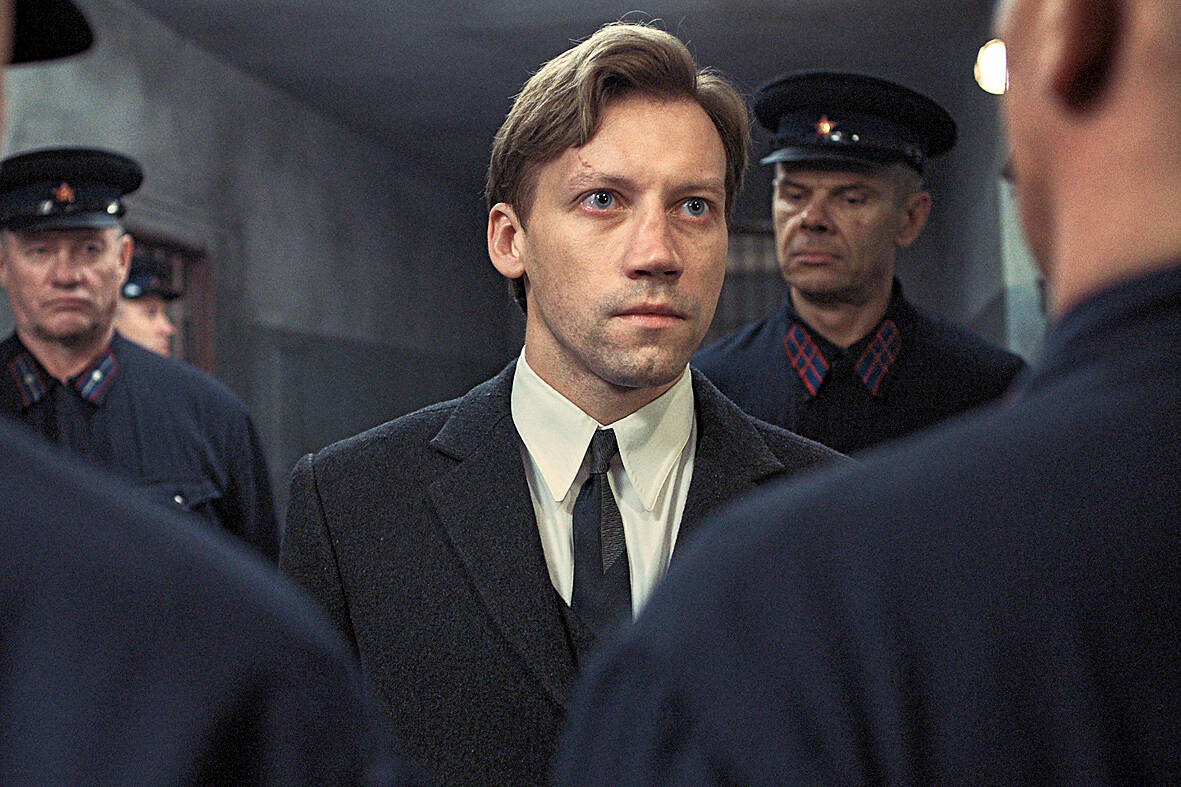
Photo: AP
Two Prosecutors, which debuted last year in competition at the Cannes Film Festival, is Loznitsa’s first fiction film in seven years. But the sober eye he brings to nonfiction is very much at work in Two Prosecutors, a starkly drawn period drama of bleak absurdism.
Beyond any direct lines of connection between past and present, Two Prosecutors has the neatness and timelessness of a parable, one that Gogol might have written, and one that could resonate in any era where the naively courageous challenge fascism.
It’s cunningly, even sinisterly structured. In the first half of the film, we follow Alexander’s prolonged entry into the prison. It takes countless series of doors and locks to get through, and each step is watched suspiciously by stone-faced guards. He’s made to wait for hours and urged to reconsider. “Do you know where your predecessor is now?” he’s asked. Every step forward for Alexander into the totalitarian maw is potentially one step further from his own freedom.
When he does finally, stubbornly reach the prisoner, the encounter is equally foreboding. I.S. Stepniak (a tremendous Aleksandr Filippenko) is himself a former prosecutor, a Bolshevik who vividly relates his story and details Stalin’s crackdown. He isn’t seeking personal justice; he wants the truth out. His bruised body is evidence.
Alexander, knowing local officials can’t be trusted, immediately sets out to Moscow to make a report to the chief prosecutor. In the capital, he encounters just as many hallways and barriers to entry as he did in the prison; Two Prisoners is composed like a sinister palindrome.
Alexander’s second passage through the layers of totalitarian bureaucracy goes similarly. He manages to get a meeting with the prosecutor, Andrey Vyshinsky (Anatoliy Beliy), but we long ago knew that Alexander’s whistle blow is sure to fall on deaf ears, and he is unwittingly sealing his own fate. The walls are closing in on him.

Taiwan’s English education system is being pulled apart by three opposing forces. Bilingual Nation 2030 pulls students toward English and global communication. Artificial Intelligence (AI) readiness pulls them toward digital judgment, verification and AI-mediated work. But Taiwan’s old exam culture pulls them back toward memorization, grammar drills, timed reading and correct answers. If the education system keeps using old exams to define success, it risks producing graduates who are neither genuinely bilingual nor genuinely AI-ready, but trained for tasks machines can already perform. The first force is Bilingual Nation 2030. Launched in 2018, the policy aimed to “help Taiwan’s workforce connect
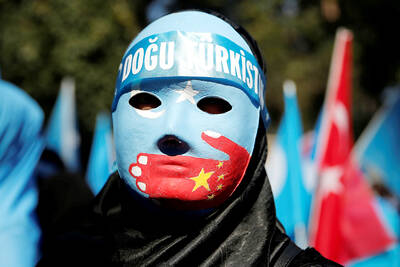
It seems every few days one bumps into one of those “real man” comments in which Taiwan is urged to “face reality” or similar, and “make a deal,” with the speaker implying that soon it will be too late. “Deal” advocates always present themselves as having a superior grip on reality, and the manly ability to make the “hard choice.” Their testosterone-laden language often echoes that of Taiwan sellout advocates. Note that such commentary always specifies a process (“make a deal, work with, make progress”), never the end state of what occupation by a violent authoritarian colonialist state will entail. In

“Taiwan’s Opposition Leader Comes to US With a Message Straight Out of Beijing” read a May 31 headline in the Wall Street Journal. Top US administration officials and members of Congress almost certainly read the WSJ, and if there was a bullet point takeaway that people in Washington should absorb ahead of Chinese Nationalist Party (KMT) Chair Cheng Li-wun’s (鄭麗文) arrival in DC on June 9, that headline is it. The last few columns have discussed this very topic, and the timing is not coincidental. While those top officials likely do not read the Taipei Times, judging by the number
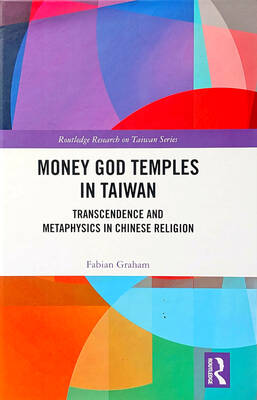
As someone who normally steers clear of books with “transcendence” or “metaphysics” in their subtitles, this reviewer — a casual observer of local belief systems since the 1990s — found Fabian Graham’s Money God Temples in Taiwan a challenging read. Those who’ve only dipped their toes into temple culture will likely need to parse several sections with special care if they’re to keep up with the author, a British ethnographic researcher whose previous books have investigated religious practices among ethnic Chinese in Southeast Asia. This scholarly volume examines a facet of Taiwan’s religious landscape that didn’t exist a century ago, and


 RSS
RSS