


March 30 to April 5
The discovery of 32 charred bodies on a smoldering ferry in China’s Qiandao Lake shocked the nation, as 24 were Taiwanese tourists.
For over two weeks, Chinese authorities insisted that the blaze was an accident and kept silent about the details, igniting outrage in Taiwan over the handling of the investigation and treatment of the victims’ loved ones.
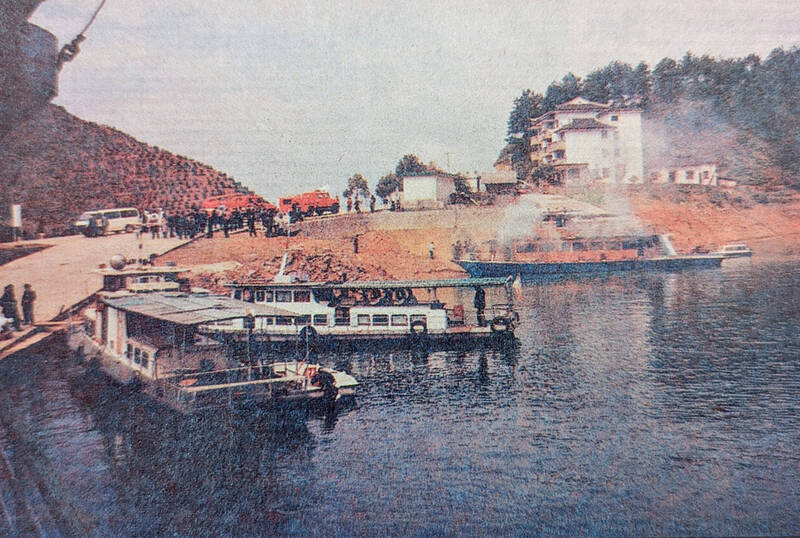
Photo: File
By the time authorities revealed that the deaths were a result of robbery and murder, the tragedy had already escalated into a diplomatic row, with Taiwan threatening to ban tourism to China, curb investment and cancel planned cross-strait exchanges and performances.
Three local young men were arrested, swiftly convicted of carrying out the robbery and murders and executed soon after. Taiwan refused to accept the verdict, saying key questions remained unanswered and raising suspicions of a cover-up.
The tragedy occurred at a time when cross-strait relations were only beginning to thaw, after Taiwan lifted its 38-year ban on travel to China in 1987. Tourism and investment dropped the following year, and public opinion polls reflected rising distrust of Beijing.
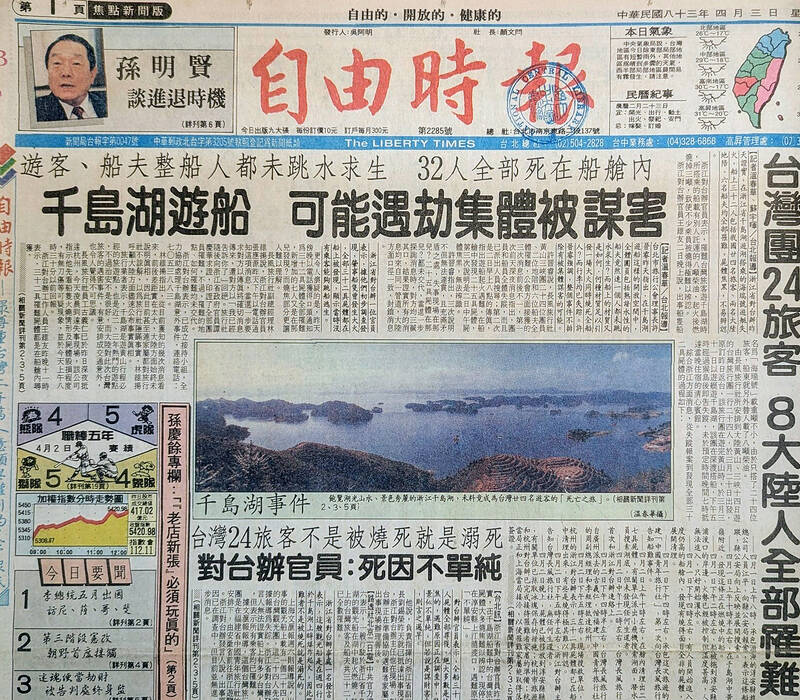
Photo courtesy of National Central Library
TRAGIC DISCOVERY
Martial law was lifted in Taiwan in July 1987, and by November people were allowed to visit relatives in China. Tourism followed in the early 1990s, with more than 1.5 million Taiwanese visiting China in 1993, the Liberty Times (Taipei Times’ sister paper) reported.
By 1994, group tours to China were declining due to safety concerns. Travel operators told the newspaper that outbound trips had dropped from about 20 per month to around five.
Graphic: File
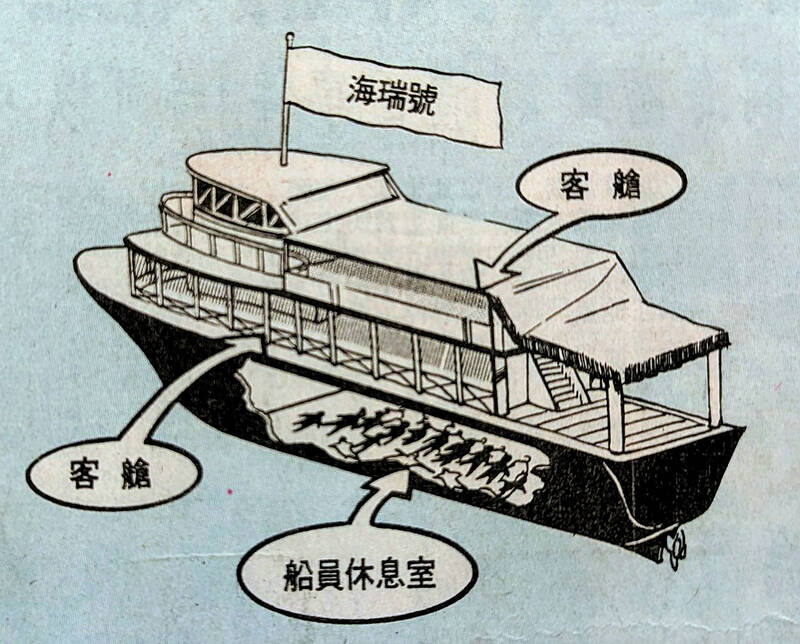
The tour group involved in the tragedy left Taiwan on March 20, 1994 for a two-week trip. On March 31, they embarked on a cruise of Qiandao Lake aboard the Hairui (海瑞), but they never arrived at their hotel that evening. The next morning, the local tour operator reported the boat missing.
Authorities soon located the vessel burning in the lake. They put out the fire and towed it to shore, and when it became cool enough to board, they found the bodies — all crammed inside the 17.4m2 crew cabin. After a lengthy search and rescue operation, Chinese authorities confirmed to Taiwan the following day that there were no survivors.
The incident was still being framed as an accident, but the Taipei Association of Travel Agents had already raised key questions: Why was everyone onboard inside the crew cabin? Why had no one attempted to jump into the water to escape, especially the boat operators who were experienced swimmers? How could a metal vessel burn so extensively? Why had all the luggage disappeared?
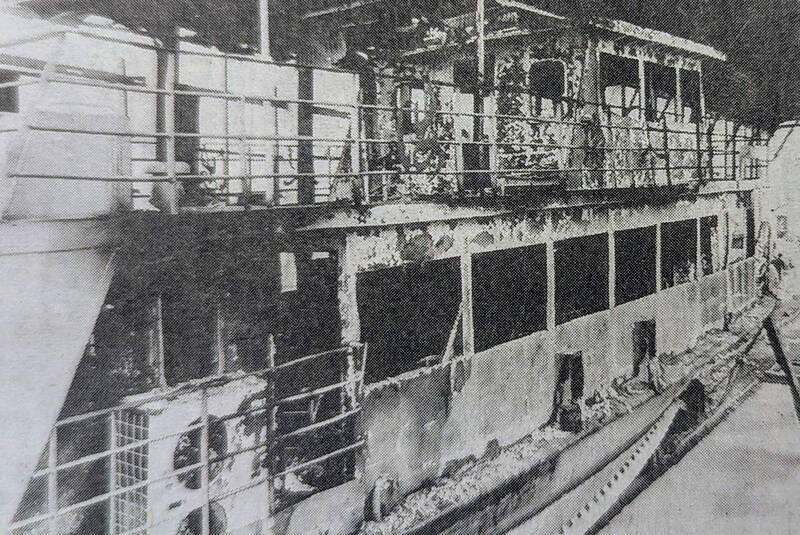
Photo: Reuters
They received no answers.
BURNING SUSPICIONS
The grieving relatives arrived on April 4, but Taiwan Straits Exchange Foundation (SEF) personnel were denied entry to assist them. The families told the Liberty Times that they were closely followed and constantly monitored. Upon seeing the bodies, they became upset that autopsies had already been conducted without their consent, and they were not permitted to bring the remains back home. They reported missing valuables and suspicious wounds, yet were still told that the fire was an accident. Many of the bodies, they said, were burned only on the upper parts, further fueling suspicion of foul play.
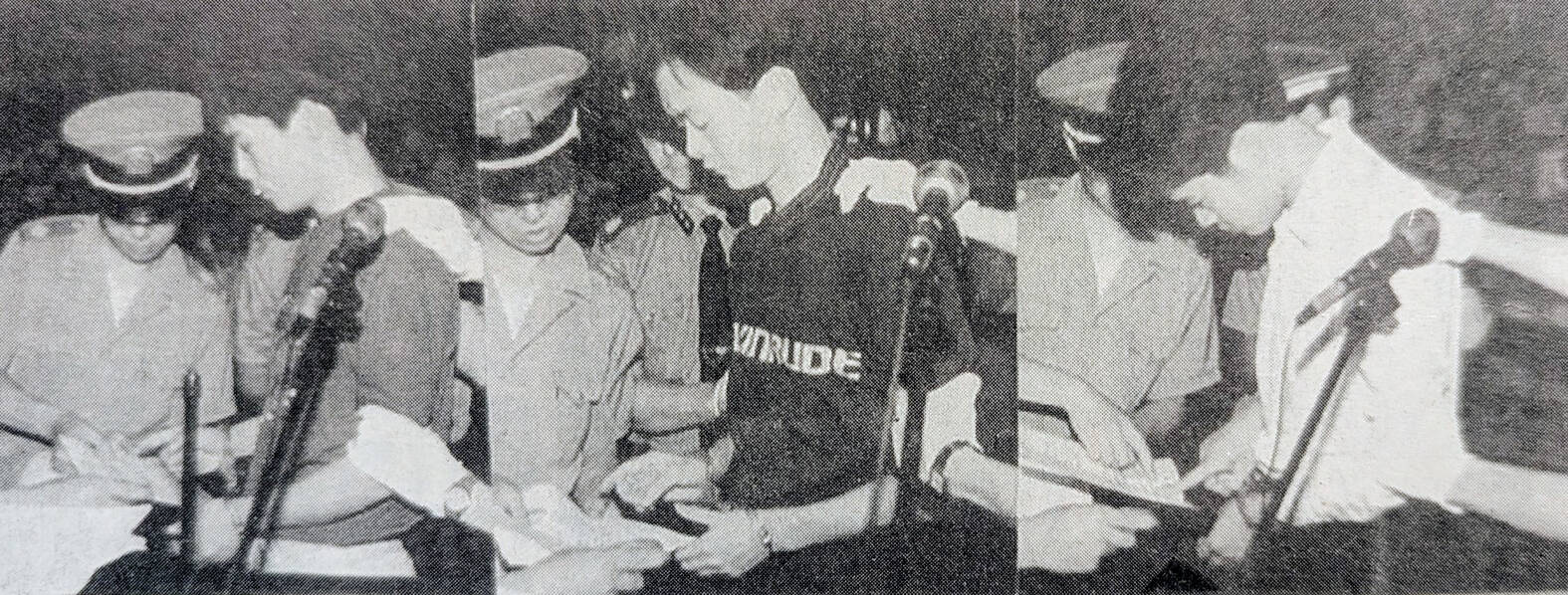
Photo: File
The families also reported that the vessel had been repainted, and they saw what appeared to be bullet holes in the hull. Furthermore, they alleged that they were confined in the hotel until they finally agreed to have the bodies cremated in China.
When the ashes were returned to Taiwan, the cause of death was listed simply as “died after the Hairui caught fire.”
On April 9, a protest was staged in front of the Chinese embassy in Washington DC. Taiwan’s Mainland Affairs Council (MAC) announced that it would suspend visits by 17 Chinese groups scheduled to appear in Taiwan later that year, and temporarily halt all cultural and educational exchanges.
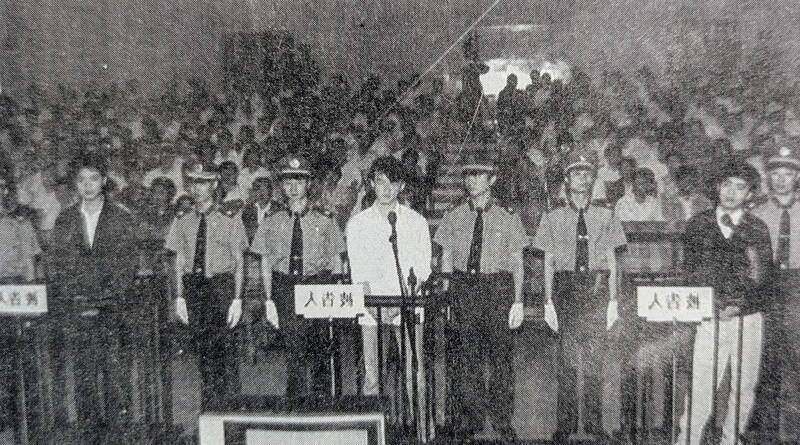
Photo: File
A travel ban was announced the following day, taking effect May 1. Most Taiwanese planning to visit China before then had already canceled their trips, the Liberty Times reported.
CASE SOLVED?
Chinese authorities broke their silence on April 16, announcing that they had solved the “robbery, arson and murder” case and apprehended three suspects: Wu Lihung (吳黎洪), 22, Yu Aijun (余愛軍), 23, Hu Zhihan (胡志瀚), 24. None had criminal records.
This was met with further outrage. The Executive Yuan said that if a criminal investigation was underway, it meant that the authorities already knew that the blaze wasn’t an accident. Meanwhile, National Security Bureau officials claimed intelligence suggested that the robbery was carried out by between eight and 10 suspects, including members of the People’s Liberation Army, and the three were merely scapegoats.
Then-Mainland Affairs Council minister Huang Kun-hui (黃昆輝) said he was “not satisfied” with the explanation and did not believe it, continuing to raise further questions.
In May, SEF officials and experts arrived in China. After several rounds of intense questioning, they were given the following account: Wu was the mastermind, plotting the crime since September 1993. They borrowed the shotguns from a friend, and targeted the Hairui that morning.
That night, Hu and Yu boarded the ship, subdued the crew and herded all passengers into the crew cabin, where they took their valuables. They then locked the cabin and tried to sink the ship, but could not get water to enter. They then attempted to destroy it with explosives, but that also failed. Finally, they returned to their motorboat to get gasoline and set the vessel on fire. As the passengers screamed inside and tried to force open the metal door, the perpetrators fired several shots — accounting for the bullet holes.
Families and officials remained skeptical that two men could subdue 32 with shotguns, which had to be reloaded between shots. They also demanded explanations for the tampering of evidence, including the ship and passengers’ belongings.
The trial began on June 9, with no Taiwanese reporters or officials allowed inside. Recording was banned, and reporters were charged US$100 for a 20-minute edited video.
The three men reportedly gave nearly identical testimonies, responding fluently to the prosecution’s questions as if their statements had been rehearsed, further raising eyebrows.
On June 19, they were executed — leaving many questions still unanswered.
Taiwan in Time, a column about Taiwan’s history that is published every Sunday, spotlights important or interesting events around the nation that either have anniversaries this week or are tied to current events.
The breakwater stretches out to sea from the sprawling Kaohsiung port in southern Taiwan. Normally, it’s crowded with massive tankers ferrying liquefied natural gas from Qatar to be stored in the bulbous white tanks that dot the shoreline. These are not normal times, though, and not a single shipment from Qatar has docked at the Yongan terminal since early March after the Strait of Hormuz was shuttered. The suspension has provided a realistic preview of a potential Chinese blockade, a move that would throttle an economy anchored by the world’s most advanced and power-hungry semiconductor industry. It is a stark reminder of
May 11 to May 17 Traversing the southern slopes of the Yushan Range in 1931, Japanese naturalist Tadao Kano knew he was approaching the last swath of Taiwan still beyond colonial control. The “vast, unknown territory,” protected by the “fierce” Bunun headman Dahu Ali, was “filled with an utterly endless jungle that choked the mountains and valleys,” Kano wrote. He noted how the group had “refused to submit to the measures of our authorities and entrenched themselves deep in these mountains … living a free existence spent chasing deer in the morning and seeking serow in the evening,” even describing them as
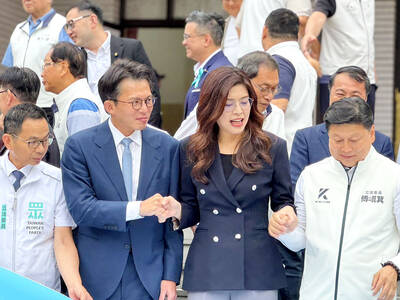
As a different column was being written, the big news dropped that Chinese Nationalist Party (KMT) caucus whip Fu Kun-chi (傅?萁) announced that negotiations within his caucus, with legislative speaker Han Kuo-yu (韓國瑜) of the KMT, party Chair Cheng Li-wun (鄭麗文), Taichung Mayor Lu Shiow-yen (盧秀燕) and Taiwan People’s Party (TPP) Chair Huang Kuo-chang (黃國昌) had produced a compromise special military budget proposal. On Thursday morning, prior to meeting with Cheng over a lunch of beef noodles, Lu reiterated her support for a budget of NT$800 or NT$900 billion — but refused to comment after the meeting. Right after Fu’s
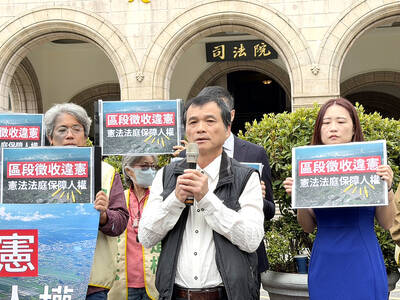
What government project has expropriated the most land in Taiwan? According to local media reports, it is the Taoyuan Aerotropolis, eating 2,500 hectares of land in its first phase, with more to come. Forty thousand people are expected to be displaced by the project. Naturally that enormous land grab is generating powerful pushback. Last week Chen Chien-ho (陳健和), a local resident of Jhuwei Borough (竹圍) in Taoyuan City’s Dayuan District (大園) filed a petition for constitutional review of the project after losing his case at the Taipei Administrative Court. The Administrative Court found in favor of nine other local landowners, but


 RSS
RSS