


In 2012, the US Department of Justice (DOJ) heroically seized residences belonging to the family of former president Chen Shui-bian (陳水扁), “purchased with the proceeds of alleged bribes,” the DOJ announcement said. “Alleged” was enough. Strangely, the DOJ remains unmoved by the any of the extensive illegality of the two Leninist authoritarian parties that held power in the People’s Republic of China (PRC) and Taiwan. If only Chen had run a one-party state that imprisoned, tortured and murdered its opponents, his property would have been completely safe from DOJ action.
I must also note two things in the interests of completeness. First, none of the parties involved in bribing Chen forfeited any of their numerous assets in the US, nor did their families. Second, as the US was announcing this, Chen’s prison warden was attending a dinner with powerful Chinese Nationalist Party (KMT) politicians, such as vice president Wu Den-yih (吳敦義) and Chen Wei-min (陳尉民), a former Bamboo Union gang mafia boss. Clearly, historical irony is the main form of communication between gods and men.
This egregiously unjust act by the DOJ has been much in my mind lately as I listen to complaints from US legislators and from the American Institute in Taiwan (AIT), the officially unofficial US representative office, about the legislators from the two pro-Beijing parties, the KMT and the Taiwan People’s Party (TPP), who are blocking the military budget. For example, last week Senator Roger Wicker of Mississippi said on X: “I’m disappointed to see Taiwan’s opposition parties in parliament slash President [William} Lai’s (賴清德) defense budget so dramatically,” adding, “The original proposal funded urgently needed weapons systems. Taiwan’s parliament should reconsider — especially with rising Chinese threats.”
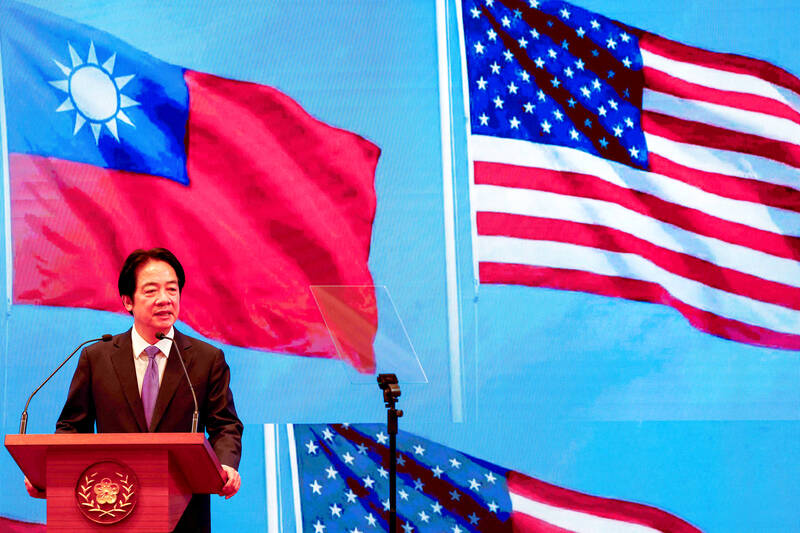
Photo: Reuters
“Disappointed?” In Taiwan “disappointment” is pronounced “backlog” — to the tune of US$21 billion in weapons systems that have yet to be delivered.
Similarly, Senator Dan Sullivan stated on X: “I’ve warned before — short changing Taiwan’s defense to kowtow to the [Chinese Communist Party] CCP is playing with fire.” What fire is coming, Senator? Nothing but words so far.
The Liberty Times, the Taipei Times’ sister paper, compiled a list of 7 times since November that AIT had emphasized the importance of the defense budget, Taiwan defense spending and US-Taiwan defense cooperation, including AIT Director Raymond Greene’s much-repeated comment that “freedom is not free.”
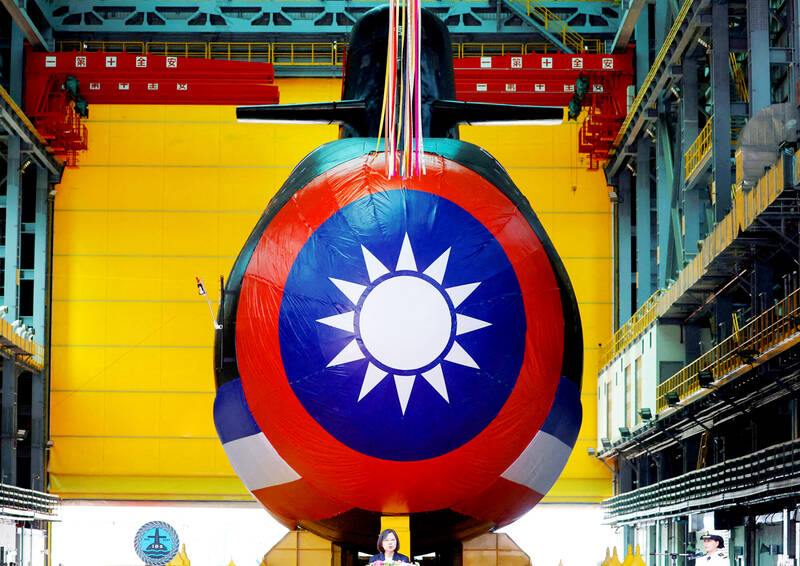
Photo: Reuters
The US, alas, does not appear to realize that this comment points in both directions: the US is going to have to impose costs on itself if it wants Taiwan’s pro-China parties to move in the right direction. Thus far, it has been reluctant to do so.
HARDBALL
US official criticism of the pro-China parties over the defense budget, both direct and indirect, is commonly reported in the media. What is lacking is US action. At the moment, the US is simply rewarding those parties by doing nothing concrete to compel them to move on the budget. And behavior that is rewarded is repeated.
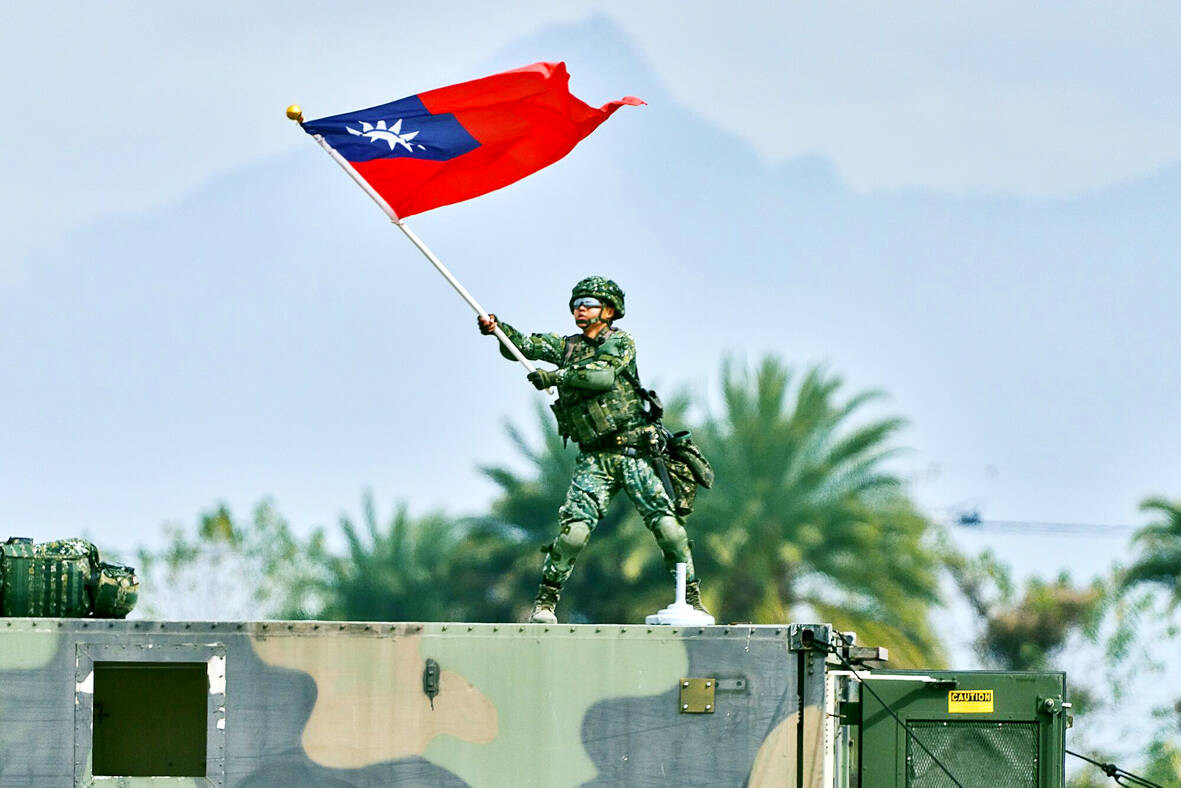
Photo: Bloomberg
The US has many powerful levers it could use to get the pro-China parties to move. On X followers of US legislators who post on this issue typically respond with requests that the US block or terminate visas for politicians from the KMT and TPP and for their families. Consider how many relatives of powerful KMT members have green cards and student visas. Could pressure be applied there?
Even a go-slow on visas for politicians and their families would be a low-grade signal to these parties that US tolerance for their behavior is thin. That would give the US latitude for scaling a response, if their behavior doesn’t change. Limiting visas would also be a fitting way to signal US displeasure with the flow of KMT visits to the PRC, which give every appearance of enabling coordination of policy between PRC authorities and the KMT. Such coordination is good neither for the US nor for Taiwan. Time to act on it, and speak loudly about it.
Another action the US could take is to suspend meetings with KMT and TPP officials. Last month TPP Chair Huang Kuo-chang (黃國昌) led a TPP delegation to Washington, where he met with officials from the US National Security Council (NSC) and AIT. Predictably, the defense budget was discussed. The TPP has long indicated it will not play ball, making such meetings a waste of time. The US is simply providing the two parties with amusing free entertainment and satisfying external validation of their power. Just stop.
Some have called for family members of KMT and TPP politicians to be stripped of their US citizenship. I do not support this: stripping naturalized citizens of their citizenship is grossly antithetical to American values. Besides, surely it would be more effective for the US to somehow publicize which politicians’ family members are US citizens, with hints that more revelations are forthcoming.
REMINDERS
The public could use some periodic reminders that while the KMT is willing to call down the PRC and its troops on Taiwan, it has built its elites boltholes in the west. That would also help blunt the oft-heard KMT propaganda that Democratic Progressive Party (DPP) politicians will be helicoptered to safety under US protection in the event of a PRC attack.
Indeed, one way the US could respond to KMT and TPP obstructionism is to more pointedly and bluntly address their numerous propaganda claims in AIT and US official communications. That would be a small thing, yet it would indicate a hardening that could be dialed up or scaled back, as necessary. More difficult, but potentially powerful, would be to put pressure on the businesses of the big businessmen backing the KMT.
Another failure of the US criticisms is the isolation of the defense budget from the rest of the KMT/TPP coalition’s attacks on governance. The budget remains blocked, which means that other budget items important to the US, such as Taiwan government purchases of US products, or funding for non-military cooperative programs, remain in limbo. The US should expand its criticisms to include the entirety of KMT/TPP obstructionism. Properly spending defense funds requires that the government be fully fed and watered.
Readers may contend that this would be burning bridges to the KMT and TPP that the US might need. Anyone with extensive experience listening to KMTers speak privately and candidly (i.e. drunkenly) about the US knows that KMT politicians and supporters who consider themselves Chinese fear and hate the US for usurping China’s rightful place in the universe. In their minds there are no bridges to the US.
I know that some are thinking of more hardball tactics involving tax audits or asset forfeiture investigations. I do not support that sort of abuse of power, especially since many of the targets would be US citizens.
Nor am I requesting that the US government seize the assets of KMT politicians and their families. That particular act of justice should have been performed long before anyone in the US had ever heard of Chen Shui-bian. It should not come as cheap retaliation for the failure of the current KMT and TPP to pass the defense budget.
Regardless, the time for talk has passed. The US must act.
Notes from Central Taiwan is a column written by long-term resident Michael Turton, who provides incisive commentary informed by three decades of living in and writing about his adoptive country. The views expressed here are his own.
The breakwater stretches out to sea from the sprawling Kaohsiung port in southern Taiwan. Normally, it’s crowded with massive tankers ferrying liquefied natural gas from Qatar to be stored in the bulbous white tanks that dot the shoreline. These are not normal times, though, and not a single shipment from Qatar has docked at the Yongan terminal since early March after the Strait of Hormuz was shuttered. The suspension has provided a realistic preview of a potential Chinese blockade, a move that would throttle an economy anchored by the world’s most advanced and power-hungry semiconductor industry. It is a stark reminder of
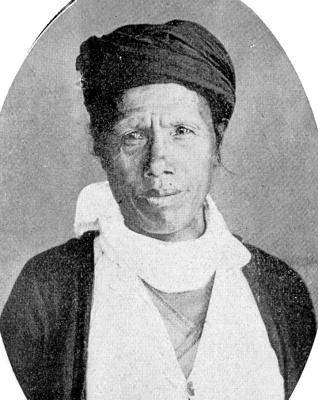
May 11 to May 17 Traversing the southern slopes of the Yushan Range in 1931, Japanese naturalist Tadao Kano knew he was approaching the last swath of Taiwan still beyond colonial control. The “vast, unknown territory,” protected by the “fierce” Bunun headman Dahu Ali, was “filled with an utterly endless jungle that choked the mountains and valleys,” Kano wrote. He noted how the group had “refused to submit to the measures of our authorities and entrenched themselves deep in these mountains … living a free existence spent chasing deer in the morning and seeking serow in the evening,” even describing them as
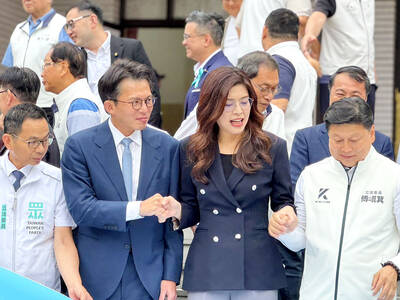
As a different column was being written, the big news dropped that Chinese Nationalist Party (KMT) caucus whip Fu Kun-chi (傅?萁) announced that negotiations within his caucus, with legislative speaker Han Kuo-yu (韓國瑜) of the KMT, party Chair Cheng Li-wun (鄭麗文), Taichung Mayor Lu Shiow-yen (盧秀燕) and Taiwan People’s Party (TPP) Chair Huang Kuo-chang (黃國昌) had produced a compromise special military budget proposal. On Thursday morning, prior to meeting with Cheng over a lunch of beef noodles, Lu reiterated her support for a budget of NT$800 or NT$900 billion — but refused to comment after the meeting. Right after Fu’s
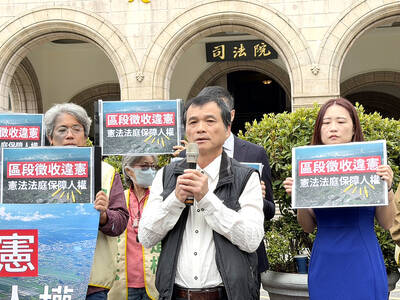
What government project has expropriated the most land in Taiwan? According to local media reports, it is the Taoyuan Aerotropolis, eating 2,500 hectares of land in its first phase, with more to come. Forty thousand people are expected to be displaced by the project. Naturally that enormous land grab is generating powerful pushback. Last week Chen Chien-ho (陳健和), a local resident of Jhuwei Borough (竹圍) in Taoyuan City’s Dayuan District (大園) filed a petition for constitutional review of the project after losing his case at the Taipei Administrative Court. The Administrative Court found in favor of nine other local landowners, but


 RSS
RSS