


As much as I’m a mountain person, I have to admit that the ocean has a singular power to clear my head. The rhythmic push and pull of the waves is profoundly restorative. I’ve found that fixing my gaze on the horizon quickly shifts my mental gearbox into neutral.
I’m not alone in savoring this kind of natural therapy, of course. Several locations along Taiwan’s coast — Shalun Beach (沙崙海水浴場) near Tamsui and Cisingtan (七星潭) in Hualien are two of the most famous — regularly draw crowds of sightseers. If you want to contemplate the vastness of the ocean in true solitude, however, you’ll need to travel further from the big cities. Here are four places where an individual seeking seclusion has a decent chance of finding a sizable stretch of seaside all to themselves.
DONGAO BAY
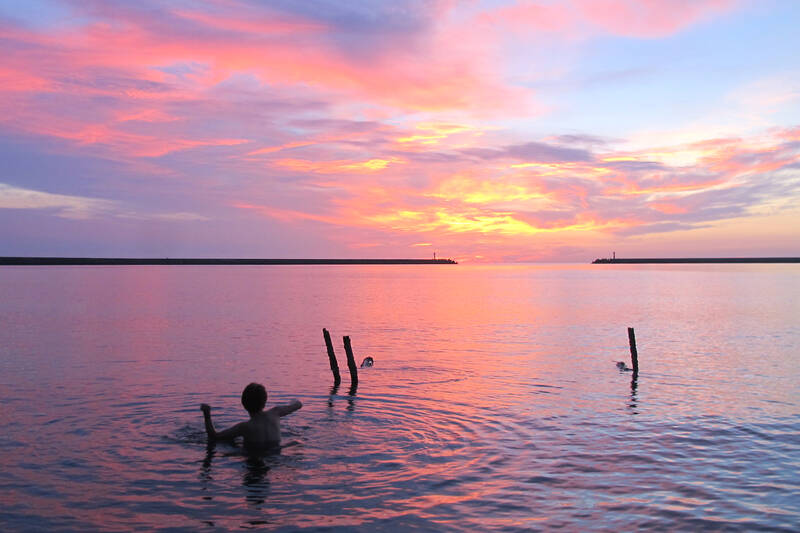
Photo by Steven Crook
Getting to Dongao (東澳) in Yilan County is straightforward. There are several Taiwan Railway Corp services from Taipei each day; most of them take around two and a quarter hours. From the train station, it’s a 20-minute walk to Dongao Bay (東澳灣), where the beach is around 2km long.
At the bay’s northern extremity, Wuyan Cape (烏岩角) is notable for its sea cave and peninsula. When the sea is placid, kayakers paddle close to the former. If you don’t have a boat, reaching the “secret beach” beside the latter from the Suhua Highway (蘇花公路) is said to involve at least three hours of hiking and lowering yourself down on fixed ropes.
The southernmost point is Wushibi (烏石鼻). For all intents and purposes, it’s inaccessible, but the nearby fishing base of Fenniaolin (粉鳥林) is something of a tourist magnet. Fenniaolin Cove (粉鳥林奇岩海灣), adjacent to the little port, is well worth a look.
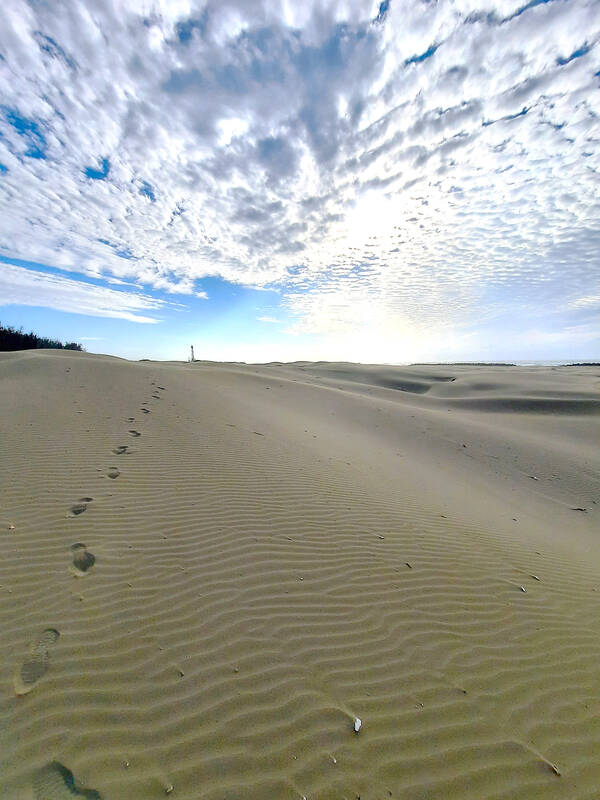
Photo by Steven Crook
The central part of the bay, near the mouth of the Dongao Creek (東澳溪), is largely deserted save for a few anglers. The beach consists of large pebbles, and for most of the year it’s either baking hot or swept by cold winds. Dress accordingly and consider bringing an umbrella to shield yourself from the sun.
SINLAN IN TAITUNG
Dulan (都蘭) is one of the best known destinations in Taitung County, thanks to its reputation as a creative hotspot and bohemian haven. Just over 3km further south, the tiny village of Sinlan (新蘭) is a very different place. It has a small fishing harbor, a couple of homestays, a bus stop where Taitung-Chenggong (成功) and Taitung-Jingpu (靜浦) services can be boarded, and more than enough beach for those who have no wish to be near other humans.
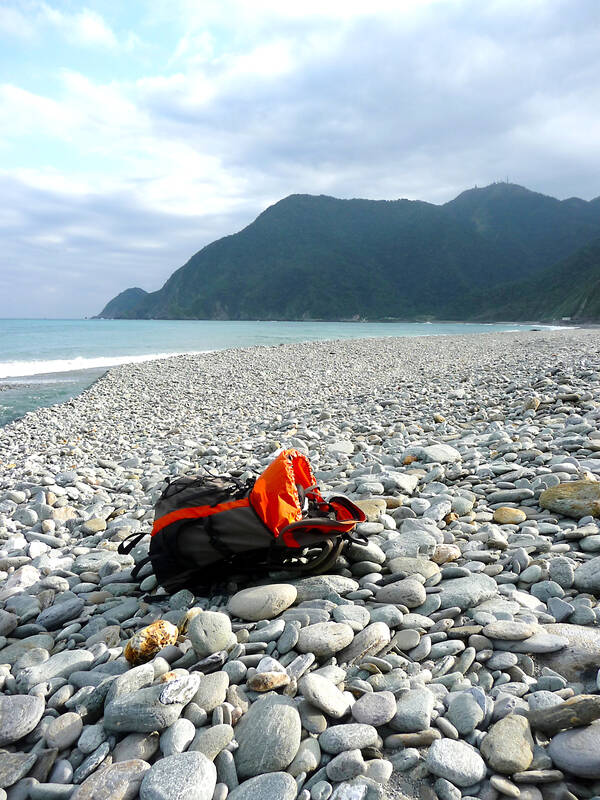
Photo by Steven Crook
Where it isn’t rocky or pebbly, the shoreline is covered by the coarse black sand that’s common along Taiwan’s east coast. Retreating tides expose a platform-like intertidal zone dotted with small pools of seawater. Tide-pooling enthusiasts say it’s easy to find sea urchins, shellfish, and limpets, as well as small fish, without having to go swimming or snorkeling. Anyone planning to look for sea creatures should wear slip-resistant footwear, and get started at least 30 minutes before the lowest tide, to ensure they’re not caught out by a rising tide.
For tide times, go to the Web site of the Central Weather Administration (www.cwa.gov.tw). Click on ‘Marine’, then ‘Tidal Forecast.” Under “Chenggong-Taitung,” you’ll see details for the next 30 days.
JIANGJUN IN TAINAN
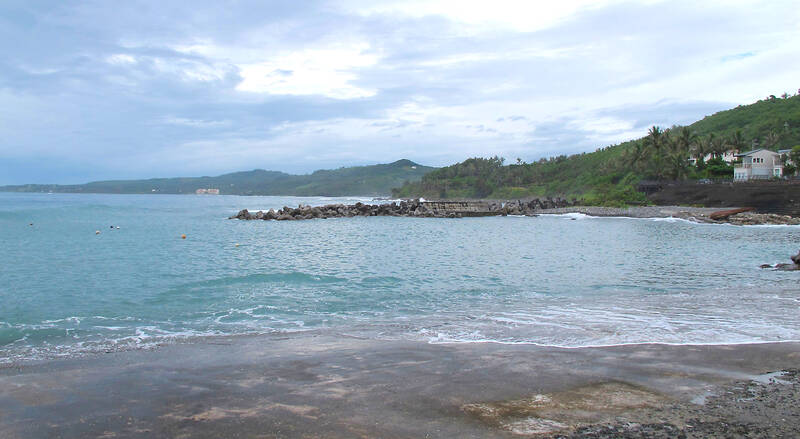
Photo by Steven Crook
Despite the authorities’ best efforts, Jiangjun (將軍) hasn’t really caught on as a place seafood-hungry Taiwanese flock to. The auction hall beside the fishing harbor gets quite lively early in the afternoon, but by four o’clock almost everyone has left.
Between the harbormouth and the southern breakwater, a strip of gray sand separates the water and a windbreak forest. It holds no appeal during the middle of the day, but this location has given me some of the best sunsets I’ve ever experienced. It’s probably no coincidence that Qingkunshen Fan-shaped Salt Fields (青鯤鯓扇形鹽田) — one of the south’s most popular sundown-viewing venues — is just 1km away.
The beach near the docks isn’t a great swimming spot, but that doesn’t stop the occasional individual from enjoying a dip. So let the crowds jostle for photos at the salt fields, while you have this oasis of quiet all to yourself.
THE ‘SAHARA’ OF TAINAN
Immediately north of the unmanned lighthouse that stands at the westernmost point of Taiwan (see “Lakeside to seaside, by bike and car” in the July 16, 2021 edition of this newspaper), Dingtoue Sandbar (頂頭額沙洲) is an expanse of dunes nearly 1.5km long and up to 300m across.
To get to it, you’ll need a vehicle, as the nearest bus stop is a daunting 6km trek away, beside Taijiang National Park’s (台江國家公園) Black-faced Spoonbill Protected Area (黑面琵鷺保育區). Driving here from central Tainan takes close to an hour, which is one reason why relatively few make the trip, despite the beguiling landscape. Some are put off because they’ve heard there’s no shade whatsoever, and that it’s impossible to walk any distance across the sand without your shoes filling with grit. Both complaints are accurate, yet the scenery is utterly different from 99-plus percent of Taiwan and, simply for that, worth seeing.
On top of sun protection, bring sunglasses or safety goggles, especially if it’s likely to be windy. Instead of approaching the sandbar from the lighthouse, it’s also possible to get there by following the road that goes southwest from Nanwan Wharf (南灣碼頭). You needn’t go to the very end of the road; after 800m, you’ll come to a truly squalid little harbor, and you’ll see the dunes to the northwest.
Steven Crook has been writing about travel, culture and business in Taiwan since 1996. He is the author of Taiwan: The Bradt Travel Guide and co-author of A Culinary History of Taipei: Beyond Pork and Ponlai.
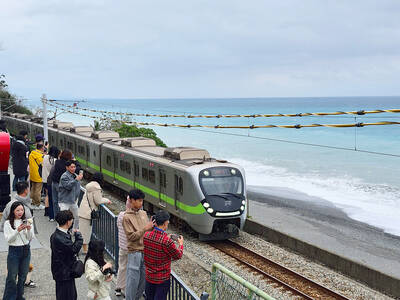
The small platform at Duoliang Train Station in Taitung County’s Taimali Township (太麻里) served villagers from 1992 to 2006, but was eventually shut down due to lack of use. Just 10 years later, the abandoned train station had become widely known as the most beautiful station in Taiwan, and visitors were so frequent that the village had to start restricting traffic. Nowadays, Duoliang Village (多良) is known as a bit of a tourist trap, with a mandatory, albeit modest, admission fee of NT$10 giving access to a crowded lane of vendors with a mediocre view of the ocean and the trains

For many people, Bilingual Nation 2030 begins and ends in the classroom. Since the policy was launched in 2018, the debate has centered on students, teachers and the pressure placed on schools. Yet the policy was never solely about English education. The government’s official plan also calls for bilingualization in Taiwan’s government services, laws and regulations, and living environment. The goal is to make Taiwan more inclusive and accessible to international enterprises and talent and better prepared for global economic and trade conditions. After eight years, that grand vision is due for a pulse check. RULES THAT CAN BE READ For Harper Chen (陳虹宇), an adviser

Traditionally, indigenous people in Taiwan’s mountains practice swidden cultivation, or “slash and burn” agriculture, a practice common in human history. According to a 2016 research article in the International Journal of Environmental Sustainability, among the Atayal people, this began with a search for suitable forested slopeland. The trees are burnt for fertilizer and the land cleared of stones. The stones and wood are then piled up to make fences, while both dead and standing trees are retained on the plot. The fences are used to grow climbing crops like squash and beans. The plot itself supports farming for three years.
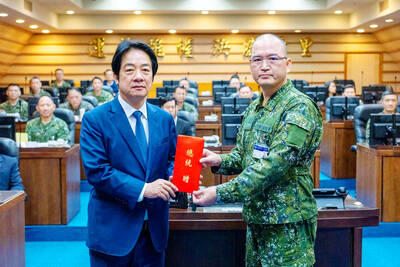
President William Lai (賴清德) on Nov. 25 last year announced in a Washington Post op-ed that “my government will introduce a historic US$40 billion supplementary defense budget, an investment that underscores our commitment to defending Taiwan’s democracy.” Lai promised “significant new arms acquisitions from the United States” and to “invest in cutting-edge technologies and expand Taiwan’s defense industrial base,” to “bolster deterrence by inserting greater costs and uncertainties into Beijing’s decision-making on the use of force.” Announcing it in the Washington Post was a strategic gamble, both geopolitically and domestically, with Taiwan’s international credibility at stake. But Lai’s message was exactly


 RSS
RSS