


What are the factors to watch going forward this election year?
In 2014, following the Sunflower movement, the political ground shifted, with the center of gravity moving closer to the pro-Democratic Progressive Party (DPP), pan-green camp. They won in a landslide, taking 13 of the 22 “big six” metropolis mayorships and county commissioners, leaving the Chinese Nationalist Party (KMT) pan-blue camp with just six.
The “Han wave” swept the 2018 election, with a charismatic Han Kuo-yu (韓國瑜) energizing and exciting the pan-blues, propelling the KMT to sweep 15 top jobs and leaving the DPP in the dust with only six.
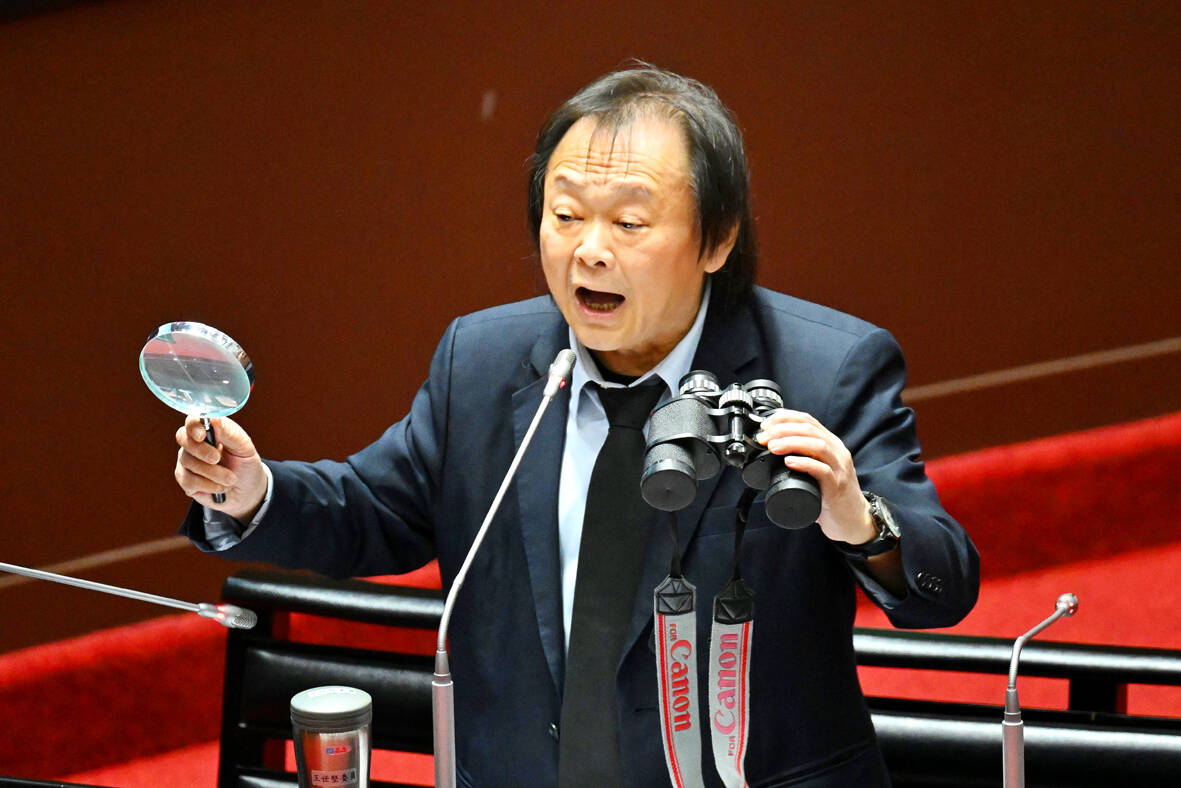
Photo: Chen Yi-kuan, Taipei Times
The 2022 election was less enthusiastic, and is largely remembered for a string of thesis plagiarism scandals that spread across the political spectrum. Mostly, this election was a strategic showdown between then-DPP chairwoman and president Tsai Ing-wen (蔡英文) and then-KMT chairman Eric Chu (朱立倫). Both leaders skipped the traditional primaries and dictated their choices for candidates. Ultimately, Chu strategically outclassed Tsai, who made some truly surprising blunders.
STRIKING STABILITY IN PARTY SUPPORT
In this column on Oct. 30 (“Taiwan’s political equilibrium shaken, but not stirred” page 12), I pointed out that support for the three major parties in the last few years has been roughly stable, despite the uncertainty and volatility in the current environment that might create the conditions for a political shift.
At the time, the DPP had lost support following the recall elections, but it appeared to be trending back towards their recent averages. Some polls showed them returning to this range earlier, but using the apples-to-apples comparison of Formosa polling, this happened in January.
Formosa polling on “view favorably” shows the DPP ahead at 43.9 percent, with “view unfavorably” at 45 percent. The KMT has favorables at 34.4 percent and unfavorables at 49.9 percent, while the Taiwan People’s Party (TPP) sits at 30.8 percent and 51.8 percent, respectively.
Why have the support levels for the three major parties remained so stable? The simplest answer is that it appears that most people have made up their minds and have only temporarily changed in response to events — such as the scandals that broke out around the TPP in August 2024 and the recalls in the summer of last year — but ultimately have returned to supporting their respective parties.
While conditions would seem to be ripe for a political realignment, the data is not showing anything of the sort. It is possible that a popular wave of some kind could arise, as happened in 2014 and 2018, but so far, indications are that this election more closely resembles 2022.
OLDSTER-LED POPULAR MOVEMENT?
It is tempting to think that a youth-led popular movement might rise up again this year, but there are several factors counting against it happening. First, there are not very many young voters.
The population aged between 20 and 29 is about 2.7 million, and those between 30 and 39 numbering about 3.2 million. By comparison, there are about 4 million in their 40s, 3.6 million in their 50s, 3.5 million in their 60s, and maybe another 3.5 million 70 and older.
For a youth-led movement to arise, they are going to have to punch far above their weight and inspire other generations to back them, at which point would it still be a youth-led movement?
Intriguingly, the idea that movements must be youth-led is outdated thinking. The “Han wave” was strongest among those in their 50s and 60s, especially women.
Anecdotally, the 2024 “Bluebird movement” was dominated by those in their 30s and 40s, with women overwhelmingly leading the charge. In one interview, a recall campaign leader described how they practically had to beg men to join them, appealing to them to join campaigners on the streets to help ward off harassment.
The TPP’s “little sprouts” movement in 2023 and 2024 that arose to support the presidential campaign of Ko Wen-je (柯文哲) was dominated by people in their 20s and 30s, leaning towards men. The male bent of this movement had much to do with the characters involved, and the issues raised.
They especially appealed to young men feeling hopeless about the future. Their leaders, like Ko also have a very male energy about them. Ko has repeatedly made disparaging and demeaning comments about women.
Though not organized directly by the TPP, the summer 2023 “Fairness and Justice to Save Taiwan” (公平正義救台灣), organized by future TPP Chairman Huang Kuo-chang (黃國昌) and the hypermasculine Holger Chen (陳之漢 aka Guan Zhang 館長) in practice turned into a TPP rally, dominated by young men, which helped set the tone for the “little sprouts.”
Yet, neither the Bluebird or “little sprout” movements looks like a very promising model going forward.
While the current uncertainty creates fertile ground for a political shift, the current mood is cynical and demoralized. The “little sprouts” movement failed to swing the presidential election, and the “Bluebird movement” flamed out without accomplishing much of anything.
The thing with politics, though, is that you never know what is around the corner. Perhaps someone will rise up with a new message, inspiring new hope.
That character would likely need to be blunt-spoken and optimistic, with a unique flair, like Han Kuo-yu or Ko Wen-je did in the past. The only politician currently active I can think of that could fit the bill is DPP Legislator Wang Shih-chien (王世堅), but he shows little appetite for it.
PUNISHING DYSFUNCTION?
Another macro trend to watch is the political dysfunction in the national government. Under pressure from the recalls, last year the KMT eventually backed down on many of their obstructionist tactics and unfroze budgets, but will they and their TPP allies do so this year? While the pressure of upcoming elections be enough for the same to happen this year?
If the dysfunction continues, who will voters blame? Will the trend be to pick one side or the other, and punish one side at the ballot box? Or will the status quo hold, with backers of each party believing the narratives those parties feed them? Or will they ignore it, considering local governments to be a separate issue?
Taiwanese voters often do punish parties at the polls, such as in 2014 and 2018 — but not always. In both of those years, it was a reaction to the ruling party, but could it also happen to the opposition for being obstructionist?
For now, it appears this election will be a partisan and strategic showdown to win over an unenthusiastic electorate, as was the case in 2022.
But then, politics is full of surprises.
Donovan’s Deep Dives is a regular column by Courtney Donovan Smith (石東文) who writes in-depth analysis on everything about Taiwan’s political scene and geopolitics. Donovan is also the central Taiwan correspondent at ICRT FM100 Radio News, co-publisher of Compass Magazine, co-founder Taiwan Report (report.tw) and former chair of the Taichung American Chamber of Commerce. Follow him on X: @donovan_smith.
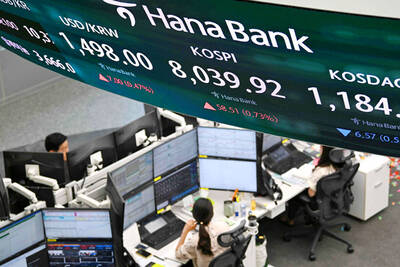
Taiwan’s overtaking of South Korea in GDP per capita is not a temporary anomaly, but the result of deeper structural problems in the South Korean economy says Chang Young-chul, the former CEO of Korea Asset Management Corp. Chang says that while it reflects Taiwan’s own gains, it also highlights weakening growth momentum in South Korea. As design and foundry capabilities become more important in the AI era, Seoul risks losing competitiveness if it relies too heavily on memory chips. IMF forecasts showing Taiwan widening its lead over South Korea have fueled debate in Seoul over memory chip dependence, industrial policy and

And so, in the wake of US President Donald Trump’s trip to the People’s Republic of China (PRC), all the experts on the Strait of Hormuz suddenly became experts on US-China-Taiwan relations. The Internet has certainly expanded human knowledge. Lots of these sudden experts made noise this week about Trump’s words after the meeting with PRC dictator Xi Jin-ping (習近平). Trump is going to sell out Taiwan! Longtime Taiwan commentator J. Michael Cole summed the situation up neatly in the Guardian: “We need to keep in mind that he has a tendency to say many things — sometimes contradicting himself within
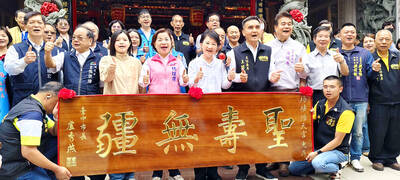
There is considerable frustration and confusion among many, both in Taiwan and abroad — including in Washington — as to why the Chinese Nationalist Party (KMT) seems so dead set on using their legislative leverage to slash defense spending and disrupt the ability of the ruling Democratic Progressive Party (DPP) administration to function. Are they pawns of the Chinese Communist Party (CCP)? Are they traitors? In reality, there are multiple reasons. In the first column in this series on this subject, “Donovan’s Deep Dives: How and why the TPP and KMT help Beijing” (Sat May 16, page 12), we examined three

It took 12 years and months of standing in the same mountain location for director Liang Chieh-te (梁皆得) to capture a few seconds of footage: Taiwan’s largest resident raptor locking talons with its mate and spinning through the air in a courtship ritual. With only about 1,000 left in the wild and very short flight windows, the mountain hawk-eagle remains among Taiwan’s most elusive birds. The species generally produces only one offspring per year. Using forest cameras, the film crew and research teams document the arduous process the monogamous pairs go through for the chick to hatch and grow up, weathering


 RSS
RSS