


How many tiny pieces of plastic are currently inside your body?
A series of headline-grabbing studies in the last few years have claimed to have found microplastics throughout human bodies — inside blood, organs and even brains.
However, some of this research has recently come under stinging criticism from scientists.
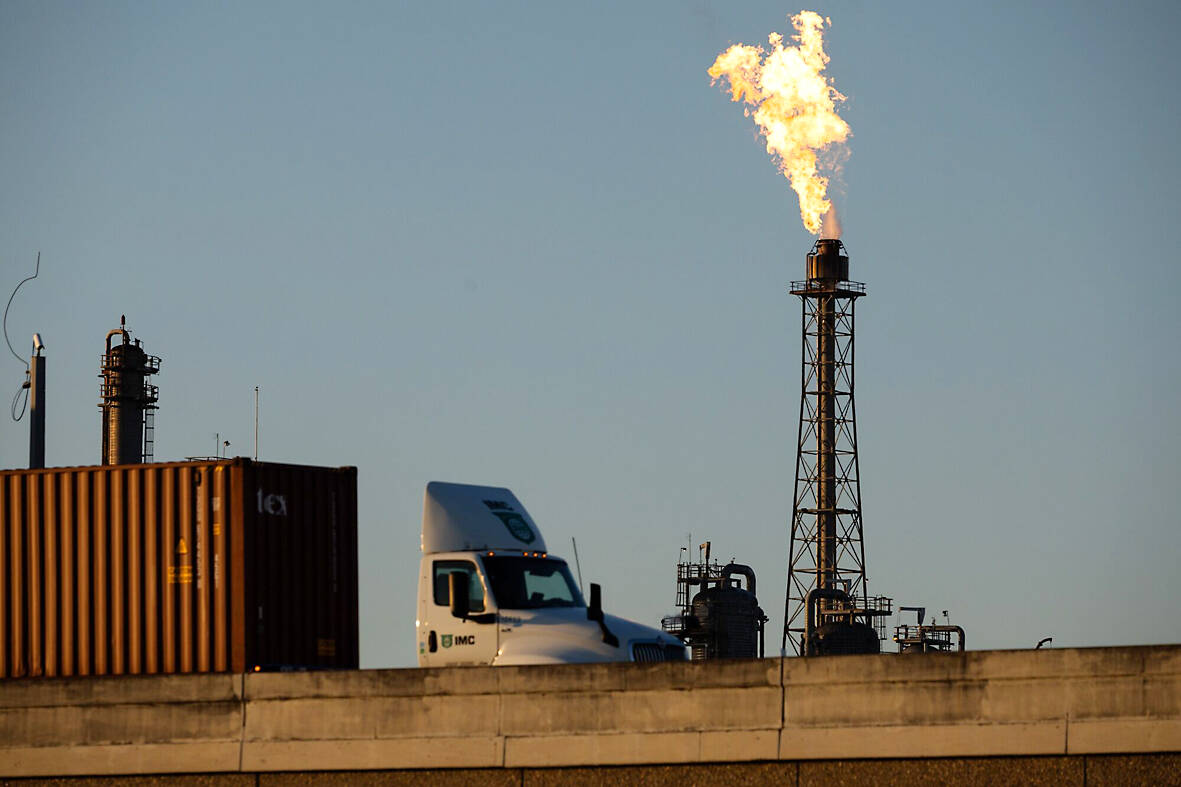
Photo: Bloomberg
Some have warned that the studies could not rule out contamination from plastic inside laboratories, or that certain techniques could be confusing human tissue with plastic.
Seeking a solution to this escalating dispute, 30 scientists from 20 research institutions across the world proposed a new framework on Tuesday for evaluating microplastic research.
The proposal, inspired by how forensic science weighs evidence found at crime scenes, offers researchers a consistent way to communicate how confident they are that microplastic has actually been detected.
No one disputes that these mostly invisible pieces of plastic are ubiquitous throughout the environment — they have been found everywhere from the tops of mountains to the bottom of oceans.
It is also “very likely” that we are regularly ingesting microplastics from air and food, Imperial College London researcher Leon Barron said.
But there is simply not enough evidence yet to say whether they are bad for our health, added the senior author of the new proposal.
INSIDE OUR BRAINS?
Microplastics — and even smaller nanoplastics — are very difficult to detect.
Yet some research in this new and rapidly expanding field has claimed to have found particles in “less-plausible” areas of the human body, Barron explained.
For example, a study published in Nature Medicine early last year announced it had detected relatively large particles inside the brains of recently deceased people.
Some scientists were skeptical because this would require the particles to cross the powerful defenses of the blood-brain barrier.
Experts have also pointed out that the technique used in this study and several others, which is called pyrolysis-GC-MS, can confuse fat with polyethylene, which is commonly used in plastic packaging. In February last year, CNN reported that the study’s senior author, Matthew Campen of the University of New Mexico, had said the amount of plastic found in a brain sample was equivalent to a plastic spoon.
However Campen said on Tuesday that “the concept of a ‘plastic spoon’ is a media invention.”
“The biggest issue was extrapolation of a single sample of the brain to the entire brain, which we are now establishing was a meaningful overestimation,” he added.
He also welcomed the “groundswell of interest” in the subject and said he looked forward to research that “will provide greater confidence and accuracy in micro and nanoplastics measurements.”
Other research has been disparaged for not using proper quality-control measures.
Without these measures, “it is impossible to know whether detected plastics originate from the tissue itself or from containers, chemicals, laboratory equipment or plastic particles present in the air,” researcher Dusan Materic said.
This would mean the results are “simply not scientific”, said the expert at Helmholtz Centre for Environmental Research in Germany.
INSPIRED BY FORENSIC SCIENCE
The new framework proposal, published in the journal Environment & Health, calls for researchers to use several different techniques when looking for microplastics to rule out any potential false positives.
Barron compared the proposal to a framework once agreed among forensic scientists about how to evaluate fibers found in clothes during a criminal investigation.
The idea is to bring “all of the different labs doing this type of work into an aligned language” that expresses how confident they are that they detected microplastic, he said.
The idea is already “starting to gain momentum”, he added.
The proposal requires scientists and journal articles to be transparent about their research, release all the raw data and include quality-control measures.
“To be clear, microplastics are a problem,” Barron emphasized.
All the research conducted thus far has been carried out in good faith, he said, adding that these are relatively normal growing pains for a new scientific field.
But precision is important — to determine whether microplastics are harmful for our health, researchers need to know just how much of them is in our bodies.
If the ongoing scientific debate “derails that effort to try and understand if they’re bad for us, that’s not helpful”, he said.
Campen said that rather than a debate, “what we are seeing is the scientific method.”
“The challenges of detecting and quantifying nanoplastics — shards of plastic the size of viruses — demand intense attention, innovation, as well as scrutiny,” he added.

Ajay Verma, a consultant gastroenterologist at Kettering general hospital in Northamptonshire, says our gut is a “complex machine.” “It is constantly providing us with the nutrition we need, initially to grow and develop, and then for us to survive, thrive and repair from injury and illness.” How can we keep it functioning well? Put simply: “Make sure what you put into it is balanced, and that you clear out its waste products adequately,” Verma says. “In a general gastroenterology clinic, the most common conditions we see are irritable bowel syndrome (IBS), gastroesophageal reflux disease, inflammatory bowel disease and constipation,” says Nisha
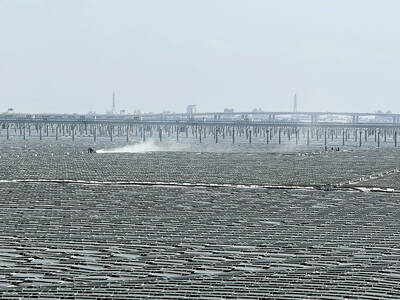
The arithmetic is straightforward and uncomfortable. By the end of 2025, Taiwan had committed itself to a 50-30-20 electricity mix — half natural gas, 30 per cent coal, 20 per cent renewables. The Ministry of Economic Affairs’s (MOEA) own monthly energy reports tell a different story. Natural gas reached 47.8 per cent of generation last year. Coal stood at 35.4 per cent, comfortably above its target ceiling. Renewables came in at 13.1 per cent, well short of the 20 per cent Taipei had pledged a decade earlier. Installed renewable capacity reached roughly half of the 12 gigawatts (GW) the government
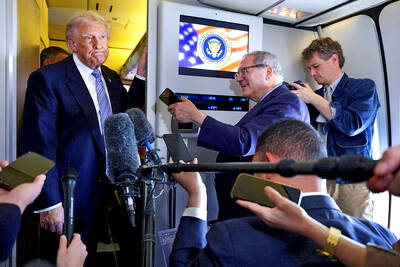
Last week US President Donald Trump was asked by a reporter whether he would speak on the phone to the President of Taiwan. “l’ll speak to him. I speak to everybody. We have that situation very well in hand,” Trump said. This marked the second time in a couple of weeks he had said he would talk to the President of Taiwan. In 2016 he famously took a call from then-president Tsai Ing-wen (蔡英文), when he was president-elect. Despite warnings that the apocalypse was nigh because of a phone call, the world quickly forgot about the conversation between two democratically-elected presidents.

May 25 to May 31 Few believed that apples could be cultivated on a commercial scale in Taiwan’s high mountains. When horticulturalist Cheng Chao-hsiung (程兆熊) first proposed the idea in 1955, both American and Taiwanese colleagues dismissed it as implausible, arguing that temperate fruit could not be reliably grown on a subtropical island, especially on rugged terrain. However, it was this terrain in the Central Mountain Range where many Chinese Civil War veterans were resettled in the late 1950s. With limited job prospects and no family in Taiwan, they were placed on cooperative farms aimed toward self-sufficiency. Some say the conditions


 RSS
RSS