


William Liu (劉家君) moved to Kaohsiung from Nantou to live with his boyfriend Reg Hong (洪嘉佑).
“In Nantou, people do not support gay rights at all and never even talk about it. Living here made me optimistic and made me realize how much I can express myself,” Liu tells the Taipei Times.
Hong and his friend Cony Hsieh (謝昀希) are both active in several LGBT groups and organizations in Kaohsiung. They were among the people behind the city’s 16th Pride event in November last year, which gathered over 35,000 people.
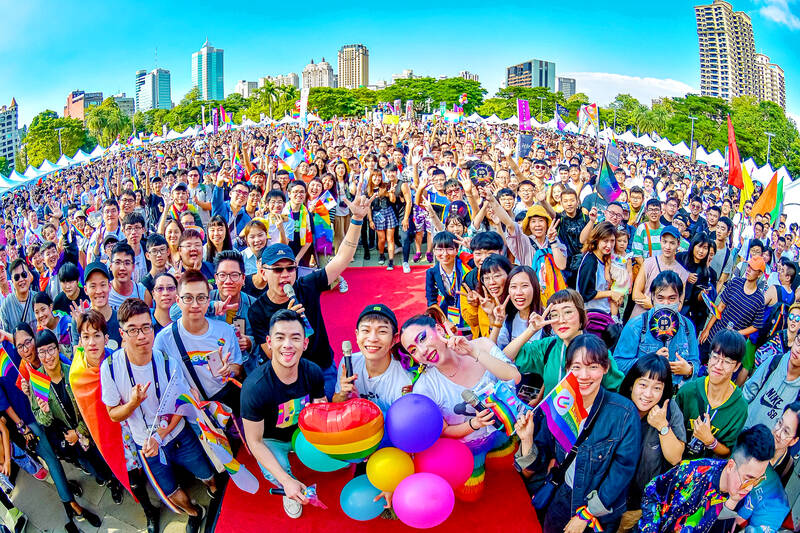
Photo courtesy of Danny Chu
Along with others, they clearly see Kaohsiung as the nexus of LGBT rights.
“The feedback you receive from people in Kaohsiung makes you feel supported,” Hsieh says.
Over the past decade, Kaohsiung has undergone massive economic development, through infrastructure projects, and also cultural development, with an emphasis on arts and performances. This has greatly helped LGBT acceptance.
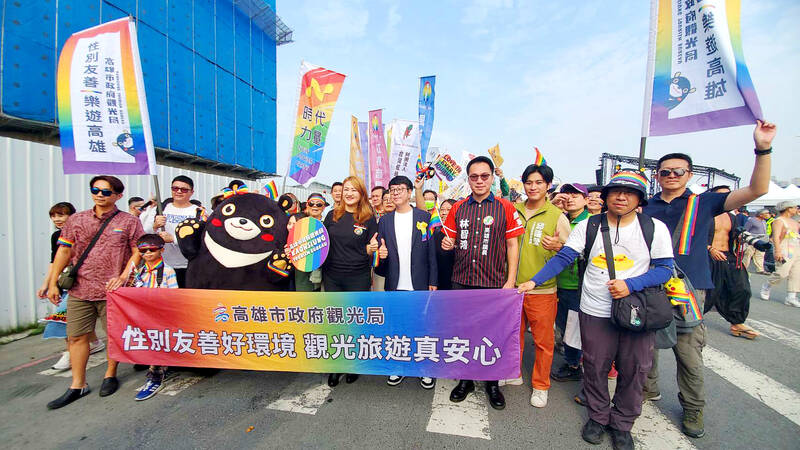
Photo: Chen Wen-chan, Liberty Times
Hana BooBoo (小花寶貝) defines themselves as “queer,” in the sense of being a man adopting a female appearance.
“I wasn’t open about being queer as a teenager beyond a circle of very supportive friends,” says Hana, “but in college I joined art classes and expressed my personality through art. This led me to take part in many events where I became more open, and now everybody knows I am queer.”
Hong concurs that the development of Kaohsiung’s art scene greatly contributed to this shift.
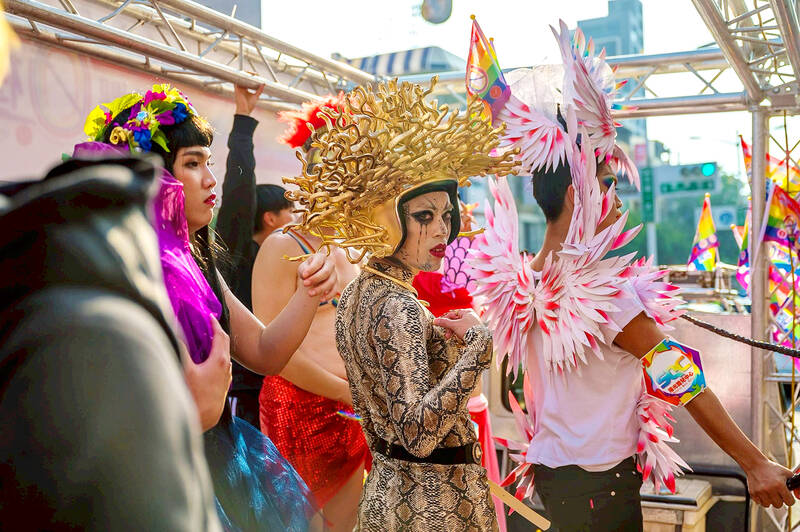
Photo courtesy of Danny Chu
“It made us more visible. We create art pieces and performances that can be shown at cultural events. Through this, more and more people saw us, heard us and became supportive.”
Hsieh adds that they are receiving more support from those outside of the LGBT community.
“It’s also straight people who are supportive. Gender equality is not just for LGBT people — everybody benefits from it.”
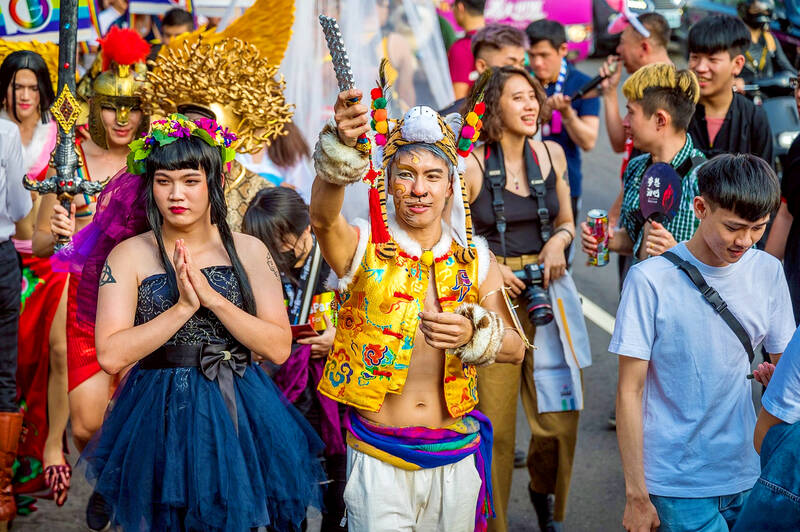
Photo courtesy of Danny Chu
Another important element is the presence in Kaohsiung of academics who spearheaded gender equality and LGBT rights nationwide.
There are only three dedicated graduate-level gender studies institutes in Taiwan, and the two oldest are located in Kaohsiung: National Kaohsiung Normal University (NKNU)’s Graduate Institute of Gender Education (性別教育研究所) and Kaohsiung Medical University (KMU)’s Graduate Institute of Gender Studies (性別研究所).
According to Hsieh, they played a significant role.
“They have been active for a quarter century by now, and they spread a lot of knowledge and enabled the emergence of many activists. Their professors are active outside the university as well. They work with government, civil groups and communities. They also built bridges with straight people.”
Hsieh, who just graduated from NKNU, recalls how in 2011, a conservative group called the Taiwan True Love Alliance (台灣真愛聯盟) campaigned against gender education in schools and targeted one of their professors and a book he had written.
“He responded by organizing a conference to talk with the public about it. In the end, there were local straight people with traditional families who defended him. They said they wanted their children to grow up with that kind of education.”
Hana and Hsieh both say that LGBT rights in Taipei are, paradoxically, undermined by the city’s status as the capital — something that does not affect Kaohsiung.
“Taipei feels like it represents the whole country,” Hana says, “and they feel they have to maintain a straight image for all of Taiwan, which is disappointing because they encourage women’s rights initiatives but not LGBT rights.”
Hsieh adds that “Taipei LGBT groups have a lot of resources, but they feel they have to carry the burden of the entire country — to be active for our rights across Taiwan — and so they focus less on Taipei itself,” whereas Kaohsiung activists are free to focus on their local community, with tremendous results.
Hana also performs as a drag queen.
“Taipei audiences want a drag queen to look like a sexy girl, but they would be critical if we adopt a more personal style.”
In short, even as a drag queen, the capital city expects you to conform to the male gaze and patriarchal beauty standards.
“They don’t do this in Kaohsiung.”
Politics also matter.
“Politics cannot be separated from gender equality,” says Hsieh. “The 2025 Pride was the first we held in the Fengshan District (鳳山) rather than Kaohsiung’s city center, because it is where many government buildings are located. It was a statement: local elections are coming, and we want to be taken into account.”
Unsurprisingly, this year’s slogan for the event was Voting with Pride (豪彩投).
Hong adds: “Politicians used to disagree with us, but in the 2010s our many events showed the strength of our community, and politicians came on board.”
Hsieh says that when she moved from Kaohsiung in 2021, she noticed that local NGOs and groups were very focused on — and skilled at — dealing with local authorities.
“It’s not the same in other major Taiwanese cities. In fact, I think we have created a model for how to have conversations with your government, so people who visit from other cities can learn how to do the same back home.”
In the end, perhaps the key to understanding Kaohsiung’s place in Taiwan’s LGBT community lies in the character of the city itself.
“Kaohsiung people are very proud of their identity,” Hsieh says, “which they define as being open. They believe that being a Kaohsiunger means opening yourself to everyone — and that includes us.”

The small platform at Duoliang Train Station in Taitung County’s Taimali Township (太麻里) served villagers from 1992 to 2006, but was eventually shut down due to lack of use. Just 10 years later, the abandoned train station had become widely known as the most beautiful station in Taiwan, and visitors were so frequent that the village had to start restricting traffic. Nowadays, Duoliang Village (多良) is known as a bit of a tourist trap, with a mandatory, albeit modest, admission fee of NT$10 giving access to a crowded lane of vendors with a mediocre view of the ocean and the trains
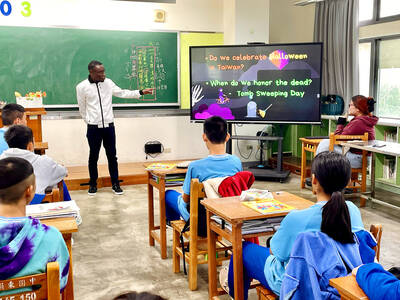
For many people, Bilingual Nation 2030 begins and ends in the classroom. Since the policy was launched in 2018, the debate has centered on students, teachers and the pressure placed on schools. Yet the policy was never solely about English education. The government’s official plan also calls for bilingualization in Taiwan’s government services, laws and regulations, and living environment. The goal is to make Taiwan more inclusive and accessible to international enterprises and talent and better prepared for global economic and trade conditions. After eight years, that grand vision is due for a pulse check. RULES THAT CAN BE READ For Harper Chen (陳虹宇), an adviser
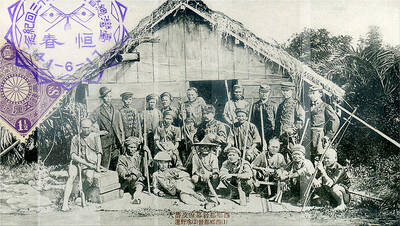
Traditionally, indigenous people in Taiwan’s mountains practice swidden cultivation, or “slash and burn” agriculture, a practice common in human history. According to a 2016 research article in the International Journal of Environmental Sustainability, among the Atayal people, this began with a search for suitable forested slopeland. The trees are burnt for fertilizer and the land cleared of stones. The stones and wood are then piled up to make fences, while both dead and standing trees are retained on the plot. The fences are used to grow climbing crops like squash and beans. The plot itself supports farming for three years.
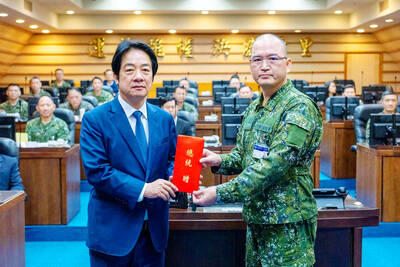
President William Lai (賴清德) on Nov. 25 last year announced in a Washington Post op-ed that “my government will introduce a historic US$40 billion supplementary defense budget, an investment that underscores our commitment to defending Taiwan’s democracy.” Lai promised “significant new arms acquisitions from the United States” and to “invest in cutting-edge technologies and expand Taiwan’s defense industrial base,” to “bolster deterrence by inserting greater costs and uncertainties into Beijing’s decision-making on the use of force.” Announcing it in the Washington Post was a strategic gamble, both geopolitically and domestically, with Taiwan’s international credibility at stake. But Lai’s message was exactly


 RSS
RSS