


Every now and then, even hardcore hikers like to sleep in, leave the heavy gear at home and just enjoy a relaxed half-day stroll in the mountains: no cold, no steep uphills, no pressure to walk a certain distance in a day. In the winter, the mild climate and lower elevations of the forests in Taiwan’s far south offer a number of easy escapes like this.
A prime example is the river above Mudan Reservoir (牡丹水庫): with shallow water, gentle current, abundant wildlife and a complete lack of tourists, this walk is accessible to nearly everyone but still feels quite remote. On a sunny November day, the author and two friends set out after a leisurely breakfast for our half-day exploration of the Rureng River (汝仍溪), the main tributary to Taiwan’s southernmost reservoir.
After turning left at Checheng (車程) onto County Route 199, passing through the hot spring town of Sihchongsi (四重溪), and arriving at Shihmen Village (石門村), we took the next left after the junior high school to access the concrete road running along the west side of the reservoir. Be careful when driving here, as the road isn’t very wide and large dump trucks and other construction vehicles appear frequently when reservoir maintenance is underway. That being said, take time to appreciate the views of the reservoir on your right side.
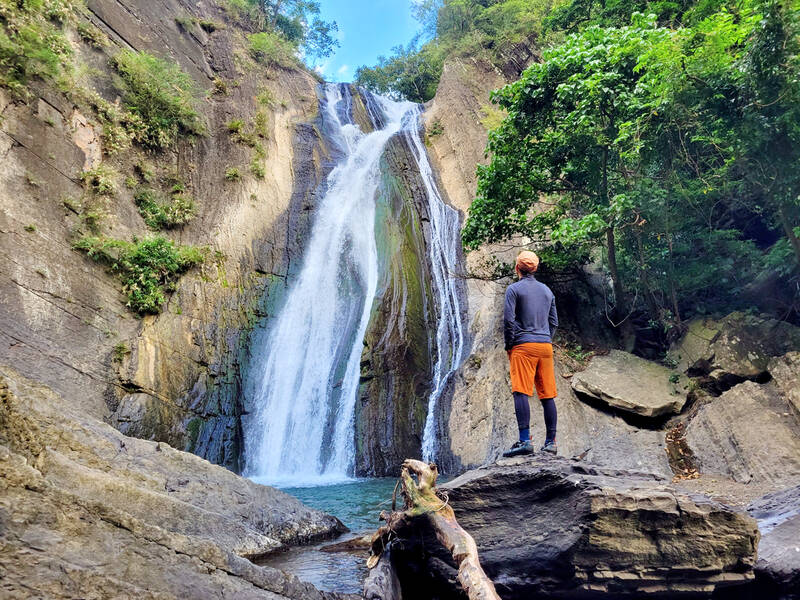
Photo: Tyler Cottenie
After crossing the northern tip of the reservoir on a bridge, the road ended about one kilometer ahead at a large clearing with two covered shrines. We parked the car here and set out on foot around noon. Scooters could have gone another 200 meters, but the parking was better in the large clearing.
STARTING UPRIVER
Our agenda for the day was to simply walk upstream for a couple of hours to see what it looked like, and then walk back to the car. We had also heard there was a waterfall along one of the branch streams that we would try to locate. Entering with low expectations, we were pleasantly surprised by what we encountered that afternoon.
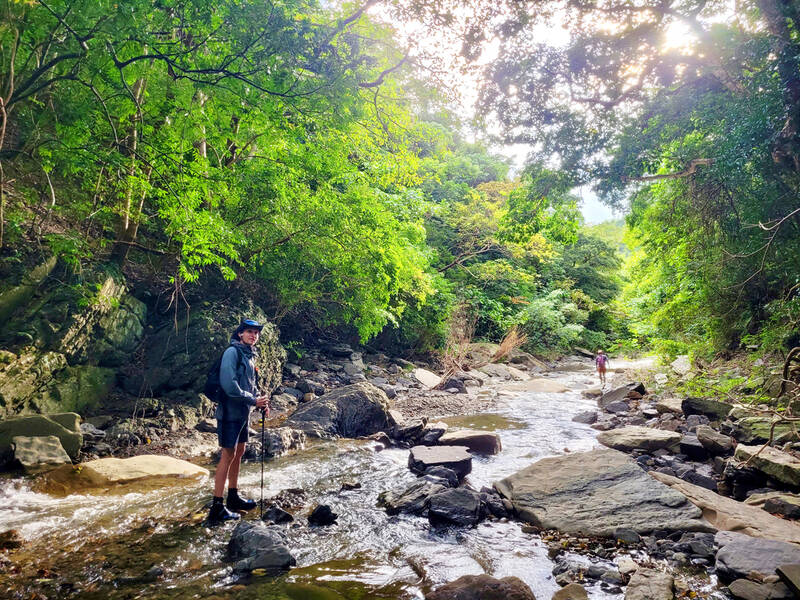
Photo: Tyler Cottenie
Just around the corner was the final (most upstream) check dam for the reservoir, recently reinforced. A small waterfall poured off the bottom level, above which were some inviting, clear pools. The rough road we were walking on went directly to the riverbed above the dam, however, so we continued walking upstream.
The riverbed here is wide and flat, and the water only calf-deep. If you visit, wear river tracing shoes or sandals with good grip, as walking in the water is unavoidable. It’s also always a good idea to wear a helmet when walking along rivers in case you slip on wet rocks. You should never have to walk in water deeper than your knees, so if you wear shorts, a change of clothes shouldn’t be necessary.
After a 180-degree bend in the river to the left, and another to the right, the river makes a 90-degree turn to the left (north). After this turn, on the right-hand side, we noticed what looked like a trail leading up to a flat area above the river. We hiked up and, to our surprise, came across a banana plantation that seemed like it was still occasionally visited and maintained.
Photo: Tyler Cottenie
Following an obvious path, we then came across a tidy concrete platform with three buildings on it: one storage shed, one bathroom, and one house, or at least that’s what our best guess was. Firewood was stacked neatly against one building, and water was flowing out of a pipe onto the ground next to the bathroom. Clearly, this was a regularly used retreat for a local hunter or farmer.
A MAJESTIC SIDE STREAM
Beyond the house, we made our own way through the forest and back down to the river on the other side. The river soon turned 180 degrees again, from south to north. At the next bend in the river, we came upon a deep turquoise pool just below a set of rapids. As with the other deep pools along this river, it could be easily circumvented by taking the high ground along the shore on one side or the other.
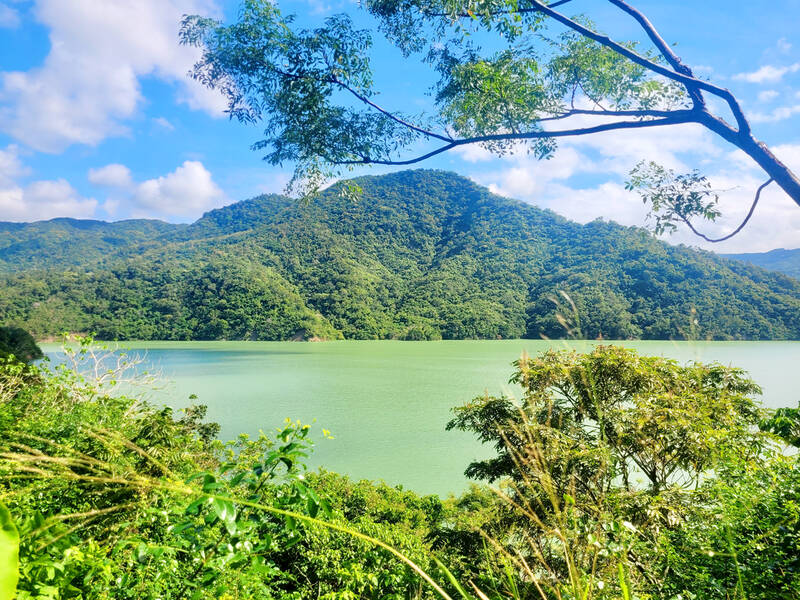
Photo: Tyler Cottenie
However, having walked for an hour already under the warm sun, the water was simply too enticing. Off went the packs, on went the swimsuits (the only change of clothes I do recommend bringing for this hike), and in went the three of us. The source of the Rureng River is only around 700 meters high, so even in the dead of winter the water is not very cold. Floating in cool blue water, under a warm blue sky, surrounded by pristine mountain wilderness on all sides, we all agreed we had made the right choice in choosing this relaxing Sunday walk.
After drying off, we still had time to continue exploring, so we proceeded upstream in search of the waterfall we had heard about. Less than 10 minutes later, we turned left up an obvious side stream that appeared to show a waterfall in satellite imagery. With very little water or vegetation in this streambed, the walking was easy, and in about 15 minutes, we turned a corner and a gorgeous waterfall appeared before our eyes.
Below the main waterfall was a lower tier about 8 feet high that was impossible to ascend, but after scouting in the forest on the left side, we did find a very precarious route up and over the ledge to the base of the waterfall’s main tier. This is the only part of the hike that is not beginner-friendly and is not advised for those without a lot of experience scrambling in loose soil. The view from the lower level is already quite good and still worth the walk in.
WRAPPING UP
Our time had run out for the day, so we turned around and headed back toward the reservoir. Four and a half hours after setting out, we were back at the car. The drive out was a picture-perfect end to the day, with the mountain behind the reservoir lit up in golden hues that only appear in the day’s final hour of sunlight. There was surely more to explore further upstream, but that could wait. For a casual half-day hike, it couldn’t get any better than this.
If you go, it’s best to drive your own car as we did, or ride a scooter. Public transit would be challenging, though not impossible, as Bus 302 from Checheng to Shihmen only runs three times a day, and the concrete road around the reservoir adds 6 km of walking each way. Always check the weather forecast and avoid the river altogether if rain is forecast, as sudden rises in water can be lethal.
The “reng” in “Rureng” looks quite a lot like a character pronounced as “nai” (仍 vs 乃), so the river is occasionally known as “Runai River.” This confusion extends to the highest peak in its catchment area, known as both “Nyureng” and “Nyunai” Mountain. To make matters more confusing, the first syllables in the river name and mountain name are also visually similar (汝 vs 女). When applying for the mountain entry permit for this hike at https://nv2.npa.gov.tw/NM107-604ClientE (English), choose Runai River as your destination if you apply in English or Rureng River (汝乃溪) if you apply in Chinese.
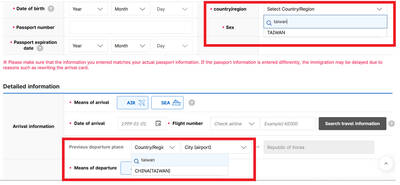
Jason Han says that the e-arrival card spat between South Korea and Taiwan shows that Seoul is signaling adherence to its “one-China” policy, while Taiwan’s response reflects a reciprocal approach. “Attempts to alter the diplomatic status quo often lead to tit-for-tat responses,” the analyst on international affairs tells the Taipei Times, adding that Taiwan may become more cautious in its dealings with South Korea going forward. Taipei has called on Seoul to correct its electronic entry system, which currently lists Taiwan as “China (Taiwan),” warning that reciprocal measures may follow if the wording is not changed before March 31. As of yesterday,

The Portuguese never established a presence on Taiwan, but they must have traded with the indigenous people because later traders reported that the locals referred to parts of deer using Portuguese words. What goods might the Portuguese have offered their indigenous trade partners? Among them must have been slaves, for the Portuguese dealt slaves across Asia. Though we often speak of “Portuguese” ships, imagining them as picturesque vessels manned by pointy-bearded Iberians, in Asia Portuguese shipping between local destinations was crewed by Asian seamen, with a handful of white or Eurasian officers. “Even the great carracks of 1,000-2,000 tons which plied

On Thursday, former Taipei mayor and founder of the Taiwan People’s Party (TPP) Ko Wen-je (柯文哲) was sentenced to 17 years in prison and had his civil rights suspended for six years over corruption, embezzlement and other charges. Seven others related to the case were also handed prison sentences, while two were found not guilty. It has been a bad week for the TPP. On Tuesday, prosecutors charged Chinese immigrant Xu Chunying (徐春鶯) with suspicion of taking part in Beijing-directed election interference. Xu has strong links to the TPP, which once offered her a party list legislator nomination. Tuesday also
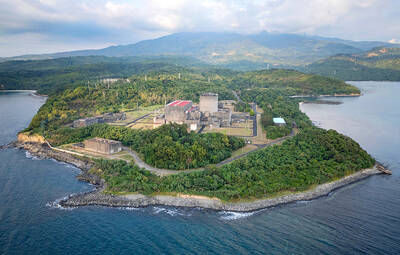
Nuclear power is getting a second look in Southeast Asia as countries prepare to meet surging energy demand as they vie for artificial intelligence-focused data centers. Several Southeast Asian nations are reviving mothballed nuclear plans and setting ambitious targets and nearly half of the region could, if they pursue those goals, have nuclear energy in the 2030s. Even countries without current plans have signaled their interest. Southeast Asia has never produced a single watt of nuclear energy, despite long-held atomic ambitions. But that may soon change as pressure mounts to reduce emissions that contribute to climate change, while meeting growing power needs. The


 RSS
RSS