


An emaciated and apparently blind man stands in the snow at the Nazi concentration camp of Flossenbuerg: the image seems real at first but is part of a wave of AI-generated content about the Holocaust.
As the world marked International Holocaust Remembrance Day yesterday, experts have been warning that such content — whether produced as clickbait for commercial gain, or for political motives — threatens efforts to preserve the memory of Nazi crimes.
There has been a surge of such imagery on social networks, distorting the history of Nazi Germany’s murder of six million European Jews during World War II. Among the AI-generated images that have gone viral is one of a little girl with curly hair on a tricycle.

Photo: AP
She is presented as Hannelore Kaufmann, a 13-year-old Berliner who purportedly died at the Auschwitz extermination camp, of which the 1945 liberation by Soviet troops was commemorated yesterday.
However, there is no record of her ever having existed.
Another example is a fake image created to illustrate the invented story of a Czech violinist called “Hank” at Auschwitz, which was called out as false by the camp museum.
After early examples emerged in the spring of last year, by the end of the year “AI slop” on the subject “was being shown very frequently,” said historian Iris Groschek.
On some sites such content was posted once a minute, said Groschek, who works at memorial sites in Hamburg, including the Neuengamme concentration camp.
With the exponential advances in AI, “the phenomenon is growing,” said Jens-Christian Wagner, director of the foundation that manages the Buchenwald and Mittelbau-Dora memorials.
EXPLOITING ‘EMOTIONAL IMPACT’
Several Holocaust memorials and commemorative associations this month issued an open letter warning about the rising number of these “entirely fabricated” pieces of content.
Some of them are churned out by content farms which exploit “the emotional impact of the Holocaust to achieve maximum reach with minimal effort.”
The picture supposedly from Flossenbuerg camp falls into this category, as it was shown on a page claiming to share “true, human stories from the darkest chapters of the past.”
The memorials warned that fake content was also being created “specifically to dilute historical facts, shift victim and perpetrator roles, or spread revisionist narratives.”
Wagner points for example to images of “well-fed prisoners, meant to suggest that conditions in concentration camps weren’t really that bad.”
The Frankfurt-based Anne Frank Educational Center warned of a “flood” of AI-generated content and propaganda “in which the Holocaust is denied or trivialized, with its victims ridiculed.”
By distorting history, AI-generated images have “very concrete consequences for how people perceive the Nazi era,” says Groschek.
The results of trivializing or denying the Holocaust are in evidence in the attitudes of some younger visitors to the camps, particularly from “rural parts of eastern Germany... in which far-right thinking has become dominant,” said Wagner.
’CONFIDENT, LOUD, AGGRESSIVE’
Staff have observed Hitler salutes as well as other provocative and disrespectful actions and comments.
Such behavior is only “by a minority, but a minority that is increasingly confident, loud and aggressive,” he said.
In their open letter, the memorials called on social media platforms to “proactively combat AI content that distorts history” and to “exclude accounts that disseminate such content from all monetization programs.”
“The challenge for society as a whole is to develop ethical and historically responsible standards for this technology,” they said, adding: “Platform operators have a particular responsibility in this regard.”
German Culture Minister Wolfram Weimer said in a statement: “I support the memorials’ call to clearly label AI-generated images and remove them when necessary.”
He said that making money from such imagery should be prevented.
“This is a matter of respect for the millions of people who were killed and persecuted under the Nazis’ reign of terror,” he said, reminding the platforms that they had “obligations” under the EU’s Digital Services Act.
Groschek said that none of the American social media giants responded to the memorials’ letter, including Meta, the owner of Facebook and Instagram.
TikTok responded by saying it wanted to exclude the accounts in question from monetization and implement “automated verification,” according to Groschek. Some of the fake Facebook posts about Hannelore and Hank were still online on the eve of Holocaust Remembrance Day.

Ajay Verma, a consultant gastroenterologist at Kettering general hospital in Northamptonshire, says our gut is a “complex machine.” “It is constantly providing us with the nutrition we need, initially to grow and develop, and then for us to survive, thrive and repair from injury and illness.” How can we keep it functioning well? Put simply: “Make sure what you put into it is balanced, and that you clear out its waste products adequately,” Verma says. “In a general gastroenterology clinic, the most common conditions we see are irritable bowel syndrome (IBS), gastroesophageal reflux disease, inflammatory bowel disease and constipation,” says Nisha
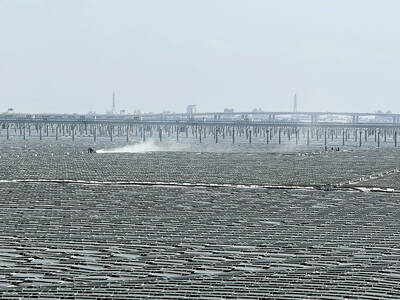
The arithmetic is straightforward and uncomfortable. By the end of 2025, Taiwan had committed itself to a 50-30-20 electricity mix — half natural gas, 30 per cent coal, 20 per cent renewables. The Ministry of Economic Affairs’s (MOEA) own monthly energy reports tell a different story. Natural gas reached 47.8 per cent of generation last year. Coal stood at 35.4 per cent, comfortably above its target ceiling. Renewables came in at 13.1 per cent, well short of the 20 per cent Taipei had pledged a decade earlier. Installed renewable capacity reached roughly half of the 12 gigawatts (GW) the government
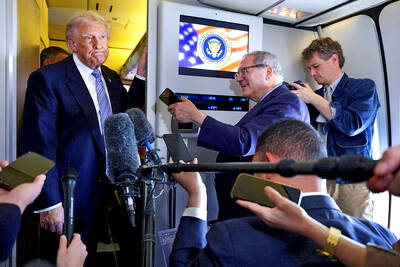
Last week US President Donald Trump was asked by a reporter whether he would speak on the phone to the President of Taiwan. “l’ll speak to him. I speak to everybody. We have that situation very well in hand,” Trump said. This marked the second time in a couple of weeks he had said he would talk to the President of Taiwan. In 2016 he famously took a call from then-president Tsai Ing-wen (蔡英文), when he was president-elect. Despite warnings that the apocalypse was nigh because of a phone call, the world quickly forgot about the conversation between two democratically-elected presidents.
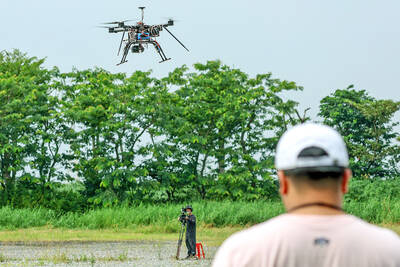
Taiwan’s drone exports are taking off, fuelled by the war in Ukraine, as Taiwanese companies seek a stake in the fast-growing global market for unmanned aerial vehicles (UAV). Low-cost drones used for reconnaissance and strikes are in high demand as governments around the world boost defense spending in the face of intensifying conflicts. A relative new player in the increasingly competitive industry, Taiwan’s pitch is to be an “Asian hub” for the production of UAVs and components free of Chinese materials, or “non-red.” That means its UAVs can be up to three times more expensive than their Chinese competitors, like the world’s biggest


 RSS
RSS