


Two former leaders of a Hong Kong pro-democracy group that for decades organized a vigil commemorating people killed during Beijing’s 1989 Tiananmen crackdown are set to stand trial in a case brought under a national security law that has all but silenced dissent in the city.
A third co-defendant is expected to plead guilty at Thursday’s hearing.
Observers say the disappearance of the only large-scale public commemoration of the 1989 crackdown within China is part of a decline in Western-style civil liberties, which Beijing promised to maintain for 50 years when it took control of the former British colony in 1997.
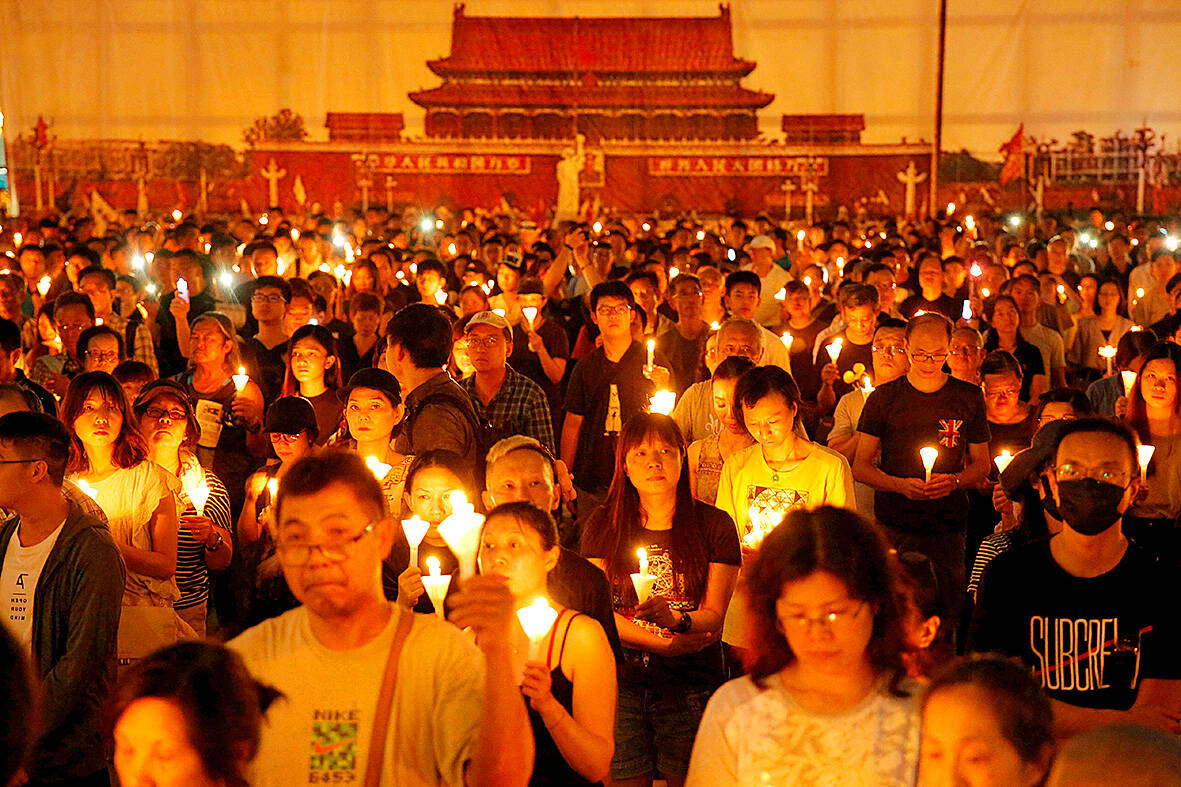
Photo: AP
The government said its law enforcement actions were evidence-based and strictly in accordance with the law.
Chow Hang-tung, Lee Cheuk-yan and Albert Ho, former leaders of the Hong Kong Alliance in Support of Patriotic Democratic Movements of China, were charged with incitement to subversion in September 2021 under a law imposed by China following massive anti-government protests in 2019.
The Hong Kong Alliance voted to disband weeks after its leaders were charged under the law.
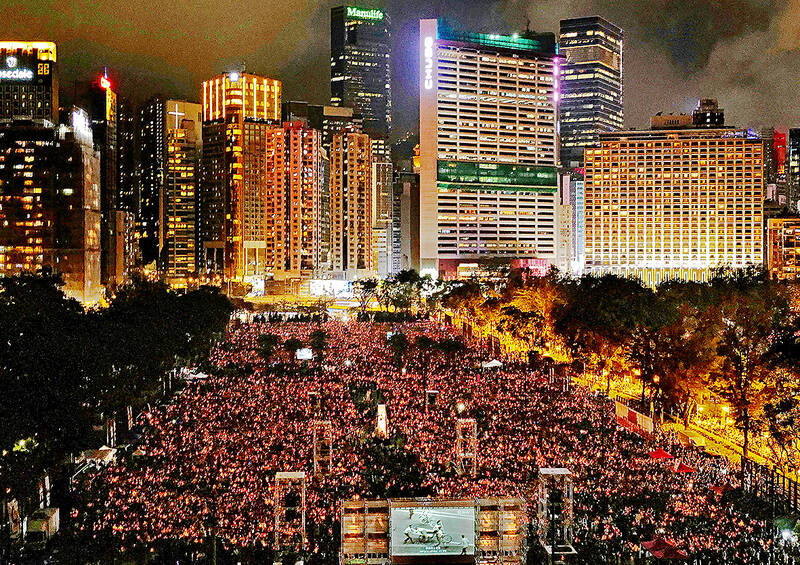
Photo: AP
Here’s what to know about the case:
KEEPING MEMORIES ALIVE
The 1989 Tiananmen Square pro-democracy protests, led by students, posed one of the most significant challenges to the Communist Party’s rule in China. They ended after the Chinese government sent tanks into Beijing, with troops opening fire in a bloody crackdown that killed hundreds, possibly thousands.
The crackdown has long been a taboo topic in mainland China, but for 30 years the alliance held annual vigils in Hong Kong. The gathering drew tens of thousands to commemorate the victims with a sea of candles until authorities banned it during the COVID-19 pandemic.
“It was a group that aimed to seek justice,” former alliance member Tang Ngok-kwan said in early January. Tang, who was a senior member of the group, was charged alongside Chow in another case related to the group.
Tang said he felt a moral burden about the deaths, because he thought the city’s financial support for the movement may have fueled the demonstrators’ conflict with authorities.
Some young people stayed away from the vigil during a rise in localism in the 2010s, deeming the alliance’s goal of building a democratic China irrelevant to Hong Kong. But the last vigil in 2019 drew an estimated 180,000 people days before the city erupted in monthslong protests.
After the pandemic, the former vigil site hosted a carnival showcasing Chinese food and products during the anniversary of the crackdown. Some residents who commemorated the event nearby were detained.
The alliance was one of dozens of civil society groups disbanded during a crackdown that started when Beijing imposed a National Security Law to quell protests.
Other people affected include former pro-democracy media mogul Jimmy Lai (黎智英), who was convicted of conspiring with others to collude with foreign forces in December and faces up to life in prison.
The Hong Kong Alliance came under increasing pressure in 2021 after police opened an investigation, saying they had reasonable grounds to believe the group was acting as a foreign agent. The group rejected the allegations and refused to cooperate. Chow, Ho and Lee were charged in September 2021, and later that month the alliance’s members voted to disband.
Chow, Tang and another core member were convicted in 2023 over their refusal to provide authorities information on the group and received a sentence of 4.5 months each. But in March last year, the city’s top court overturned the trio’s convictions.
Thursday’s trial is expected to last 75 days
Chow, Ho and Lee are accused of inciting others to organize, plan or act through unlawful means with a view to subvert the state power. Their charge carries a maximum jail term of 10 years. The trial is expected to last 75 days.
In previous court proceedings, Ho’s lawyer indicated that his client intended to plead guilty, which could help him getting a sentence reduction.
Chow, also a barrister, who defended herself in the case, tried to quash her indictment in court arguing that prosecutors had failed to make specific allegations, but was rejected in November.
Alex Lee, one of the government-vetted judges, said the prosecution had identified the alliance’s calls to “bring one-party rule to an end” as an issue. The prosecution is expected to detail its case this week.
CHOW CONTINUES THE FIGHT
Tang said he viewed the trial as the conclusion of the group’s mission.
Regardless of the outcome, he said, it’s an opportunity to express their beliefs one more time.
“It’s another unexpected encouragement,” he laughed at the thought, then immediately added: “But this price is huge.”
Tang, who visited Chow and Lee regularly in prison, said they have grown thinner.
He said Lee was relatively philosophical, wanting only to explain his beliefs to the court, while Chow felt strongly about defending her position.
Chow has already successfully defended herself in the separate case involving Tang from behind bars, getting the conviction quashed.
She also mounted a challenge to prison regulations that require female inmates to wear long trousers in summer, though her bid was rejected by the court last week.
In a post on the social media platform Patreon, she wrote on Jan. 5 that she was still looking forward to a reunion with her friends and allies.
“I still firmly believe that the human spirit endures. Together, we shall smile until the very end,” she said.
Jason Han says that the e-arrival card spat between South Korea and Taiwan shows that Seoul is signaling adherence to its “one-China” policy, while Taiwan’s response reflects a reciprocal approach. “Attempts to alter the diplomatic status quo often lead to tit-for-tat responses,” the analyst on international affairs tells the Taipei Times, adding that Taiwan may become more cautious in its dealings with South Korea going forward. Taipei has called on Seoul to correct its electronic entry system, which currently lists Taiwan as “China (Taiwan),” warning that reciprocal measures may follow if the wording is not changed before March 31. As of yesterday,
The Portuguese never established a presence on Taiwan, but they must have traded with the indigenous people because later traders reported that the locals referred to parts of deer using Portuguese words. What goods might the Portuguese have offered their indigenous trade partners? Among them must have been slaves, for the Portuguese dealt slaves across Asia. Though we often speak of “Portuguese” ships, imagining them as picturesque vessels manned by pointy-bearded Iberians, in Asia Portuguese shipping between local destinations was crewed by Asian seamen, with a handful of white or Eurasian officers. “Even the great carracks of 1,000-2,000 tons which plied
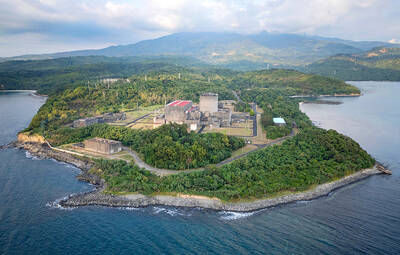
Nuclear power is getting a second look in Southeast Asia as countries prepare to meet surging energy demand as they vie for artificial intelligence-focused data centers. Several Southeast Asian nations are reviving mothballed nuclear plans and setting ambitious targets and nearly half of the region could, if they pursue those goals, have nuclear energy in the 2030s. Even countries without current plans have signaled their interest. Southeast Asia has never produced a single watt of nuclear energy, despite long-held atomic ambitions. But that may soon change as pressure mounts to reduce emissions that contribute to climate change, while meeting growing power needs. The
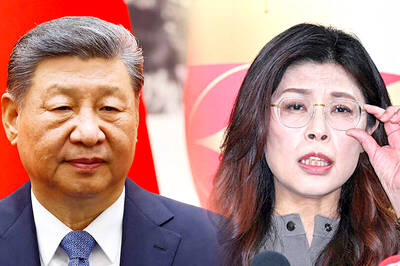
On Monday morning, in quick succession, the Chinese Communist Party (CCP) and the Chinese Nationalist Party (KMT) released statements announcing “that the Central Committee of the Communist Party of China and General Secretary Xi Jinping (習近平) have invited KMT Chairwoman Cheng Li-wun (鄭麗文) to lead a delegation on a visit to the mainland” as the KMT’s press release worded it. The KMT’s press release added “Chairwoman Cheng expressed her gratitude for the invitation and has gladly accepted it.” Beijing’s official Xinhua news release described Song Tao (宋濤), head of the Taiwan Work Office of the CCP Central Committee, as


 RSS
RSS