


Taiwan People’s Party (TPP) Chairman Huang Kuo-chang’s (黃國昌) New Year’s resolution was to get healthy and fit. On New Year’s Eve, he released a video detailing his journey and released photos showing off not only his progress but also his newly buff physique.
Regardless of what one thinks of his politics, he looks great and earned it. There has not been this much beefcake in Taiwan politics since Freddy Lim (林昶佐) decided not to run for re-election.
Like Huang, recently the TPP has been showing signs of health, discipline and fitness. This should make their pan-blue coalition partners, the Chinese Nationalist Party (KMT), nervous, and the Democratic Progressive Party (DPP) very concerned.
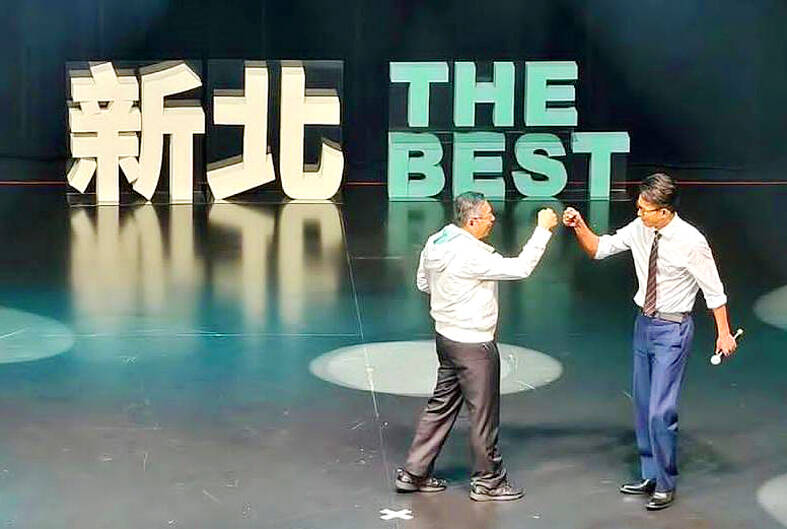
Photo taken from Huang Kuo-chang’s Instagram
As a smaller third party, they still face significant uphill challenges. Their legal problems and scandals have also not disappeared.
Yet so far, for all their trials and tribulations, the party appears to be becoming harder, smarter and stronger.
STAVING OFF DISASTER
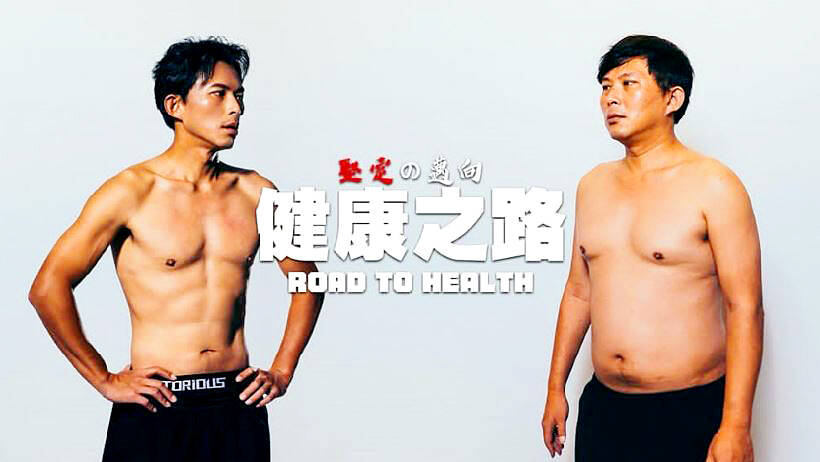
Photo taken from Huang Kuo-chang’s Instagram
In August 2024, the TPP was in serious trouble. It came to light that the party had submitted seriously flawed financial reports, which put it into damage control mode. It also came out that party founder and then chairman Ko Wen-je (柯文哲) had used government election subsidies to purchase property for himself, which is not illegal, but is a very bad look. Then it got worse: Ko was detained incommunicado for a year on corruption charges.
Huang took control of the party and likely saved it from disaster. Their polling numbers had plunged, but under Huang, they stabilized, maintaining the party as a viable, though weakened, force.
Following the DPP’s disastrous official backing of the recall campaigns last summer, their popularity plunged while the KMT’s and TPP’s rose. This put the TPP’s popularity back to where it was before Ko’s detention.
Then, last September, Ko was released on bail. This could have led to a power struggle in the party, but it did not.
Under Huang, the party’s Ko-era ideology was not touched, but the tone and behavior of the party shifted. Huang excels at selective outrage, standing on stage with fist raised, railing at his enemies, the DPP’s “authoritarian regime” of the “dictator” President William Lai (賴清德).
This strategy was successful at staunching the bleeding and keeping the party viable among their core supporters, but it lacked vision. It left open a lot of questions as to what to support the party for, rather than just supporting them for what they are against.
Huang had also further blurred the identity of the party by effectively turning the party into a subsidiary of the KMT. Though the party had successes in the legislature they could point to, they did little to communicate them. Huang preferred to stick to hyperbolic outrage.
Recently, the party has done a far better job of highlighting their own legislative achievements and goals. The emerging image is of a party that is allied with the KMT, but still maintaining something of a distinct agenda and identity.
The TPP is again talking about issues and policy proposals. Huang has resurrected common usage of the “scientific, rational and pragmatic” language that defined the party in the Ko era.
While frequently speaking of his “sincerity” in working with the KMT in this year’s elections and his confidence in their partnership, Huang has been setting some boundaries. He has made it clear he will not be rushed, nor has he backed away from his run for New Taipei City mayor despite KMT Chairwoman Cheng Li-wun’s (鄭麗文) insistence that the KMT must run a candidate there.
Huang is also implementing the party’s two-year pledge for lawmakers, a strategic move conceived by Ko. The party’s lawmakers were all voted in on the party list, so by stepping down, the next ones on the list move up to take their place. This doubles the opportunities to build name recognition to develop budding political talent for the smaller party. Huang has already signed the resignation paperwork, and on Feb. 1, he will lose the powerful platform as legislator and party caucus convener — though he will continue to join the biweekly party caucus morning meetings.
A FORGED BOND
While it is theoretically possible these changes are all Huang’s ideas, that is unlikely. Many of these moves have Ko’s fingerprints all over them.
Meanwhile, Ko has been carefully avoiding stealing the spotlight from Huang and has credited Huang with saving the party. Huang is carefully respectful of Ko as his elder.
This is remarkable. Both men are notoriously stubborn and strong-willed, and have reputations for a “my way or the highway” mentality. Yet, clearly, they are working as a team and by all appearances respect each other.
Both are showing a maturity and deference they were previously not known for possessing. The likely explanation is that they have grown and learned from their mistakes, and their common trials and tribulations — and common interests — have forged a bond between them.
They are also divvying up tasks. Huang will help the party campaign in the north from his base in New Taipei City, while Ko will be heading up the campaign team of their Chiayi City candidate and will concentrate on the south.
I suspect the reason the TPP has held their post-recall popularity bump, unlike the KMT, is this partnership.
Ko is the cerebral, strategic thinker of the two. Huang is a dramatic, effective communicator. This is a powerful combination.
CHALLENGES AHEAD
Another potential opportunity has opened up in Hsinchu Mayor Ann Kao’s (高虹安) acquittal on corruption charges on appeal. This cleared the way for her reinstatement as mayor.
After her initial conviction, Kao resigned from the TPP. Last summer, despite the conviction and being suspended from her post, she survived a recall attempt.
This puts Kao in a fairly strong position to run for re-election, and the KMT has made clear they do not plan to challenge her.
They will now need to convince her to rejoin the party. She joined a meeting held by the Hsinchu TPP that was attended by Huang, but so far, she has not officially rejoined. If she does, that will be a big win for the TPP.
There are some serious risks for the party going forward. The verdict in Ko’s corruption trial is due on March 26, and he potentially faces significant jail time — though if found guilty, he can appeal.
Investigators are questioning people close to Huang related to the alleged “paparazzi” scandal. Huang has not been questioned so far, and at this point, he faces no criminal charges. But the possibility of both Huang and Ko facing jail time can not be discounted. KMT Vice Chairman Shawn Hsiao (蕭旭岑) has fretted about this and what it might mean for their cooperation.
The party also lacks the talent pipeline of the two big parties, so growing is a challenge. Headlines in the local press talk of a “tide of defections” from the party, but these are overblown.
The TPP has lost four low-to-mid-level people in the last two months. That is painful for such a small party, and will make their goal of being able to form city and county caucuses in some places harder, but this sort of churn is typical of third parties and by no means exceptional, much less a “tide.”
Overall, the party is likely in the strongest position it has ever been in, though pending legal issues could derail it, and the likeliest successors to these two — Vivian Huang (黃珊珊) and Tsai Pi-ru (蔡壁如) — have been sidelined in the Huang era.
If the party survives these challenges, they could begin to take support from the KMT and challenge the DPP in places they had not anticipated.
Donovan’s Deep Dives is a regular column by Courtney Donovan Smith (石東文) who writes in-depth analysis on everything about Taiwan’s political scene and geopolitics. Donovan is also the central Taiwan correspondent at ICRT FM100 Radio News, co-publisher of Compass Magazine, co-founder Taiwan Report (report.tw) and former chair of the Taichung American Chamber of Commerce. Follow him on X: @donovan_smith.
Taiwan’s overtaking of South Korea in GDP per capita is not a temporary anomaly, but the result of deeper structural problems in the South Korean economy says Chang Young-chul, the former CEO of Korea Asset Management Corp. Chang says that while it reflects Taiwan’s own gains, it also highlights weakening growth momentum in South Korea. As design and foundry capabilities become more important in the AI era, Seoul risks losing competitiveness if it relies too heavily on memory chips. IMF forecasts showing Taiwan widening its lead over South Korea have fueled debate in Seoul over memory chip dependence, industrial policy and
“China wants to unify with Taiwan at the lowest possible cost, and it currently believes that unification will become easier and less costly as time passes,” wrote Amanda Hsiao (蕭嫣然) and Bonnie Glaser in Foreign Affairs (“Why China Waits”) this month, describing how the People’s Republic of China (PRC) is playing the long game in its quest to seize Taiwan. This has been a favorite claim of many writers over the years, easy to argue because it is so trite. Very obviously, if the PRC isn’t attacking Taiwan, it is waiting. But for what? Hsiao and Glaser’s main point is trivial,
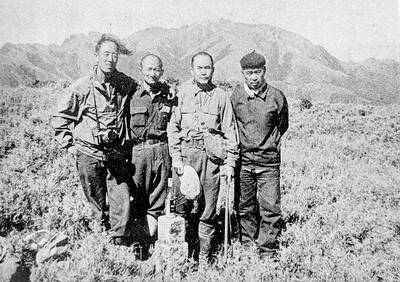
May 18 to May 24 Gathered on Yangtou Mountain (羊頭山) on Dec. 5, 1972, Taiwan’s hiking enthusiasts formally declared the formation of the “100 Peaks Club” (百岳俱樂部) and unveiled the final list of mountains. Famed mountaineer Lin Wen-an (林文安) led this effort for the Chinese Alpine Association (中華山岳協會). Working with other experienced climbers, he chose 100 peaks above 10,000 feet (3,048m) that featured triangulation points and varied in difficulty and character. The list sparked an alpine hiking craze, inspiring many to take up mountaineering and competing to “conquer” the summits. A common misconception is that the 100 Peaks represent Taiwan’s 100 tallest
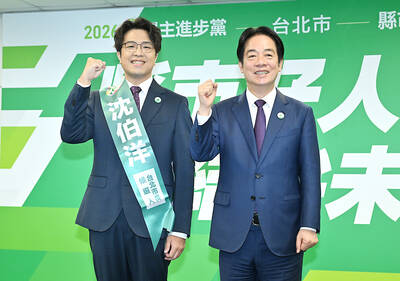
Yesterday, the Democratic Progressive Party (DPP) nominated legislator Puma Shen (沈伯洋) as their Taipei mayoral candidate, the Chinese Nationalist Party (KMT) put their stamp of approval on Wei Ping-cheng (魏平政) as their candidate for Changhua County commissioner and former legislator Tsai Pi-ru (蔡壁如) of the Taiwan People’s Party (TPP) has begun the process to also run in Changhua, though she has not yet been formally nominated. All three news items are bizarre. The DPP has struggled with settling on a Taipei nominee. The only candidate who declared interest was Enoch Wu (吳怡農), but the party seemed determined to nominate anyone


 RSS
RSS