


Dissident artist Ai Weiwei’s (艾未未) famous return to the People’s Republic of China (PRC) has been overshadowed by the astonishing news of the latest arrests of senior military figures for “corruption,” but it is an interesting piece of news in its own right, though more for what Ai does not understand than for what he does.
Ai simply lacks the reflective understanding that the loneliness and isolation he imagines are “European” are simply the joys of life as an expat. That goes both ways: “I love Taiwan!” say many still wet-behind-the-ears expats here, not realizing what they love is being an expat.
For example, Ai reported that few Germans had ever invited him into his home, very much a standard experience for expatriates. In 30 years here, I have only been in local homes when on some business there, or if they were relatives. Ai said he reactivated his suspended Chinese bank account in minutes (no kidding, he’s a local in the PRC). Of Europe, he complained: “In Germany, my bank accounts were closed twice. And not just mine, but my girlfriend’s as well. In Switzerland, I was refused an account at the country’s largest bank, and another bank later closed my account there as well. There were other similar incidents, which I won’t go into detail about here. These processes are extraordinarily complicated and often irrational.”
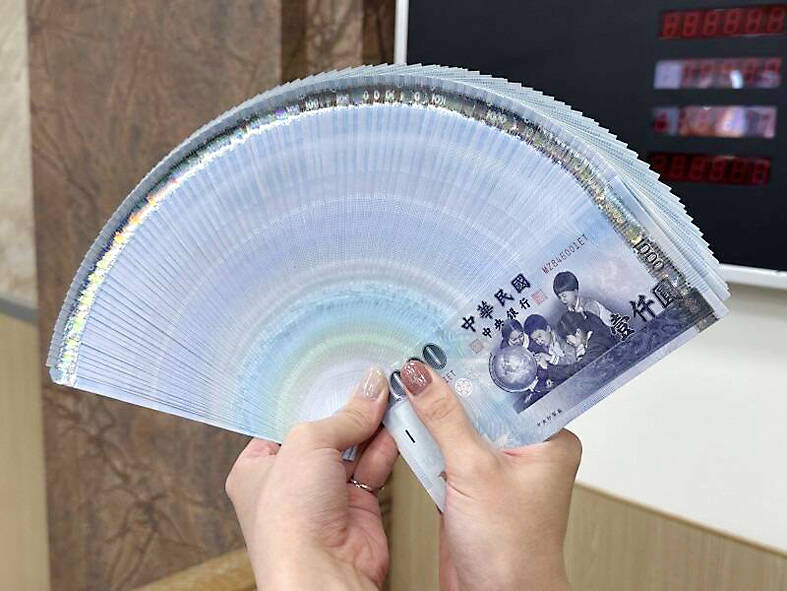
Photo: TT file photo
Welcome to expat life, Mr. Ai, where irrational banks are a fact in every country (wait til someone tells him what foreigners can go through in the PRC). As this goes to publication I am closing my useless account at the Taiwan Post Office since it will not recognize any variations on my name, a major issue for expat banking here. Recently a large check from a US bank was rejected because it used my initial instead of my full middle name, though ID numbers were the same. Similarly, I set up the National Heath Insurance (NHI) to automatically take money from my post office account while I was abroad. These were rejected because the NHI used my Chinese name, which has been associated with that account for decades (it’s right there on the chop I have had registered with them since I opened the account, for one thing) and all the ID numbers were identical. My NHI payments then fell into arrears. Of course no one notified me.
These experiences are by no means unusual. Nearly all long-term expats here report them. Banking problems are a leading complaint of Gold Card holders, the royalty of Taiwan’s visa caste system.
“Anything to do with banking is complicated, onerous and time consuming,” a respondent wrote in a survey of Gold card holders in 2023. “If there was one thing I could change about Taiwan it would be for it to get on board with modern banking systems.”
Amen, but the banks simply forward a hollow apology and move on. No one ever makes them change fundamentally. Instead, the banking system has slathered a veneer of English and other languages across its rigid, impaired services, like a thick sauce over rotten meat.
Ai’s anger at the stupidity of European banks is an anger generated by the attempt to shove the square of foreignness into the circle of local life: one can never fit. Because life without money is impossible, the local bank is the place where the raw experience of being an expat becomes real, where expats are forced to confront their otherness. Hence the long-running jokes among foreigners about the banking system, which are really attempts to cope with the way rejection at the bank is a form of rejection by local society, the way the bank operates like a formal extension of the little kid on the street yelling “foreigner!”
When asked about their archaic banking systems, bank officials will explain that these restrictions exist to combat money laundering. For example, when my wife, from the Philippines, left Taiwan in August last year one bank requested she close her account, saying that Filipinos often sell their accounts to money launderers. Consider the implications of that request: apparently once the account is in the hands of criminals, they have no trouble operating it. The anti-money laundering measures appear to inconvenience only law-abiding people. Despite these measures, in 2024 the UN office on Drugs and Crime identified Taiwan as a major money laundering hub.
The necessity for change is urgent. Earlier this month, columnist Courtney Donovan Smith argued that this year services are going to begin their slow erosion. The nation is attempting to ameliorate its worsening labor shortages, creations of its suicidal immigration and birth policies, by importing foreign workers. Smith argued that soon Taiwan will reach the psychologically potent number of a million foreign workers, but many would contend that the total number of foreigners in Taiwan already exceeds that magic figure.
All these people are going to need banking services and they are going to need them under full names, names with initials, and Chinese names and local and foreign ID numbers, all seamlessly linked (ironically, that would be a useful anti-money laundering measure) so that it is irrelevant what the order of names on my account is. That would help reduce the insanity one encounters trying to deposit foreign checks. Depositing a piddling US$413 check I received for selling a story to Analog took four hours of debate with officials at a bank where I had banked for two decades, and later they rejected a check from my parents completely. Every foreigner has stories like this.
My NHI card forces me to use only my Chinese name, meaning that the Post Office bank won’t recognize my account, even though both are government agencies. Since the tax office uses my NHI card to open my tax data, the government obviously knows I have multiple legal names and what ID numbers are associated with those names. Banks should be compelled to accept that. The seamlessness of the tax service, ironically often the friendliest and most problem-free interaction foreigners have with officialdom, is an illusion: for the tax refund, they need a copy of the account book with the legal name at that particular bank, which the clerk must then input manually. Foreigners often move around, but the requirement that certain functions can only be performed at the “home bank” for the account remains.
At present 20 percent of the population, or roughly 4.5 million people, are aged. Even if only a fourth to sixth of that population requires a foreign caregiver, an additional 700,000 or more caregivers could be imported, especially as Taiwan is moving towards relaxing the requirements for employing a foreign caregiver. That does not take into account the need for everything from bus drivers to convenience store clerks just to run Taiwan’s increasingly aged society. These new foreigners need banks that can treat them with the dignity and competence they deserve. As Ai Weiwei’s story shows, few experiences sour expats on their new homes more powerfully than banks that treat them as second-class citizens.
Notes from Central Taiwan is a column written by long-term resident Michael Turton, who provides incisive commentary informed by three decades of living in and writing about his adoptive country. The views expressed here are his own.

“China wants to unify with Taiwan at the lowest possible cost, and it currently believes that unification will become easier and less costly as time passes,” wrote Amanda Hsiao (蕭嫣然) and Bonnie Glaser in Foreign Affairs (“Why China Waits”) this month, describing how the People’s Republic of China (PRC) is playing the long game in its quest to seize Taiwan. This has been a favorite claim of many writers over the years, easy to argue because it is so trite. Very obviously, if the PRC isn’t attacking Taiwan, it is waiting. But for what? Hsiao and Glaser’s main point is trivial,
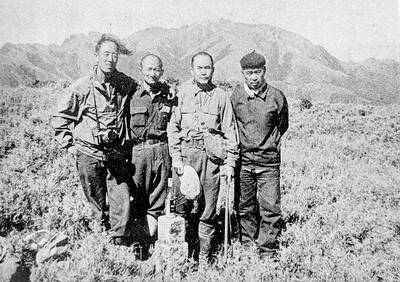
May 18 to May 24 Gathered on Yangtou Mountain (羊頭山) on Dec. 5, 1972, Taiwan’s hiking enthusiasts formally declared the formation of the “100 Peaks Club” (百岳俱樂部) and unveiled the final list of mountains. Famed mountaineer Lin Wen-an (林文安) led this effort for the Chinese Alpine Association (中華山岳協會). Working with other experienced climbers, he chose 100 peaks above 10,000 feet (3,048m) that featured triangulation points and varied in difficulty and character. The list sparked an alpine hiking craze, inspiring many to take up mountaineering and competing to “conquer” the summits. A common misconception is that the 100 Peaks represent Taiwan’s 100 tallest

Yesterday, the Democratic Progressive Party (DPP) nominated legislator Puma Shen (沈伯洋) as their Taipei mayoral candidate, the Chinese Nationalist Party (KMT) put their stamp of approval on Wei Ping-cheng (魏平政) as their candidate for Changhua County commissioner and former legislator Tsai Pi-ru (蔡壁如) of the Taiwan People’s Party (TPP) has begun the process to also run in Changhua, though she has not yet been formally nominated. All three news items are bizarre. The DPP has struggled with settling on a Taipei nominee. The only candidate who declared interest was Enoch Wu (吳怡農), but the party seemed determined to nominate anyone

In a sudden move last week, opposition lawmakers of the Chinese Nationalist Party (KMT) and Taiwan People’s Party (TPP) passed a NT$780 billion special defense budget as a preemptive measure to stop either Chinese leader Xi Jinping (習近平) or US President Donald Trump from blocking US arms sales to Taiwan at their summit in Beijing, said KMT heavyweight Jaw Shaw-kong (趙少康), speaking to the Taipei Foreign Correspondents Club on Wednesday night in Taipei. The 76-year-old Jaw, a political talk show host who ran as the KMT’s vice presidential candidate in 2024, says that he personally brokered the deal to resolve


 RSS
RSS