


Cambodian master classical dancer Penh Yom walks between her teenage students, painstakingly adjusting a bent-back finger here and the tilt of a head there, as she passes on a centuries-old art form.
Khmer classical dance, performed to traditional music, is renowned for its graceful hand gestures and stunning costumes, and has a 1,000-year history.
But after barely surviving Cambodia’s genocidal Khmer Rouge regime in the 1970s, it is now under threat from a changing media and entertainment landscape, limited funding and economic challenges.
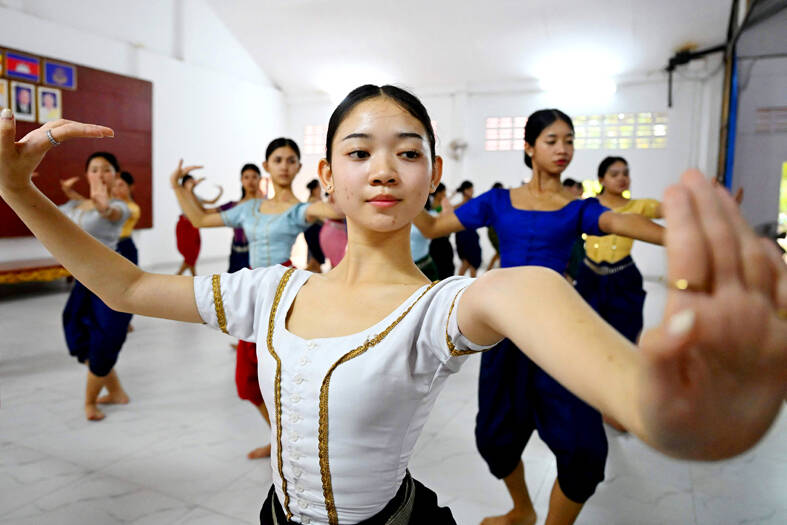
Photo: AFP
Enrollment in the Secondary School of Fine Arts in Phnom Penh is falling, and many entrants do not complete the grueling nine-year curriculum.
The art form was nearly destroyed when the Khmer Rouge killed almost all the master dancers and musicians, among nearly two million who were murdered or died of starvation, illness or overwork during the regime’s less than four years in power.
Then-leader Pol Pot’s ultra-Maoist fanatics considered dancers among the enemies of the people, both educated and representative of a feudal past they wanted to eradicate entirely.
As artists, they were specifically targeted for identification and elimination.
Penh Yom, 78, survived by hiding her profession, and after the Khmer Rouge-run Democratic Kampuchea fell in 1979, she regrouped with a small troupe of dancers to revive the form.
Her own training began in the Royal Palace when she was eight.
“Now I am worried that it will disappear,” she said. “We keep urging them to train hard and to help us preserve this art.”
“Like ‘you the grandchildren and me the grandmother try hard together.’”
Dancer Yang Sopheaktra, 21, graduated from the Phnom Penh school three years ago and recalled that the training was “really difficult”.
“We need patience, for example, when we bend our fingers, we have to count up to 100,” she said.
“We have to remember many styles of the dance. So students with less talent would drop out easily. Sometimes, I was so tired and wanted to drop it.”
Her father is also a dancer, but was against her following in his footsteps. “He wanted me to learn whatever is not related to the arts.”
But she persevered: “I want to help preserve this art form with new ideas.”
’FROM HAIR TO TOE’
Also known as Cambodia’s royal ballet, classical dance performances were originally mounted for court occasions such as coronations or marriages.
It was first introduced to an international audience in colonial power France in 1906.
UNESCO proclaimed it an intangible cultural heritage in 2003 and says it takes dancers “years of intensive training” to master its gestures and poses, which “evoke the gamut of human emotions, from fear and rage to love and joy.”
But it risks “becoming a mere tourist attraction,” it adds.
The Secondary School of Fine Arts has more than 90 classical dance teachers and is the primary training center for the next generation.
Pupils attend dance classes in the mornings and follow the standard school curriculum in the afternoons.
Tuition is free, but it has slashed the accommodation available to students, and trainers expect many to drop out in the face of educational demands and financial pressures on their families.
This year, 39 eight-year-olds registered, little more than half the usual number.
A few weeks into the course, the new entrants bent their hands, legs and bodies as trainer Hang Sophea sought to instill the basics.
“I have to watch them from hair to toe so that in the future they could be our heirs,” she said.
Some would soon start dropping out and at most 15 would become dancers, she predicted.
“As teachers, we are worried... Now it is the modern era and everything is in a smartphone,” Hang Sophea added.
“We always remind them not to forget our identity.”
But some use social media to promote their art.
Tola Thina, 18, is in her final year at the school and often posts her performances on Facebook, where she has more than 20,000 followers.
“This culture is really beautiful and I love it,” she said. “I want to be a traditional dancer and preserve it.”

The breakwater stretches out to sea from the sprawling Kaohsiung port in southern Taiwan. Normally, it’s crowded with massive tankers ferrying liquefied natural gas from Qatar to be stored in the bulbous white tanks that dot the shoreline. These are not normal times, though, and not a single shipment from Qatar has docked at the Yongan terminal since early March after the Strait of Hormuz was shuttered. The suspension has provided a realistic preview of a potential Chinese blockade, a move that would throttle an economy anchored by the world’s most advanced and power-hungry semiconductor industry. It is a stark reminder of
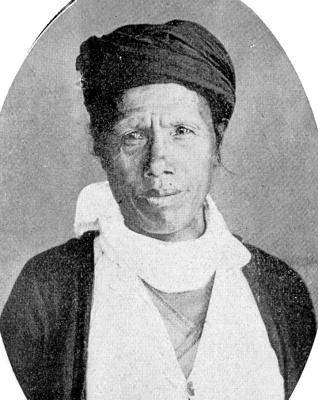
May 11 to May 17 Traversing the southern slopes of the Yushan Range in 1931, Japanese naturalist Tadao Kano knew he was approaching the last swath of Taiwan still beyond colonial control. The “vast, unknown territory,” protected by the “fierce” Bunun headman Dahu Ali, was “filled with an utterly endless jungle that choked the mountains and valleys,” Kano wrote. He noted how the group had “refused to submit to the measures of our authorities and entrenched themselves deep in these mountains … living a free existence spent chasing deer in the morning and seeking serow in the evening,” even describing them as

As a different column was being written, the big news dropped that Chinese Nationalist Party (KMT) caucus whip Fu Kun-chi (傅?萁) announced that negotiations within his caucus, with legislative speaker Han Kuo-yu (韓國瑜) of the KMT, party Chair Cheng Li-wun (鄭麗文), Taichung Mayor Lu Shiow-yen (盧秀燕) and Taiwan People’s Party (TPP) Chair Huang Kuo-chang (黃國昌) had produced a compromise special military budget proposal. On Thursday morning, prior to meeting with Cheng over a lunch of beef noodles, Lu reiterated her support for a budget of NT$800 or NT$900 billion — but refused to comment after the meeting. Right after Fu’s

Yesterday, the Democratic Progressive Party (DPP) nominated legislator Puma Shen (沈伯洋) as their Taipei mayoral candidate, the Chinese Nationalist Party (KMT) put their stamp of approval on Wei Ping-cheng (魏平政) as their candidate for Changhua County commissioner and former legislator Tsai Pi-ru (蔡壁如) of the Taiwan People’s Party (TPP) has begun the process to also run in Changhua, though she has not yet been formally nominated. All three news items are bizarre. The DPP has struggled with settling on a Taipei nominee. The only candidate who declared interest was Enoch Wu (吳怡農), but the party seemed determined to nominate anyone


 RSS
RSS