

Environmental education is a lot like health education. Teaching people what they should do, and why it’s a desirable course of action, isn’t particularly hard. Getting them to actually modify their lifestyle, however, is altogether more difficult.
Almost every smoker agrees they’d be better off quitting the habit, but many find it hard to stop. Likewise, most of those who get around by car or motorcycle are well aware of the link between burning fossil fuels and climate change, yet they continue to drive or ride when they could walk or take a bus.
Scholars usually call this most human of behaviors the “knowledge-action gap,” the “knowing-doing gap,” or the “belief-action gap” — and two academic papers published earlier this year provide insights into how this gap might be bridged in the Taiwanese context.
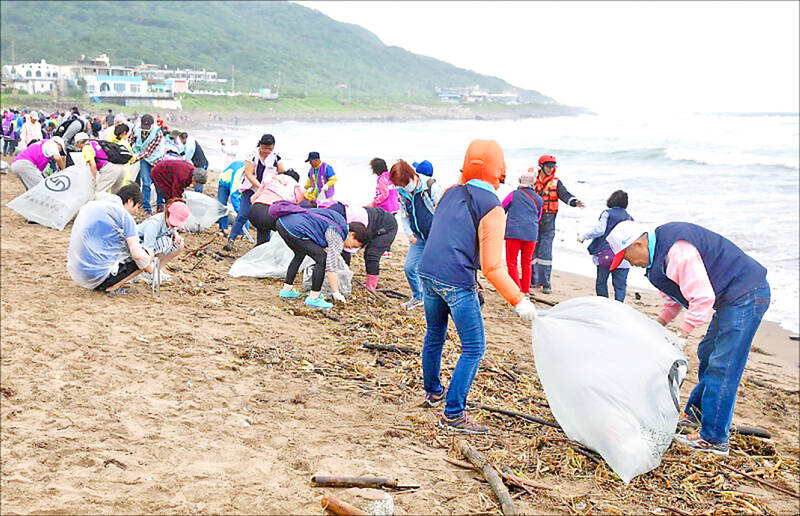
Photo courtesy of the Environmental Protection Department, New Taipei City
CIVIL SERVANTS
The authors of “Environmental Institutional Determinants of Climate Behavior Among Taiwan’s Public Officials” (Climate, Oct. 25, 2025) surveyed civil servants at various levels of government, so as to examine the interplay between individuals’ climate-change knowledge and the reality of the institutions in which they operate.
Noting that Taiwanese citizens report high levels of environmental awareness, yet “their actual participation in climate action remains limited,” the five co-authors — four of whom are affiliated with National Taiwan Normal University — assert that this indicates a need to “investigate how institutional and organizational conditions facilitate or constrain” people’s efforts to translate their concerns into action.
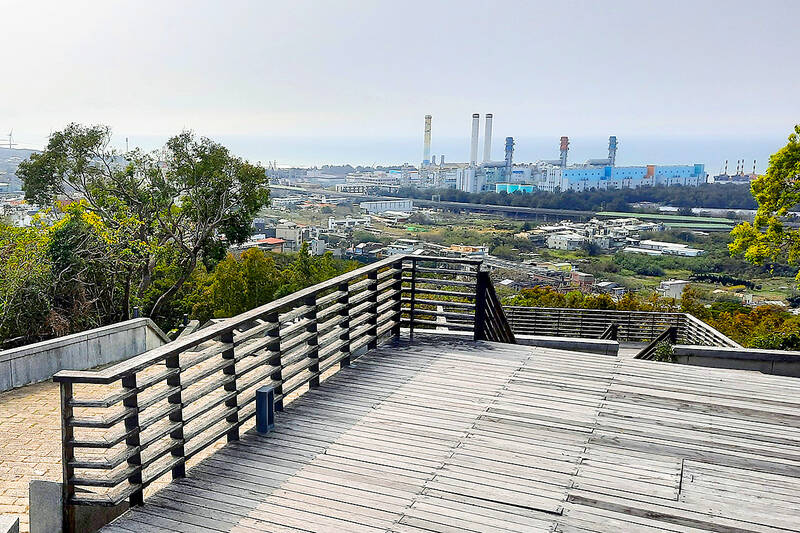
Photo: Steven Crook
The 1,940 respondents each answered 22 multiple-choice questions (among them “In 2023, which energy source accounted for the largest share of Taiwan’s electricity generation?” and “Which of the following laws has been enacted in Taiwan in response to the severity of global climate change?”) and indicated how strongly they agreed or disagreed with 28 statements. The latter included “Everyone has a responsibility to respond to climate change” and “I am able to collaborate with personnel from other departments or agencies on projects or tasks related to climate change.”
The researchers conclude that for civil servants to genuinely engage with governmental climate programs, a distinction must be drawn between types of knowledge. Strategy knowledge, which focuses on climate-mitigation-and-adaptation solutions, rather than factual knowledge of the issues, seems more likely to result in proactive attitudes. This finding, they write, “challenges the assumption that information provision is sufficient for behavioral change and underscores the necessity of equipping officials with practical tools to bridge the knowledge–behavior gap.”
In both scale and culture, working in local government is quite different to working for a central government ministry. It’s thus no surprise that the survey reveals what the authors describe as “a striking institutional divergence.” The behavior of central government officials is “shaped primarily by departmental mandates yet constrained by bureaucratic structures,” while at the local level, government workers “rely more on supervisory encouragement and experiential involvement.”
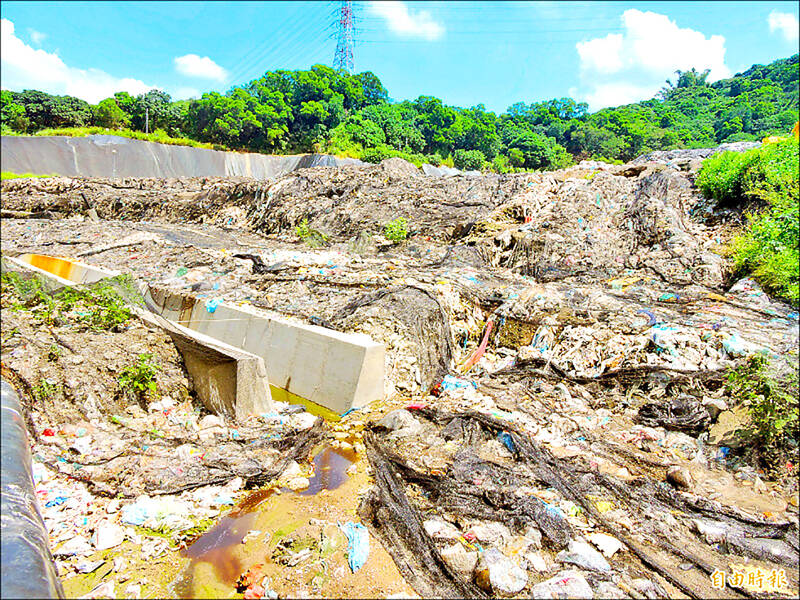
Photo: Su Chin-feng, Taipei Times
They caution against a one-size-fits-all effort to improve governmental effectiveness in the face of climate change. Central government entities should “streamline mandates, clarify responsibilities, and reduce fragmentation,” so knowledge isn’t hindered by institutional constraints. Local officials, by contrast, would benefit from supervisor training and experiential learning.
GENERAL PUBLIC
The authors of “Environmental Literacy Among the General Public in Chiayi County, Taiwan” (Sustainability, April 1, 2025) differentiate between environmental awareness and environmental knowledge. The former, “an individual’s ability to recognize environmental issues, challenges and threats,” is typically gained through education, media exposure and personal experience. The latter is an individual’s grasp of “environmental processes, issues and sustainable practices.”
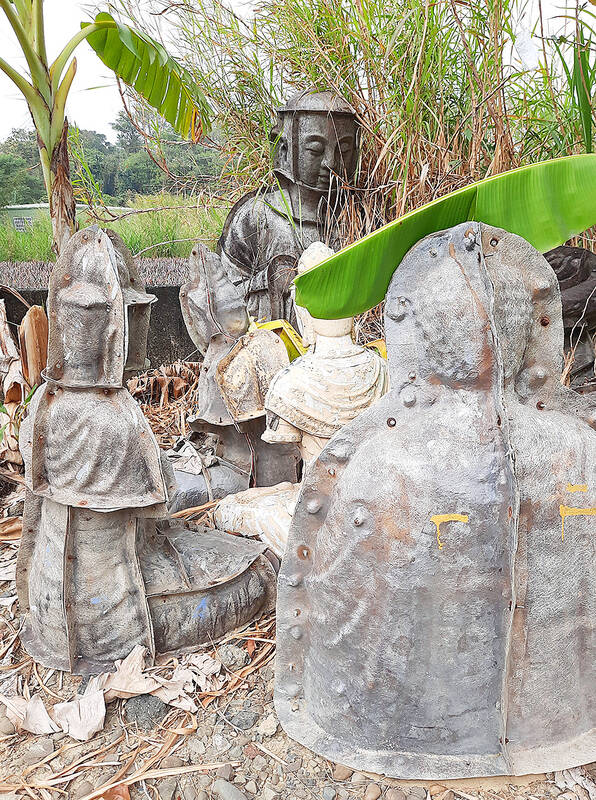
Photo: Steven Crook
Their concept of environmental literacy incorporates three additional dimensions: environmental attitudes (a person’s values and emotional responses toward their surroundings); environmental action skills (for example, knowing how to separate trash or alert the authorities to pollution) and environmental behavior (such as energy conservation and sustainable consumption).
The trio of researchers behind the Chiayi paper hypothesize that, when it comes to the environment, awareness helps build knowledge, while knowledge positively influences both pro-environment attitudes and relevant skills. Such skills are also reinforced by environmental attitudes.
What’s more, survey participants’ education, gender, age and occupation appears to shape how these different dimensions relate to one another. Higher education strengthens the connection between knowledge and attitudes, while women show a stronger link between attitudes and action skills than men, indicating they’re “more likely to translate their environmental concerns into practical competencies.”
Photo: Steven Crook
The authors acknowledge that social conditions sometimes impede women from acting on their pro-environment values. While they do not offer specific examples, a clear instance would be a woman opting to drive a car rather than use public transit to ensure her personal safety after dark.
The 500 participants strongly agreed with the statement that “environmental pollution affects food safety,” and decisively endorsed both reusable tableware and local/seasonal agricultural products. (Agriculture remains a cornerstone of the county’s economy, so respondents may support local produce out of self-interest.) However, the survey discovered a relative lack of environmental action skills. The lowest score of all was for documenting and reporting environmental violations, which suggests educating the public about reporting mechanisms should be a priority.
The researchers who carried out the Chiayi study (which was funded by the county government’s Environmental Protection Bureau) stress that having the right mindset and appropriate skills don’t by themselves guarantee that a person will integrate sustainability practices into their daily routine.
Inconvenience is often a significant barrier. So is cost, but that works both ways. The study didn’t ask respondents what they thought about penalties for environmental violations, however, and the authors didn’t comment on a view expressed by veteran sociologist Michael Hsiao Hsin-huang (蕭新煌). Hsiao and others have said it’s the potential cost of non-compliance, not an innate devotion to the Earth, that encourages many Taiwanese to do the right thing.
While environmental awareness in Taiwan is relatively high, the paper’s authors write, the environmental education system “primarily focuses on theoretical knowledge rather than hands-on environmental action skills.” They contrast this with Europe and the US, “where localized sustainability initiatives play a crucial role in shaping community engagement.”
Much like the scholars who examined public officials’ climate behavior, the team that surveyed Chiayi residents say their findings “suggest that targeted educational interventions are needed to bridge the knowledge–action gap.”
Any narrowing of that gap would be progress, especially if it can be achieved at the highest levels where policy is set. Surely Taiwan’s leaders know that the existing intersection of regulations and interest groups — which, to give just one example, encourages the construction of far more houses than a shrinking population requires — often obstructs meaningful climate action. But it may be a lack of political will, rather than not having the right skills, that’s holding them back.
Steven Crook, the author or co-author of four books about Taiwan, has been following environmental issues since he arrived in the country in 1991. He drives a hybrid and carries his own chopsticks. The views expressed here are his own.

For a time, it became popular to describe the tactics of the People’s Republic of China (PRC) in encroaching on sovereignty and militarizing islands in the South China Sea as “salami slicing.” Those slices have been getting chunkier. The People’s Liberation Army has been increasing its navy and air force activities in the region. The Chinese Coast Guard has likewise been ramping up their activities, and the civilian paramilitary People’s Armed Forces Maritime Militia has been backing up the navy and coast guard with alarming swarming maneuvers. The PRC claims most of the South China Sea through its U-shaped 10-dash

For most train journeys, where you are going is the main consideration. On the Shanlan train (山嵐號) in eastern Taiwan, however, it’s not the “where” but the “how” that matters. On this pricey but meticulously crafted train journey running between Hualien and Taitung County’s Chihshang (池上), what you’re paying for isn’t to get from Point A to Point B, but rather a sensory, aesthetic and cultural experience. On the platform, the train stands out vividly next to the other Taiwan Railway carriages. Its exterior is painted in a yellow-green gradient intended to blend harmoniously with the ripening rice paddies of the East

The comical bit of parachute journalism by Simon Shuster in the Atlantic last week under the title “Will Taiwan Just Give Up?”, drew much attention for its numerous minor errors, largely forgivable, its total lack of understanding of Taiwan and its history and its strange, pro-China interpretations, including taking Chinese Nationalist Party (KMT) Chairwoman Cheng Li-wun (鄭麗文) seriously. The laughter and indignation that essay generated among Taiwan aficionados is an indicator of how far Western journalism on Taiwan has come. Twenty years ago, it would have been another piece for the pile. Today, it is an obvious outlier. Shuster’s piece was
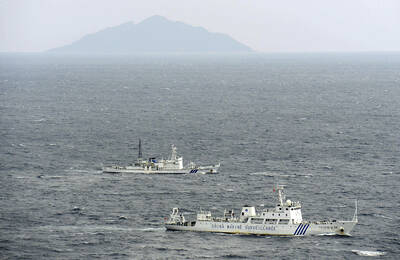
For a small nation, Taiwan has an unusually long list of territorial disputes. In part or in whole, it has disputes over the Spratly Islands (Nansha Islands, 南沙群島) with Vietnam, the Philippines, Malaysia and Brunei. It also has another territorial dispute with Vietnam over the Paracel Islands, and with Japan over the Senkaku Islands (Diaoyutai Islands, 釣魚台). Of course, the biggest territorial disputes are with the People’s Republic of China (PRC), which not only claims all of the above, but also Pratas Island (Dongsha, 東沙島), Kinmen, Penghu and all of Taiwan itself. This creates considerable headaches politically for the government, especially


 RSS
RSS