


Thirty years after her death, Eileen Chang (張愛玲), who shot to literary stardom in 1940s, Japanese-occupied Shanghai, remains one of China’s most-read novelists. Though she owes much of her lasting fame to the Taiwanese critics and publishers who rediscovered her work in the 1960s, she only ever visited Taiwan once.
On that trip, in late 1961, she found Taipei to be a ghost of the Shanghai she’d left behind. Mandarin was spoken everywhere, and upon landing at a crowded Taipei Songshan Airport, she suddenly felt, “it really was China, not the strange one I left 10 years ago under the Communists but the one I knew best and thought had vanished forever.”
In the Republic of China’s (ROC) relocated capital, “they were going along with the official assumption that Formosa is China, the mother country of all Chinese,” she described. But before long, “a feeling of chronological confusion came over me,” an experience so psychologically jarring that, addressing her hosts, she suddenly burst out, “But it’s not possible!”
After an initial stay at a Yangmingshan guest house also used by distinguished visitors of Chiang Kai-shek (蔣介石), she went on to the countryside where she found “more native Formosans than refugees.” By refugees she meant those who fled the Chinese Civil War. The native Formosans were Fujianese settlers and “gypsylike” aboriginals, who preferred to speak their own languages or Japanese.
“I thought how un-Chinese these people were,” she noted.
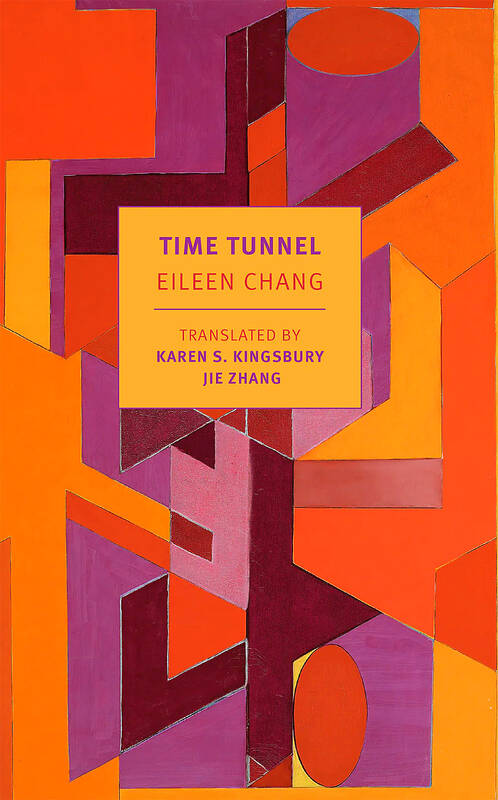
These impressions come down to us through Chang’s essay, “Return to the Frontier,” which now appears in a remarkable new volume of Chang’s writing, Time Tunnel, a collection of short stories and essays that spans the entirety of her career and in doing so offers a sort of oblique biography of the iconic Chinese writer.
Chang initially wrote “Return to the Frontier” in English for an American magazine not long after her visit, but the version here is a later reworking in Chinese from the 1980s that has now been retranslated into English. This bit of provenance may seem a footnote, but the essay’s oscillation between the two languages mirrors the trajectory of Chang’s own career, which similarly swung between English and Chinese.
Chang, the aristocratic great-granddaughter of the Qing Dynasty statesman Li Hongzhang (李鴻章), published her first stories in English for Shanghai magazines, but soon began writing in Chinese. Following the Communist takeover, she fled China for Hong Kong, then in 1955 emigrated to the US as a self-described “refugee.”
After writing Hong Kong film scripts and Chinese novels for a US government propaganda office, she attempted several English stories and novels, but with middling success. At the same time, Taiwanese publishers rescued her out-of-print writings from obscurity, only to see their popularity grow with successive generations of readers.
Because Chang first wrote many of her stories for magazines, collections of her writings vary, especially between languages. The selections in Time Tunnel range from stories of first love she penned in her 20s to ruminations on exile from the final years of her life.
Several of these pieces have not been published in English previously, and the essay “New England is China” appears for the first time in any language. The work brings together impressions of a bus journey through the snowy and confounding New Hampshire countryside — she found the New Englanders “almost inscrutable like the Chinese are said to be” — with meditations on dislocation and identity. It is what in Chinese is called a sanwen (散文), or meandering essay.
This bus journey, though she does not mention it here, delivered her to a writers’ residency where she would meet her second husband, American screenwriter Ferdinand Reyher. What she presents instead is the image of one deposited spiritually into the midst of a snowbound wasteland. Only the honest hospitality of the locals offers a glimmer of hope, and in this even-keeled society, she sees an idealized ancient China — the Duchy of Lu under the governance of Confucius.
Though Chang lived the final 40 years of her life in the US, she could never put China behind her.
The story “Those Old Schoolmates They’re All Quite Classy Now,” written in the 1970s but only published posthumously in 2006, is perhaps the best in this volume. It depicts a scene of two women, once middle school classmates in Shanghai but now middle-aged exiles in the US, meeting up to reminisce. With marvelous attention to detail, Chang describes an awkwardness between them. The host, a stand-in for Chang herself, cannot help but see herself through the eyes of her friend, the glamorous wife of an advisor to the US president. Throughout the conversation, her own past washes over her in waves — her “ugly duckling” youth, the stinging separation from her philandering husband, her muddled career as a translator and interpreter for the US government. It makes the presumed judgments of her successful friend almost too much to bear.
There is an air of loneliness here, also a sense of dislocation and estrangement. Believing her life hasn’t amounted to much, the woman hears of US President John F. Kennedy’s assassination on the radio. She can only offer this wistful rumination: “Kennedy is dead. I’m still alive, even if I’m only washing the dishes.”
Departure is another powerful thread — especially the final departure from China to Hong Kong over the bridge at Lo Wu, which she likens to “crossing a border between dark and light, yin and yang.” “Blossoms Afloat, Flowers Adrift” describes a sea voyage out of Hong Kong. “Return to the Frontier” is her Tom Wolfe “you can never go home again” moment. And finally there is snowy New England.
The final essay, “1988—?”, is a sketch from quite late in her life that was inspired by seeing two Chinese lovers’ names scrawled in a bit of graffiti on a bus stop bench in suburban Los Angeles.
“Here, in the midst of utter ennui, this sudden sighting of written marks made by a Chinese strikes a spark of delight,” she writes.
And later, “A boy and a girl in this wayward world, the two of them from the same place meeting each other in a foreign place — who knows what the future will bring?”
Time Tunnel is full of such splendid moments. Though its selections are in some senses late discoveries and peripheral works, they are no mere footnotes to a towering literary career. Evident throughout are Chang’s masterful storytelling, her biting pragmatism and sharp pronouncements. So too are her daring and pioneering views on gender, sex and cross-cultural love affairs — for what other Chinese author of her era could measure a woman’s diminishing social power by her sagging breasts, remark on schoolgirl lesbianism or describe a Chinese boy’s crush on a Jewish girl without a load of cultural baggage?
When read against the drama of the author’s own life, these many fantastic details, along with the writings that contain them, resonate with great pathos indeed.
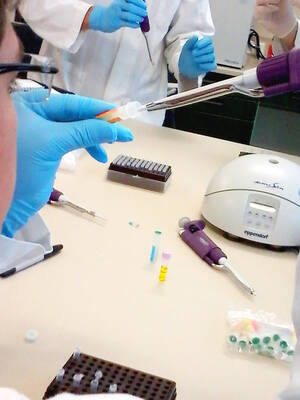
Google unveiled an artificial intelligence tool Wednesday that its scientists said would help unravel the mysteries of the human genome — and could one day lead to new treatments for diseases. The deep learning model AlphaGenome was hailed by outside researchers as a “breakthrough” that would let scientists study and even simulate the roots of difficult-to-treat genetic diseases. While the first complete map of the human genome in 2003 “gave us the book of life, reading it remained a challenge,” Pushmeet Kohli, vice president of research at Google DeepMind, told journalists. “We have the text,” he said, which is a sequence of
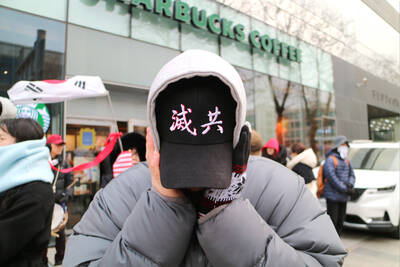
On a harsh winter afternoon last month, 2,000 protesters marched and chanted slogans such as “CCP out” and “Korea for Koreans” in Seoul’s popular Gangnam District. Participants — mostly students — wore caps printed with the Chinese characters for “exterminate communism” (滅共) and held banners reading “Heaven will destroy the Chinese Communist Party” (天滅中共). During the march, Park Jun-young, the leader of the protest organizer “Free University,” a conservative youth movement, who was on a hunger strike, collapsed after delivering a speech in sub-zero temperatures and was later hospitalized. Several protesters shaved their heads at the end of the demonstration. A
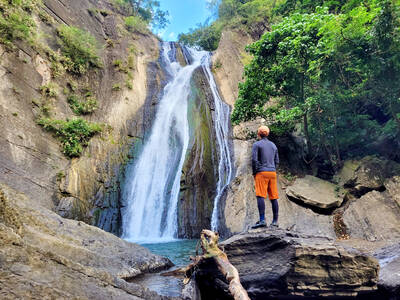
Every now and then, even hardcore hikers like to sleep in, leave the heavy gear at home and just enjoy a relaxed half-day stroll in the mountains: no cold, no steep uphills, no pressure to walk a certain distance in a day. In the winter, the mild climate and lower elevations of the forests in Taiwan’s far south offer a number of easy escapes like this. A prime example is the river above Mudan Reservoir (牡丹水庫): with shallow water, gentle current, abundant wildlife and a complete lack of tourists, this walk is accessible to nearly everyone but still feels quite remote.
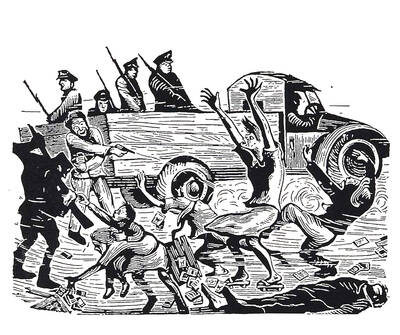
In August of 1949 American journalist Darrell Berrigan toured occupied Formosa and on Aug. 13 published “Should We Grab Formosa?” in the Saturday Evening Post. Berrigan, cataloguing the numerous horrors of corruption and looting the occupying Republic of China (ROC) was inflicting on the locals, advocated outright annexation of Taiwan by the US. He contended the islanders would welcome that. Berrigan also observed that the islanders were planning another revolt, and wrote of their “island nationalism.” The US position on Taiwan was well known there, and islanders, he said, had told him of US official statements that Taiwan had not


 RSS
RSS