


Kristen Stewart has claimed that acting is “unmasculine” and “inherently submissive,” and that male actors developed “the method” to compensate.
In an interview with the New York Times, Stewart was asked about Marlon Brando’s performance in the 1978 film Superman, and after saying she hadn’t seen the movie said that his apparent inability to pronounce the word “Krypton” correctly was “painful.”
“Performance is inherently vulnerable and therefore quite embarrassing and unmasculine. There’s no bravado in suggesting that you’re a mouthpiece for someone else’s ideas. It’s inherently submissive. Have you ever heard of a female actor that was method?”

Photo: AP
“Method acting” is a term used to describe the immersive techniques derived from the practice of performance first outlined by Russian theater director Konstantin Stanislavski in a series of books, beginning in 1924 with My Life in Art. The style was popularized in the US by the Group Theater in the 1930s and by the Actors Studio, which was founded in 1947.
Notable female students at the Actors Studio include Ellen Burstyn, Sally Field, Jane Fonda, Melissa Leo and Marilyn Monroe.
Stewart went on to say that “men are aggrandized for retaining self” and that “if a woman did that, it would be different”.
“If you have to do 50 push-ups before your closeup or refuse to say a word a certain way … There’s a common act that happens before the acting happens on set: if [male actors] can protrude out of the vulnerability and feel like a gorilla pounding their chest before they cry on camera, it’s a little less embarrassing. It also makes it seem like a magic trick, like it is so impossible to do what you’re doing that nobody else could do it.”
At the same time, Stewart objected to the idea that female actors are somehow emotionally unbalanced. Saying that “the ‘Krypton’ thing is so defensive”, she said: “I asked a fellow actor: ‘Have you ever met a female actor that was method and needed to scream and do a whole thing?’ As soon as I said ‘male actor, female actor’ … he goes, ‘Oh, actresses are crazy.’ Then I was like: hold on a second. You just called me crazy! Cool. So now we’re doing the typical thing where the girl’s crazy, and you didn’t even listen to anything I said?”
If one asks Taiwanese why house prices are so high or why the nation is so built up or why certain policies cannot be carried out, one common answer is that “Taiwan is too small.” This is actually true, though not in the way people think. The National Property Administration (NPA), responsible for tracking and managing the government’s real estate assets, maintains statistics on how much land the government owns. As of the end of last year, land for official use constituted 293,655 hectares, for public use 1,732,513 hectares, for non-public use 216,972 hectares and for state enterprises 34 hectares, yielding

The small platform at Duoliang Train Station in Taitung County’s Taimali Township (太麻里) served villagers from 1992 to 2006, but was eventually shut down due to lack of use. Just 10 years later, the abandoned train station had become widely known as the most beautiful station in Taiwan, and visitors were so frequent that the village had to start restricting traffic. Nowadays, Duoliang Village (多良) is known as a bit of a tourist trap, with a mandatory, albeit modest, admission fee of NT$10 giving access to a crowded lane of vendors with a mediocre view of the ocean and the trains

For many people, Bilingual Nation 2030 begins and ends in the classroom. Since the policy was launched in 2018, the debate has centered on students, teachers and the pressure placed on schools. Yet the policy was never solely about English education. The government’s official plan also calls for bilingualization in Taiwan’s government services, laws and regulations, and living environment. The goal is to make Taiwan more inclusive and accessible to international enterprises and talent and better prepared for global economic and trade conditions. After eight years, that grand vision is due for a pulse check. RULES THAT CAN BE READ For Harper Chen (陳虹宇), an adviser

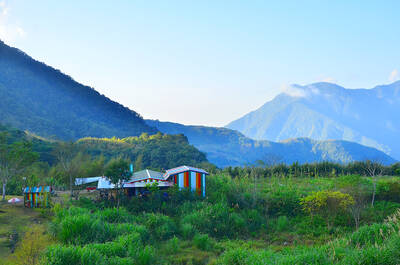
Traditionally, indigenous people in Taiwan’s mountains practice swidden cultivation, or “slash and burn” agriculture, a practice common in human history. According to a 2016 research article in the International Journal of Environmental Sustainability, among the Atayal people, this began with a search for suitable forested slopeland. The trees are burnt for fertilizer and the land cleared of stones. The stones and wood are then piled up to make fences, while both dead and standing trees are retained on the plot. The fences are used to grow climbing crops like squash and beans. The plot itself supports farming for three years.


 RSS
RSS