


Article 5 of the Public Debt Act (公共債務法) limits government debt with a maturity of one year or later to 50 percent of the average of the nominal GDP for the previous three fiscal years, as determined by the Directorate General of Budget, Accounting and Statistics (DGBAS). The central government limit is 40.6 percent; the remaining 10 percent is divided up among special municipalities (7.65 percent), counties and county-level cities (1.63 percent) and townships and township-level cities (0.12 percent).
Given the strictures of this law — and the systematic destruction of budgets and governance by the pro-China parties in the legislature — one recent trend has been to reach for special budgets. The law allows for them in cases of genuine national emergency. For example, the Tsai Ing-wen (蔡英文) administration, which had a friendly legislature, pushed through a special budget for the pandemic.
Similarly, in response to the crisis engendered by US tariffs, the administration of President William Lai (賴清德) proposed a special resilience budget, which was passed by the legislature in October. That budget included the NT$10,000 universal handouts, originally proposed by the pro-China parties in the legislature, which has no constitutional authority to propose budgets or spending (the legislature can only cut or freeze budgets). Their 2023 proposal for similar handouts was shot down.
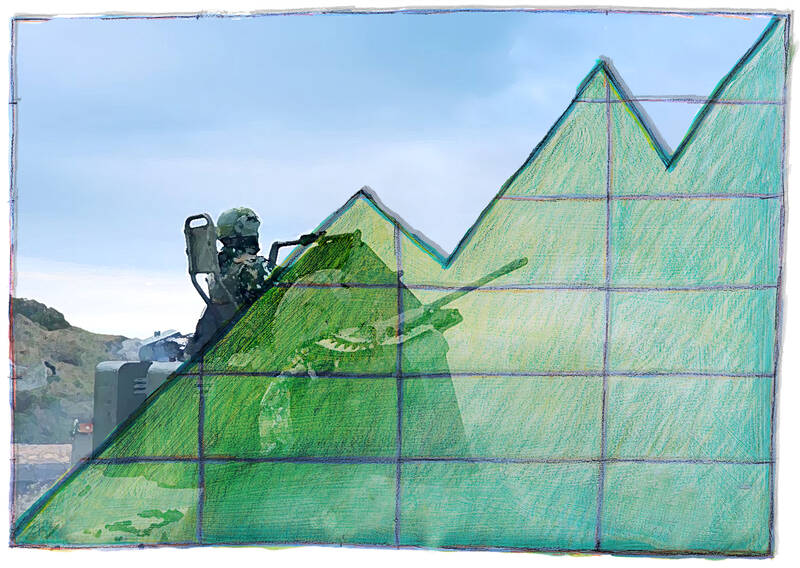
GRAPHIC: TT
DEFENSE DEBATES
The special budgets made international headlines last month when President Lai proposed a special budget for military spending, revealing it in an op-ed in the Washington Post. The budget of NT$1.25 trillion (US$39.8 billion), spread over eight years, was blocked in committee by legislators of the two pro-China parties, the Chinese Nationalist Party (KMT) and the Taiwan People’s Party (TPP) this week. The KMT also blocked a number of other proposed laws in committee, including legal amendments proposed by Democratic Progressive Party (DPP) lawmakers to oversee lawmakers heading to the People’s Republic of China (PRC).
Lai’s choice of venue was clever. It demonstrated the DPP’s commitment to defending Taiwan to the US, and implicitly requested that the US pressure the KMT to get the budget passed.
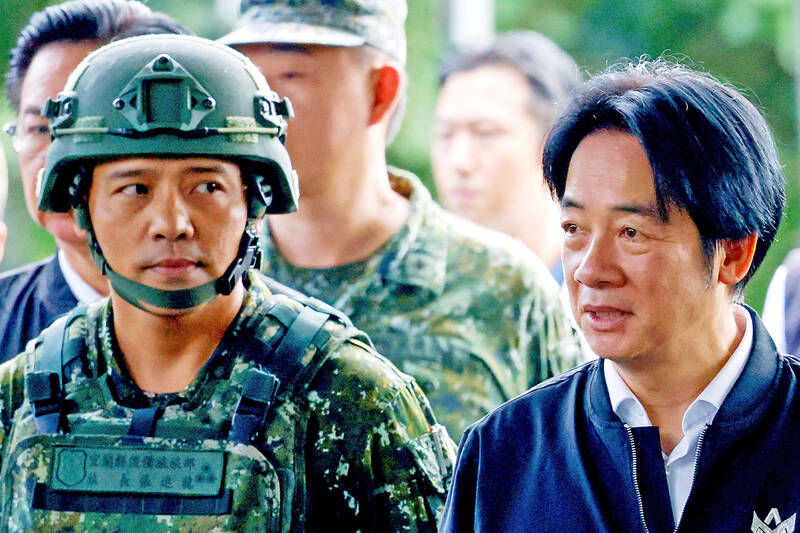
Photo: Reuters
The pro-China parties responded with fierce criticism. KMT caucus whip Fu Kun-chi (傅?萁), who meets periodically with officials of the PRC, complained of Lai’s special budget that the Ministry of National Defense (MND) had not explicitly stated that the PRC would have the capability to take Taiwan by force by 2027 in any of its defense budgets across the past three fiscal years. This logic-impaired claim is an entirely new complaint, as the government has been authorizing defense budgets since 1949 without meeting that requirement. Weirdly, it means that Taiwan could never spend money on defense, since that would set back all PRC deadlines for an invasion. It also implies a world where Taiwan does not seriously move on defense unless invasion is imminent.
TPP Chairman Huang Kuo-chang (黃國昌) similarly complained that with budgets exceeding NT$1 trillion, Lai should provide guarantees that the special budget would truly increase Taiwan’s combat readiness. If Lai should attempt to do that, of course, the goalposts would simply shift again.
Recall that these are the leaders of the same two parties that have attempted to transfer central government spending to local governments, increasing the share of the government budget for local governments from 30 percent to 40 percent. In part, this is an indirect attempt to reduce defense budgets by reducing the funds available to the central government, one reason Lai is proposing a special budget. KMT Caucus whip Fu has proposed massive infrastructure spending in his home district, another proposal that would crowd out defense spending. Fortunately that appears to be DOA in the legislature.
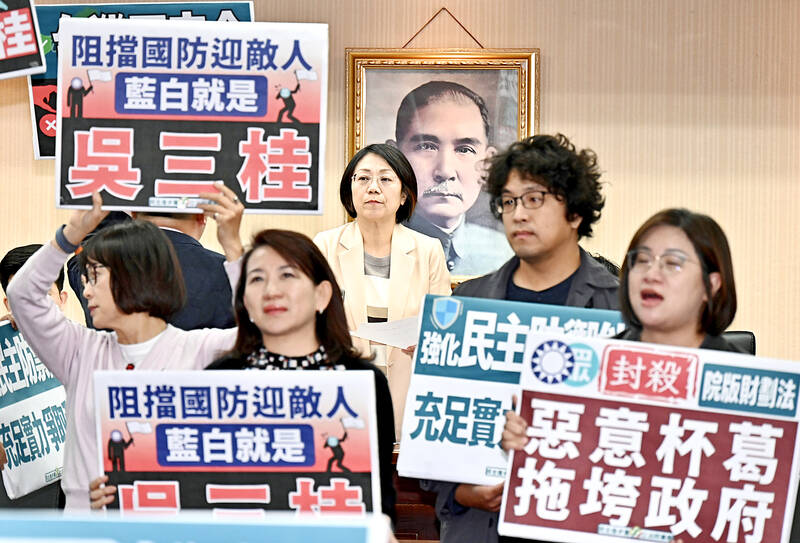
Photo: Tu Chien-jung, Taipei Times
HANDOUT HYPOCRISY
The opposition’s concerns about debt are touching. After assuming office in December of 2022, the KMT Mayor of Taipei, Chiang Wan-an (蔣萬安), announced the resumption of NT$1,500 cash gifts to elderly residents on the Double Ninth Festival. The last time such handouts had been made was 2015. Similarly, the KMT Mayor of Taoyuan, Simon Chang (張善政), promised to increase bonuses for elderly people on the three major holidays, in addition to a Double Ninth Festival payment of NT$2,500. Evidently, KMT politicians aren’t shy about using public money to buy private votes. It is only defending the nation that bothers them.
Fortunately, the DGBAS maintains a tight hold on local government budgets. Several deeply indebted local governments are currently on tight repayment plans after debt disasters unfolded in the middle 2010s.
While passing the special budget for the NT$10,000 handout, the pro-China parties removed the subsidy for Taiwan Power Co’s (Taipower) massive debts (that was partly restored in the special tariff resilience budget passed in October). They slashed the Taipower subsidies to force the DPP government to raise electricity rates and take the blame from the public for rising electricity rates.
The net result of the NT$10,000 payout, DPP officials pointed out, was to raise central government debt. Again, one effect of that is to place additional constraints on future defense spending.
SLASH AND SUPPRESS
In blocking Lai’s proposed special budget, the KMT also demanded that Lai appear before the legislature to answer questions about it. There is no constitutional requirement that Lai do so. That demand signals the KMT-controlled legislature’s goal to render the executive branch a mere appendage of the legislature, just as the shenanigans with the budgets — also used against DPP President Chen Shui-bian (陳水扁) — appears to signal the KMT’s determination to stealthily bypass the Constitution and gradually establish a de facto legislative ability to create and set budgets.
Legislator Fan Yun (范雲) of the ruling DPP said that the demand for a presidential report to the legislature was an excuse and the real aim of the KMT was to help China suppress Taiwan’s defense budget. That is also the goal of increasing the central government debt and of actions such as slashing Taipower subsidies, which will force the government to cut other spending to pay off Taipower’s debts. The pro-China parties are using the central government’s public debt as a tool, both in rhetoric and reality, to restrict defense spending.
Lai’s use of an op-ed in a Washington DC newspaper was a cry for help. The US needs to step up. It already makes criticism of weapons purchases too easy with its enormous backlog of weapons deliveries, something KMT officials invariably point to. Deliveries must be accelerated. US lawmakers, already becoming more vocal in their criticisms of the pro-China parties, need to dial that up more. Visits by US government officials should be implemented, to read the riot act to the pro-China parties. The US might also consider closing KMT offices in the US, and restricting visas for KMT officials.
Finally, it must be said that neither party ever discusses raising taxes, especially on the wealthy. New taxes would alleviate the need for special budgets and reduce the leverage debt provides for the KMT. Special budgets are thus embraced by both sides in part because they circumvent discussion of new taxes.
If only the second word in the DPP’s name actually meant something.
Notes from Central Taiwan is a column written by long-term resident Michael Turton, who provides incisive commentary informed by three decades of living in and writing about his adoptive country. The views expressed here are his own.
The small platform at Duoliang Train Station in Taitung County’s Taimali Township (太麻里) served villagers from 1992 to 2006, but was eventually shut down due to lack of use. Just 10 years later, the abandoned train station had become widely known as the most beautiful station in Taiwan, and visitors were so frequent that the village had to start restricting traffic. Nowadays, Duoliang Village (多良) is known as a bit of a tourist trap, with a mandatory, albeit modest, admission fee of NT$10 giving access to a crowded lane of vendors with a mediocre view of the ocean and the trains

For many people, Bilingual Nation 2030 begins and ends in the classroom. Since the policy was launched in 2018, the debate has centered on students, teachers and the pressure placed on schools. Yet the policy was never solely about English education. The government’s official plan also calls for bilingualization in Taiwan’s government services, laws and regulations, and living environment. The goal is to make Taiwan more inclusive and accessible to international enterprises and talent and better prepared for global economic and trade conditions. After eight years, that grand vision is due for a pulse check. RULES THAT CAN BE READ For Harper Chen (陳虹宇), an adviser
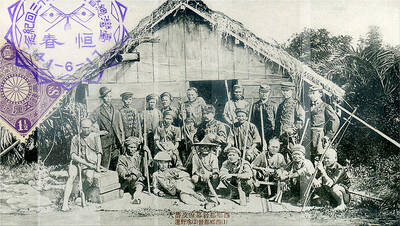
Traditionally, indigenous people in Taiwan’s mountains practice swidden cultivation, or “slash and burn” agriculture, a practice common in human history. According to a 2016 research article in the International Journal of Environmental Sustainability, among the Atayal people, this began with a search for suitable forested slopeland. The trees are burnt for fertilizer and the land cleared of stones. The stones and wood are then piled up to make fences, while both dead and standing trees are retained on the plot. The fences are used to grow climbing crops like squash and beans. The plot itself supports farming for three years.
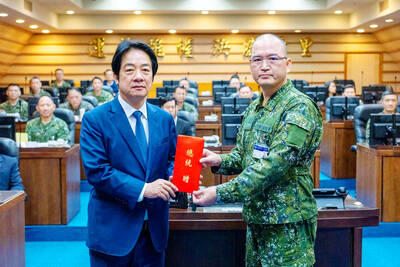
President William Lai (賴清德) on Nov. 25 last year announced in a Washington Post op-ed that “my government will introduce a historic US$40 billion supplementary defense budget, an investment that underscores our commitment to defending Taiwan’s democracy.” Lai promised “significant new arms acquisitions from the United States” and to “invest in cutting-edge technologies and expand Taiwan’s defense industrial base,” to “bolster deterrence by inserting greater costs and uncertainties into Beijing’s decision-making on the use of force.” Announcing it in the Washington Post was a strategic gamble, both geopolitically and domestically, with Taiwan’s international credibility at stake. But Lai’s message was exactly


 RSS
RSS