


The original Zootopia was a minor miracle. Here was a Disney animated film that took themes of race and prejudice and managed to make a sensitive-to-all-sides tale, anthropomorphize it and, as a bonus, sneak in a Department of Motor Vehicles (DMV) sloth gag that the DMV is still wincing from.
A sequel coming almost a decade later, Zootopia 2 isn’t as good. It’s a more timid and tame movie that leans largely on the (still winning) duo of Judy Hopps (Ginnifer Goodwin) and the small-time hustler fox Nick Wilde (Jason Bateman). Both are now out-to-prove-themselves rookies on the police force, nicknamed “the fuzz.”
Nobody would call the original Zootopia an especially biting satire. But, still, the sequel is a little toothless — not just Nick’s move from con man to cop but throughout the metropolis. Nick’s baby-posing partner in crime, the fennec fox Finnick (Tommy Lister Jr., who died in 2020), is only briefly seen. Missing entirely is anyone like Tommy Chong’s nudist stoner yak. A hint of gentrification, you might say, has swept over Zootopia.

Photo: AP
So Zootopia 2, directed by Jared Bush and Byron Howard (both veterans from the first film), is, like many long-in-coming sequels, a slightly watered down version of what came before. But the central relationship of Judy and Nick, a team-up with some echoes of 48 Hours, remains a compelling one, and the primary reason that Zootopia 2 will be plenty satisfying to families seeking more cartoony lions and tigers and bears (oh my) this November. It looks great, it’s mildly funny and animal cities are fun.
That’s particularly because of Bateman’s fox. For an actor with a long list of credits, it might sound odd to say, but Nick Wilde is Bateman’s best movie role. A sly, sarcastic but secretly sweet canine in a loose tie is so squarely in Bateman’s wheelhouse. No one can better draw out a line about making a rug from the fur off a skunk’s butt, and I mean that as a high compliment.
Out to prove themselves as detectives, Judy and Nick cause widespread damage through the city chasing a criminal, leading Idris Elba’s surly cape buffalo Police Chief Bogo to order them into a therapy session for dysfunctional partners (other members include an elephant and mouse duo).
Acknowledging and talking through differences is the running theme, which dovetails with a plot that goes to the roots of Zootopia. Snakes, we learn, aren’t allowed in the city. As Zootopia prepares for its centennial celebration, Judy uncovers some clues that suggest a snake infiltration. But when one turns up (a cloying Ke Huy Quan as Gary De’Snake), Judy and Nick realize that snakes aren’t so bad.
They follow a deepening conspiracy to keep out snakes that goes back to the founding of Zootopia, “Chinatown”-like. A family of Lynxes, the Lynxleys, has always taken ownership for the weather walls that divide the city into variously accommodating climates. But even one of their own, Pawbert Lynxley (Andy Samberg), suspects foul play — which, I’m sorry to report, doesn’t include a single fowl.
But there are, to be sure, plenty of puns (Gnu Jersey, Burning Mammal) to be found, as well as a Shining reference and a quick nod to Ratatouille (a sequel to which is also reportedly in development). In Zootopia, this stuff is like shooting fish in a barrel. Back is Shakira as a pop-star gazelle named… Gazelle. New characters include a beaver podcaster named Nibbles Maplestick (Fortune Feimster) and a long-maned stallion mayor (Patrick Warburton). Judy and Nick’s adventures take them to a New Orleans-like reptile-friendly enclave and a snowy Tundatown.
For a movie that was in so many ways about a country mouse (bunny) coming to the big city and finding endless varieties of wildlife, both upright and shady, the Zootopia sequel spends too much of its time away from its mammalian metropolis. Even Nick Wilde — no longer scheming, more in touch with his feelings — doesn’t feel quite so wild now. The fun caper spirit of the first movie is alive enough to carry Bush and Howard’s film, but you can’t help feel like sequel-ization also means domestication.

Just after 6am, I walked up to the ticket gate at Taipei Main Station and entered the Taiwan Railway platform without scanning any ticket; instead, I flashed the Sanrio Fun Rail pass on my phone to the gate worker and was admitted. I found my train and prepared to board. My destination? This very same station. I was embarking on a 13-hour journey on one of two round-the-island trains operated by ezTravel. They run each day, one counterclockwise around the island and one clockwise. They differ in a number of ways from an ordinary Taiwan Railway train and can make for

Jason Han says that the e-arrival card spat between South Korea and Taiwan shows that Seoul is signaling adherence to its “one-China” policy, while Taiwan’s response reflects a reciprocal approach. “Attempts to alter the diplomatic status quo often lead to tit-for-tat responses,” the analyst on international affairs tells the Taipei Times, adding that Taiwan may become more cautious in its dealings with South Korea going forward. Taipei has called on Seoul to correct its electronic entry system, which currently lists Taiwan as “China (Taiwan),” warning that reciprocal measures may follow if the wording is not changed before March 31. As of yesterday,
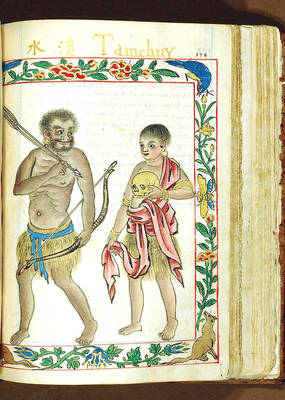
The Portuguese never established a presence on Taiwan, but they must have traded with the indigenous people because later traders reported that the locals referred to parts of deer using Portuguese words. What goods might the Portuguese have offered their indigenous trade partners? Among them must have been slaves, for the Portuguese dealt slaves across Asia. Though we often speak of “Portuguese” ships, imagining them as picturesque vessels manned by pointy-bearded Iberians, in Asia Portuguese shipping between local destinations was crewed by Asian seamen, with a handful of white or Eurasian officers. “Even the great carracks of 1,000-2,000 tons which plied

On Thursday, former Taipei mayor and founder of the Taiwan People’s Party (TPP) Ko Wen-je (柯文哲) was sentenced to 17 years in prison and had his civil rights suspended for six years over corruption, embezzlement and other charges. Seven others related to the case were also handed prison sentences, while two were found not guilty. It has been a bad week for the TPP. On Tuesday, prosecutors charged Chinese immigrant Xu Chunying (徐春鶯) with suspicion of taking part in Beijing-directed election interference. Xu has strong links to the TPP, which once offered her a party list legislator nomination. Tuesday also


 RSS
RSS