


From Nepal to Peru, Morocco and Madagascar, brandishing the symbol of a skull and crossbones in a straw hat, Gen Z protests across the world stood up to authorities in 2025, even toppling two governments.
More typically used to refer to a generation born between the late 1990s and late 2000s, the term Gen Z this year became associated with rebellions led by youth frustrated with issues like unemployment, poverty and inequality.
Young people took to the streets and rattled governments across three continents: Latin America, Asia and Africa, where 60 percent of the population is aged under 25, according to UN figures.

Photo: AFP
The pirate-like emblem, taken from the wildly popular Japanese manga series One Piece, was seen at protests in more than a dozen countries. In two of them — Madagascar and Nepal — the governments fell. “I grew up with One Piece, like the vast majority of Gen Z, so it became a symbol for us,” said a 26-year-old protester in Madagascar who would give their name only as Kai.
It had come to mean resistance against “oppressive governments,” Kai said.
There have been other youth-led protests such as the anti-austerity Indignados Movement that kicked off in Spain in 2011 and the Arab Spring uprisings launched in 2010.

Photo: AFP
But the Gen Z movement was different in its use of social media such as Discord, Instagram and TikTok to mobilize in real-time ever-connected youngsters who then brought in other sectors of society, said University of Montreal sociologist Cecile Van de Velde.
It also transcended local issues in an aspiration to become “the new face of a global and generational revolt,” said the professor, who specializes in issues related to youth.
LOCAL TO GLOBAL
The Gen Z uprising in Madagascar followed shortly after similar protests in Nepal in September.
“Nepal paved the way. We saw what happened, the flag raised, the links made with One Piece,” said Elliot Randriamandrato, a spokesman for the Madagascar movement.
“And we said to ourselves: that’s it, enough is enough,” he said.
In all of the countries, the spark was local. In Indonesia it was low wages, unemployment and police violence; in Nepal, corruption among the elite and social media bans.
Madagascar’s youth first rallied against persistent and chronic water and electricity cuts; in Morocco, it was inequalities in education and health; in Kenya — where the name Gen Z was already attached to protests last year — it was new taxes.
“In the triggers of the protests, there is first the will of young people to stand up for the essential needs of their communities, their refusal to be dispossessed of the basics for survival: health, security, political representation,” said Van de Velde. “These local demands show the common stand against the plundering and abuses of governments and the economic and political oligarchy that governs them,” she said.
MIXED RESULTS
As the rebellions calmed towards the end of the year, the aftermath has been mixed for the young people who inspired them.
In Madagascar, the army took power after the president fled. It appointed a government heavily composed of political insiders, to the dismay of the Gen Z groups.
But in Nepal, an interim prime minister was appointed after a vote on Discord and has set up a commission to shed light on the deaths of dozens of young people during the violence.
In Morocco, protesters won some pledges for social reforms, including improvement to health care and education, but by the end of last month, more than 2,400 people — including over 1,400 in detention — faced prosecution.
And while the activist core of the various Gen Z movements are organized, their spontaneous, loose structure and lack of leadership have not translated into the creation of political projects beyond the initial demands. Many of the movements have also faced a massive and often-violent police repression.
In Nepal, “we are in the second phase of the movement” leading up to the elections scheduled for March next year, said one of the protesters, Yujan Rajbhandari.
Still targeting corruption, the new vision encompasses a drive to raise awareness about voter registration, he said, adding: “We won’t stop.”
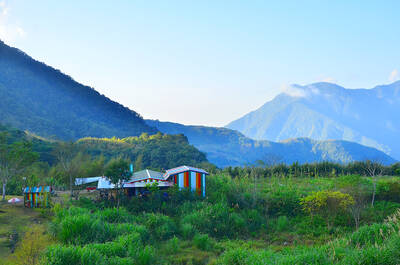
If one asks Taiwanese why house prices are so high or why the nation is so built up or why certain policies cannot be carried out, one common answer is that “Taiwan is too small.” This is actually true, though not in the way people think. The National Property Administration (NPA), responsible for tracking and managing the government’s real estate assets, maintains statistics on how much land the government owns. As of the end of last year, land for official use constituted 293,655 hectares, for public use 1,732,513 hectares, for non-public use 216,972 hectares and for state enterprises 34 hectares, yielding

The small platform at Duoliang Train Station in Taitung County’s Taimali Township (太麻里) served villagers from 1992 to 2006, but was eventually shut down due to lack of use. Just 10 years later, the abandoned train station had become widely known as the most beautiful station in Taiwan, and visitors were so frequent that the village had to start restricting traffic. Nowadays, Duoliang Village (多良) is known as a bit of a tourist trap, with a mandatory, albeit modest, admission fee of NT$10 giving access to a crowded lane of vendors with a mediocre view of the ocean and the trains

For many people, Bilingual Nation 2030 begins and ends in the classroom. Since the policy was launched in 2018, the debate has centered on students, teachers and the pressure placed on schools. Yet the policy was never solely about English education. The government’s official plan also calls for bilingualization in Taiwan’s government services, laws and regulations, and living environment. The goal is to make Taiwan more inclusive and accessible to international enterprises and talent and better prepared for global economic and trade conditions. After eight years, that grand vision is due for a pulse check. RULES THAT CAN BE READ For Harper Chen (陳虹宇), an adviser
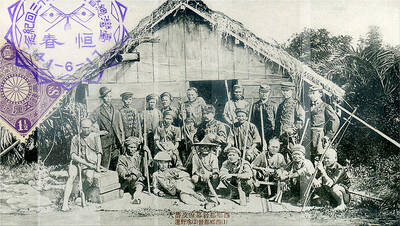
Traditionally, indigenous people in Taiwan’s mountains practice swidden cultivation, or “slash and burn” agriculture, a practice common in human history. According to a 2016 research article in the International Journal of Environmental Sustainability, among the Atayal people, this began with a search for suitable forested slopeland. The trees are burnt for fertilizer and the land cleared of stones. The stones and wood are then piled up to make fences, while both dead and standing trees are retained on the plot. The fences are used to grow climbing crops like squash and beans. The plot itself supports farming for three years.


 RSS
RSS