


Picture a plastic surgeon’s office. You might imagine a sleek Los Angeles practice, with discreet entrances meant to conceal celebrities from the paparazzi. Maybe a Dallas high-rise, where monied housewives spend on postpartum “mommy makeovers.” Or a Miami location, where influencers and OnlyFans stars film TikToks of their BBLs. One city you might not think of is Washington DC. But its buttoned-up reputation belies a newly buzzing industry.
Much has been made of the so-called “Mar-a-Lago face,” or the uncannily smooth and artificially voluminous features seen on the likes of Maga elite such as Kristi Noem, Kimberly Guilfoyle, Laura Loomer and Matt Gaetz. The bee-sting puffy lips, frozen brows and taut necks have been compared to Real Housewives stars, sleep paralysis demons and — ironically, considering the Republican party’s anti-LGBTQ+ culture war — drag queens (minus the campy fun).
As of January, plastic surgeons in Washington DC have seen a “surge in ‘Mar-a-Lago face’ requests from Trump insiders,” Axios recently reported. Surgeons told the outlet that more Washingtonians want their procedures to be not unnoticed but obvious and overdone.

Photo: AP
Axios attributed the aesthetic shift to the influx of transplants from south Florida (where Mar-a-Lago, Trump’s gaudy private club, is located), who are no strangers to nip-tuck tune-ups. Others theorize that going through these procedures is a calculated act of political deference to Trump’s preferred (and unnatural) beauty standards.
Anita Kulkarni is a plastic surgeon who practices out of DC’s West End neighborhood and specializes in postpartum body contouring. Enter her office, and you will be greeted by staff who look good, but not worked on — and that is the effect most of her clients have gone for.
“Before this second Trump term, I just didn’t see a lot of patients coming in making unreasonable requests,” Kulkarni says.

Photo: Reuters
But since the inauguration, she has fielded half a dozen or more — not a large sample size, but enough for the surgeon to take note.
GIVE ME MORE
She says nobody comes in asking for Mar-a-Lago face by name; the most obvious clue is when a patient with visible lip filler comes in wanting more.
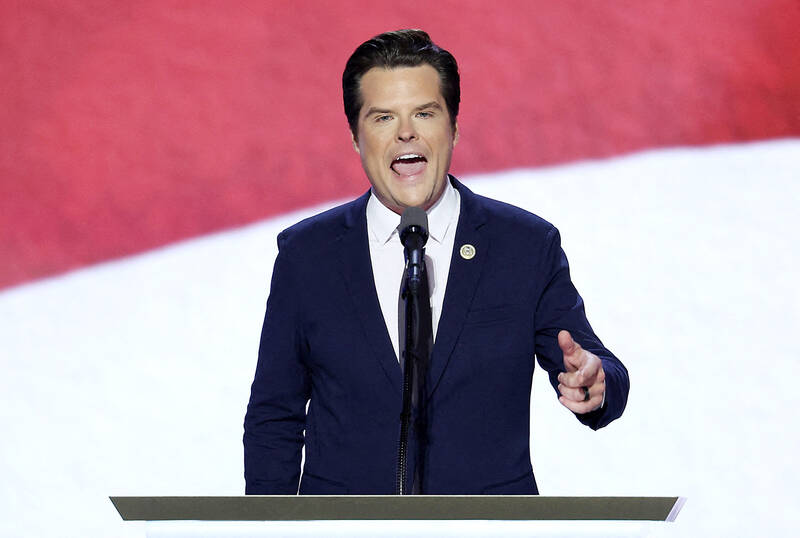
Photo: Reuters
“I have to say: ‘I cannot put any more in there safely.’”
Or they will want more cheek or jawline filler.
“‘To my eye, if I put any more in there, you’re going to cross over from looking like the best version of yourself to looking like Maleficent.’ I have to say no in a way that I have never seen before.”
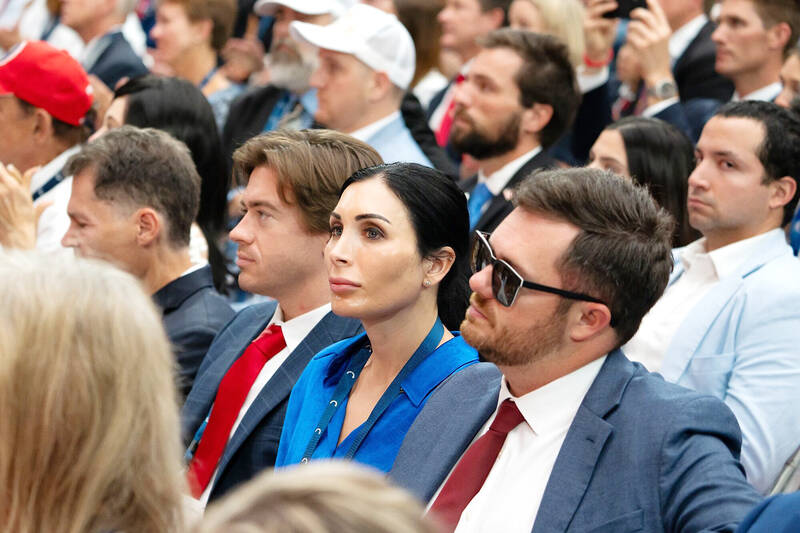
Photo: Bloomberg
And still patients will try to talk their way into more. But placing fresh filler over an existing layer too soon can cause lumpiness, and Kulkarni does not want to risk being known for that look.
“My aesthetic doesn’t necessarily have to be your aesthetic for me to give you what you want,” she says. “But when you go outside the range of what a normal human face should look like, that’s not a place I’m willing to go.”
More still might shrug their shoulders and say Mar-a-Lago face is part of society’s wider embrace of body contouring. Kris Jenner’s ageless, 70th-birthday facelift may look less garish than Laura Loomer’s balloonish attributes, but both are just as fake. It comes at a time when the American Society of Plastic Surgeons reports there were more than 28.5 million minimally invasive procedures done last year; lip augmentation, dermal fillers and neuromodulator treatments (such as Botox) cracked the top five.
Troy Pittman, a plastic surgeon based in DC, says that across the country, people are more willing to talk about the work they have had done.
“That’s not a bad thing,” he says. “But in a town like DC, there is this glamming up of Washington with this new administration, so it’s become more prevalent. They’re OK with looking enhanced.”
Kelly Bolden is also a DC-based plastic surgeon. Most of her clients are people of color — she is the medical director of Cultura Dermatology, a practice that specializes in cosmetic treatments for deeper skin tones — and she is not seeing a boom in Mar-a-Lago face requests. But she has noticed a shift, especially among her younger clients in their 20s and 30s.
“They come in and actually tell me that they like the artificial look. A couple of my patients have said those exact words to me,” Bolden says.
Some of the most visible Trump officials are young, such as press secretary Karoline Leavitt and her deputy Anna Kelly (both 28, and the latter is a former pageant queen), and they’re always camera-ready.
“I think most of [Trump’s] administration is on the younger side compared to traditional ones, so that’s probably a little bit of where the trend comes from.”
Those who want a Mar-a-Lago face have to be able to handle needles: Bolden says it is most often achieved via shots and injectables underneath the skin.
“It’s overdone filler and Botox that gives them that mask-face type of appearance.”
This is not a look Bolden is known for. Sometimes, she outright denies these requests. Or she will compromise.
“Usually I’ll look at them and say: ‘Let’s balance you out, let’s make it more even.’ It’s almost like just as long as they get a little bit more, it will satisfy them,” she says.
After the Duchess of Sussex announced her engagement to Prince Harry in 2017, Pittman said women would bring photos of Meghan to appointments and ask for her nose.
“That’s a trap,” Pittman says. “We’re not trying to make people look like clones of each other.”
He would similarly talk down someone who brought in a picture of Ivanka or Melania Trump.
“Whenever people come in asking for a branded look, that can lead to either very unrealistic expectations or artificial results.”
Other plastic surgeons advertise Mar-a-Lago face. A practice out of Boca Raton, Florida — less than an hour away from Mar-a-Lago — calls it a procedure that “doesn’t scream surgery. Instead, it whispers refinement.”
Shervin Naderi, based in the DC area, described the look as “a modern aristocratic mask” in his practice’s blog.
PERCEPTION BLINDNESS
When does a patient know it’s time to ease up on the procedures? Bolden says it’s common not to; the industry term is perception blindness.
“The first time someone gets filler, the majority of the time, it looks good,” she said. “Then people get used to it, and they see a wrinkle come back or some sagging, and they’re like, ‘I need more.’ They’re chasing after something without realizing it. A little bit more, a little bit more, and you can’t really see the evolution.”
The aesthetics of politics have long been an uneasy topic, especially as it relates to women. Nicole Russell, a columnist at USA Today, called jokes about Mar-a-Lago face “cruel attacks” on conservative women. To others, the face has come to symbolize an allegiance to Trump and his policies. See Noem wearing full glam to an ICE raid, beach waves tumbling over her bulletproof vest. Or Leavitt at the press podium, insisting Trump’s name in Jeffrey Epstein’s e-mails means nothing, as she purses overlined pink lips to match her shimmery eye shadow.
Men are not spared the political aesthetic shift either. Ninety-two per cent of surgeons report treating male patients, with facelifts and sculpted jawlines being top picks. Pittman told Axios his male patients want to look “younger … more virile and masculine” like Pete Hegseth, via Botox, liposuction and eyelid rejuvenation. A fitting counter to Maga’s leading women.
But, just like trends, administrations ebb and flow. Mar-a-Lago face won’t last forever — literally.
“Nothing in plastic surgery is permanent,” Bolden says. “Filler goes away. Most people will say you get a good eight to 10 years out of a facelift. Everything has a lifespan.”

The small platform at Duoliang Train Station in Taitung County’s Taimali Township (太麻里) served villagers from 1992 to 2006, but was eventually shut down due to lack of use. Just 10 years later, the abandoned train station had become widely known as the most beautiful station in Taiwan, and visitors were so frequent that the village had to start restricting traffic. Nowadays, Duoliang Village (多良) is known as a bit of a tourist trap, with a mandatory, albeit modest, admission fee of NT$10 giving access to a crowded lane of vendors with a mediocre view of the ocean and the trains

For many people, Bilingual Nation 2030 begins and ends in the classroom. Since the policy was launched in 2018, the debate has centered on students, teachers and the pressure placed on schools. Yet the policy was never solely about English education. The government’s official plan also calls for bilingualization in Taiwan’s government services, laws and regulations, and living environment. The goal is to make Taiwan more inclusive and accessible to international enterprises and talent and better prepared for global economic and trade conditions. After eight years, that grand vision is due for a pulse check. RULES THAT CAN BE READ For Harper Chen (陳虹宇), an adviser

Traditionally, indigenous people in Taiwan’s mountains practice swidden cultivation, or “slash and burn” agriculture, a practice common in human history. According to a 2016 research article in the International Journal of Environmental Sustainability, among the Atayal people, this began with a search for suitable forested slopeland. The trees are burnt for fertilizer and the land cleared of stones. The stones and wood are then piled up to make fences, while both dead and standing trees are retained on the plot. The fences are used to grow climbing crops like squash and beans. The plot itself supports farming for three years.

President William Lai (賴清德) on Nov. 25 last year announced in a Washington Post op-ed that “my government will introduce a historic US$40 billion supplementary defense budget, an investment that underscores our commitment to defending Taiwan’s democracy.” Lai promised “significant new arms acquisitions from the United States” and to “invest in cutting-edge technologies and expand Taiwan’s defense industrial base,” to “bolster deterrence by inserting greater costs and uncertainties into Beijing’s decision-making on the use of force.” Announcing it in the Washington Post was a strategic gamble, both geopolitically and domestically, with Taiwan’s international credibility at stake. But Lai’s message was exactly


 RSS
RSS