


The press is calling the Chinese Nationalist Party (KMT) chair race “white hot,” “extremely competitive” and “intense hand-to-hand combat.” Left unsaid is what everyone already know: This election is extremely consequential.
There are six candidates. While their platforms and strategies are still being formulated, let us take a look at the challenges they will need to address.
LEADERSHIP AND CHARACTER
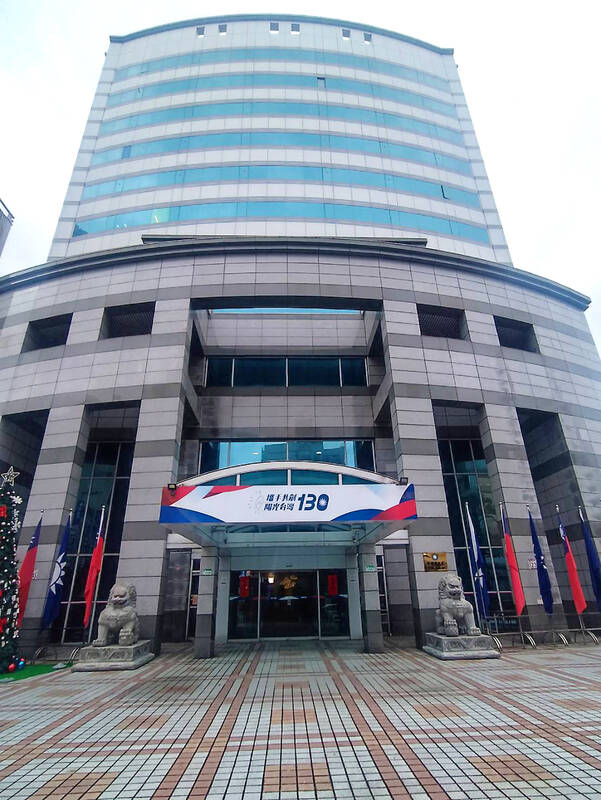
TT file photo
Party chairs are towering figures, exercising considerable power over their parties — unlike in many Western countries. This reflects the local influence of the political culture of the KMT, which was founded on Leninist lines.
Since democratization, the KMT chair no longer exercises the near absolute power they once did. The party has also lost their enormous financial advantage after the passage of the The Act Governing the Handling of Ill-gotten Properties by Political Parties and Their Affiliate Organizations (政黨及其附隨組織不當取得財產處理條例).
To effectively run the KMT, today’s party chairs need considerable skills, talent and influence to keep the many fractious factions, interests and ideologies in line and working together as a team. Outgoing Chairman Eric Chu (朱立倫) faced many rebellions, financial difficulties and disunity — but in the end he kept the party on track, which is impressive.

Photo: Tien Yu-hua, Taipei Times
The next party chair will have the wind at their back. Many of the necessary tough reforms have been implemented by Chu and the party is riding higher in the polls than at any time for many years.
EXPERIENCE AND PARTY BUILDING
Though Chu has stabilized the KMT enough to prevent a financial collapse, that needs to be carried forward — which will be challenging for even the most experienced leader. According to their official filing with the Ministry of Interior, the KMT is sitting on NT$2.1 billion (US$69.3 million) in liabilities.
Staff has been slashed and party and think tank positions have been filled by sitting lawmakers, retirees and wealthy individuals willing to volunteer their time.
The Huang Fu-hsing (黃復興) military veteran’s organization was formerly known as a “party within the party,” with its own independent leadership and organizations within the KMT. Chu disbanded it as an independent organization and folded their functions into local KMT chapter committees.
Politicians and party members have been assigned fundraising quotas, making high positions connected to ability to attract wealthy supporters willing to donate or loan money to the party to keep it afloat.
The party’s fundraiser-in-chief is the party chair and bears ultimate responsibility for raising enough funds to continue to operate and rolling over debt. There are legal limits to political donations, so sometimes loans are the only option.
It is not public record who the KMT’s creditors are. It can be safely assumed they are party supporters and very wealthy, but rich people are also notoriously fickle, aggressive in demanding loan repayment, and intolerant of losses. How demanding these creditors are and the terms and conditions of their loans are unknown, as is how much risk they could pose to the party, but even in the best of circumstances, the KMT chair must lose sleep over this.
Many of the KMT’s top leaders and supporters in local branches are going on trial for voter fraud for allegedly copying party membership rolls and forging signatures on the submissions to initiate recalls against Democratic Progressive Party (DPP) legislators.
This has the potential to gut the party of local talent, hampering its legendary get-out-the-vote efforts ahead of next year’s local elections. Many are pleading guilty at the request of the KMT to move the process along as quickly and smoothly as possible in the hope of light sentences so they can return to work. How effective that will be remains to be seen.
Another big issue is the primary process for choosing candidates. The first question they will need to address is if they plan on running for president themselves — as is traditionally the custom — or oversee the process of choosing the candidate.
Chu skipped the traditional primary process using opinion polling and designated candidates, which was quite successful in 2022, but infuriated many in the party.
Another issue is how to coordinate with the Taiwan People’s Party (TPP) in choosing candidates.
IDEOLOGY AND ELECTABILITY
Overconfidence is a serious challenge. Both the DPP and KMT appear to be doing all they can to avoid learning lessons from their respective recall disasters.
The KMT is riding high on their victories, but is sweeping under the rug their disastrous failed attempts to get even one recall campaign off the ground. Understanding and addressing why voters utterly rejected them would be an asset, but there is no sign so far that any of the candidates want to explore this topic.
Meanwhile, estimates cited by the Chinese-language United Daily News from inside the KMT suggest that, based on past elections, they expect around 200,000 to vote this time. Of those, the estimate is that around 50,000 will be from the “military faction,” roughly 80,000 influenced by local patronage factions and approximately 60,000 will vote “independently.”
The Huang Fu-hsing “military faction” is understandably furious at being disbanded, and restoring their powers would be a big vote-getter, but a huge financial and organizational mistake.
The local patronage factions, and the association of city and council speakers and deputy speakers that is sometimes used as a proxy to represent them, also want promises to win over their votes. There is considerable crossover between their interests and Taiwanese businesspeople based in China.
They will likely have practical considerations, especially in opening business opportunities both locally and in China. Removing restrictions and limitations imposed on local patronage faction business operations and in conducting business in China will be high on their priority list.
Local reports suggest that in the weeks prior to the deadline to vote in the chair election, a flood of around 8,000 members joined in the “south.” The reports were not specific on who or what was behind this, but it could suggest that local patronage factions are looking to increase their leverage on the chair race and to increase their representation in the party’s central standing committee.
Chair candidates will also need to consider the ideological base. A core group of KMT members is keen on integrating with China, and a majority is interested in improving relations and promoting peace.
However, many KMT members consider winning elections and returning to power a higher priority than better relations with Beijing. They are aware that popular opinion is far more skeptical towards China than they are.
That creates internal friction between how far to go in promoting better relations with China — as well as the closeness of the relationship with the US — versus widespread popular acceptance and electability.
The candidates are only just now starting to develop and communicate their goals, ideals and plans for the party. They are also just beginning to court key voting blocs. In the coming days, their strategies will become clearer.
Donovan’s Deep Dives is a regular column by Courtney Donovan Smith (石東文) who writes in-depth analysis on everything about Taiwan’s political scene and geopolitics. Donovan is also the central Taiwan correspondent at ICRT FM100 Radio News, co-publisher of Compass Magazine, co-founder Taiwan Report (report.tw) and former chair of the Taichung American Chamber of Commerce. Follow him on X: @donovan_smith.
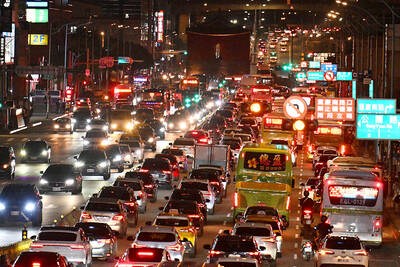
By global standards, the traffic congestion that afflicts Taiwan’s urban areas isn’t horrific. But nor is it something the country can be proud of. According to TomTom, a Dutch developer of location and navigation technologies, last year Taiwan was the sixth most congested country in Asia. Of the 492 towns and cities included in its rankings last year, Taipei was the 74th most congested. Taoyuan ranked 105th, while Hsinchu County (121st), Taichung (142nd), Tainan (173rd), New Taipei City (227th), Kaohsiung (241st) and Keelung (302nd) also featured on the list. Four Japanese cities have slower traffic than Taipei. (Seoul, which has some

Michael slides a sequin glove over the pop star’s tarnished legacy, shrouding Michael Jackson’s complications with a conventional biopic that, if you cover your ears, sounds great. Antoine Fuqua’s movie is sanctioned by Jackson’s estate and its producers include the estate’s executors. So it is, by its nature, a narrow, authorized perspective on Jackson. The film ends before the flood of allegations of sexual abuse of children, or Jackson’s own acknowledgment of sleeping alongside kids. Jackson and his estate have long maintained his innocence. In his only criminal trial, in 2005, Jackson was acquitted. Michael doesn’t even subtly nod to these facts.
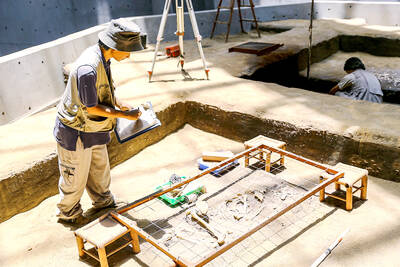
Writing of the finds at the ancient iron-working site of Shihsanhang (十 三行) in New Taipei City’s Bali District (八里), archaeologist Tsang Cheng-hwa (臧振華) of the Academia Sinica’s Institute of History and Philology observes: “One bronze bowl gilded with gold, together with copper coins and fragments of Tang and Song ceramics, were also found. These provide evidence for early contact between Taiwan aborigines and Chinese.” The Shihsanhang Web site from the Ministry of Culture says of the finds: “They were evidence that the residents of the area had a close trading relation with Chinese civilians, as the coins can be
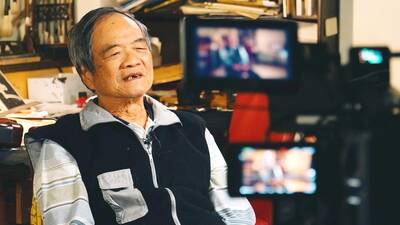
During her 2015 trip to Taiwan, Sophia J. Chang (張詠慧) got fewer answers than she’d hoped for, but more revelations than she could have imagined. “That was the year I last saw my grandmother. She was in hospice care in Tainan, and it was painful to see her in bed, barely able to open her eyes,” says Los Angeles-born Chang. “The grandma I’d known, a fantastic cook and incredibly kind, was already gone.” After their visit, Chang and her grandfather went back to his apartment. There she asked him how he’d met her grandmother. “He hesitated, then started talking a bit.


 RSS
RSS