


Enter the Dragon 13 will bring Taiwan’s first taste of Dirty Boxing Sunday at Taipei Gymnasium, one highlight of a mixed-rules card blending new formats with traditional MMA.
The undercard starts at 10:30am, with the main card beginning at 4pm. Tickets are NT$1,200.
Dirty Boxing is a US-born ruleset popularized by fighters Mike Perry and Jon Jones as an alternative to boxing. The format has gained traction overseas, with its inaugural championship streamed free to millions on YouTube, Facebook and Instagram.

Photo courtesy of Combat Sports Arts
Taiwan’s version allows punches and elbows with clinch striking, but bans kicks, knees and takedowns. The rules are stricter than the American version, where standing ground strikes are also legal.
Event matchmaker Kemp Cheng (鄭宇哲) said the decision to stage Dirty Boxing was part of a broader plan to diversify the offerings of Way of the Dragon (WOTD), a promoter sanctioned by the Chinese Taipei Mixed Martial Arts Association. He previously considered working with another promotion but disagreed with its use of boxing gloves.
Cheng said Dirty Boxing is suited to athletes with backgrounds in Sanda and traditional Chinese martial arts. Fans may see techniques drawn from boxing, Muay Thai and other striking disciplines.
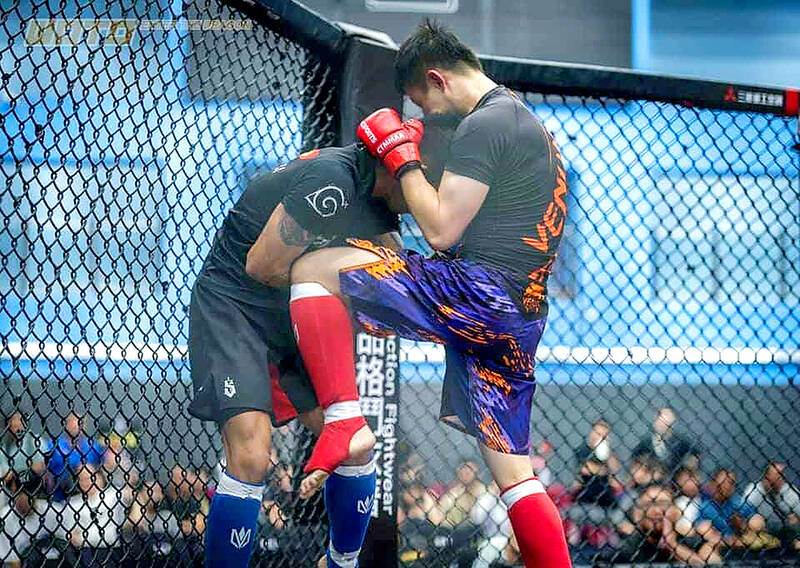
Photo courtesy of Combat Sports Arts
He organized the bout himself with MMA gloves and hand wraps. This, he said, “keeps the intensity of combat while ensuring safety.”
Cheng added that the Enter the Dragon series remains WOTD’s flagship event, giving local and regional fighters large-venue opportunities. Dirty Boxing, he said, is intended as a long-term project rather than a one-off spectacle.
The main event will be held under professional MMA rules, contrasting with the Dirty Boxing debut.
The ETD 13 card will also feature Beta MMA, which serves as the amateur format. Matches consist of three, three-minute rounds with no elbows, limited knees and the use of six-ounce gloves. Another format, Cage Striking, stages kickboxing inside a cage with three rounds of two and a half minutes each. Fighters are allowed to use punches, kicks and knees, with one clinch knee permitted, but elbows and takedowns remain prohibited.
In 2018, ETD 2 featured Jun Yong Park against Glenn Sparv. Park went on to compete as a UFC middleweight, underscoring the promotion’s ability to host fighters who later reach international stages.
Cheng confirmed the card’s headliner: Kevin Yu (尤凱文) vs Chiang Chieh-yu (蔣捷宇), a matchup he described as a “dream fight” between two of Taiwan’s toughest fighters.
“Nobody expected this fight to actually happen, so anticipation is enormous,” he said. “Everyone wants to know who will be crowned the strongest man in Taiwan.”

As mega K-pop group BTS returns to the stage after a hiatus of more than three years, one major market is conspicuously missing from its 12-month world tour: China. The omission of one of the group’s biggest fan bases comes as no surprise. In fact, just the opposite would have been huge news. China has blocked most South Korean entertainment since 2016 under an unofficial ban that also restricts movies and the country’s popular TV dramas. For some Chinese, that means flying to Seoul to see their favorite groups perform — as many were expected to do for three shows opening
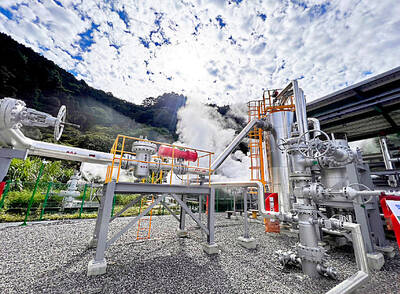
Taiwan’s semiconductor industry consumes electricity at rates that would strain most national grids. Taiwan Semiconductor Manufacturing Co (TSMC) alone accounted for more than 9 percent, or 2,590 megawatts (MW), of the nation’s power demand last year. The factories that produce chips for the world’s phones and servers run around the clock. They cannot tolerate blackouts. Yet Taiwan imports 97 percent of its energy, with liquefied natural gas reserves measured in days. Underground, Taiwan has options. Studies from National Taiwan University estimate recoverable geothermal resources at more than 33,000 MW. Current installed capacity stands below 10 MW. OBSTACLES Despite Taiwan’s significant geothermal potential, the
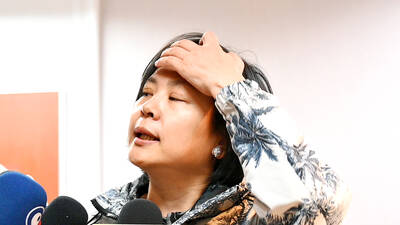
The entire Li Zhenxiu (李貞秀) saga has been an ugly, complicated mess. Born in China’s Hunan Province, she moved to work in Shenzhen, where she met her future Taiwanese husband. Most accounts have her arriving in Taiwan and marrying somewhere between 1993 and 1999. She built a successful career in Taiwan in the tech industry before founding her own company. She also served in high-ranking positions on various environmentally-focused tech associations. She says she was inspired by the founding of the Taiwan People’s Party (TPP) in 2019 by Ko Wen-je (柯文哲), and began volunteering for the party soon after. Ko
Chinese Nationalist Party (KMT) Chair Cheng Li-wun (鄭麗文) returned from her trip to meet People’s Republic of China (PRC) dictator Xi Jinping (習近平) bearing “a gift” for the people of Taiwan: 10 measures the PRC proposed to “facilitate the peaceful development of cross-strait relations.” “China on Sunday unveiled 10 new incentive measures for Taiwan,” wrote Reuters, wrongly. The PRC’s longstanding habit with Taiwan relations is to repackage already extant or once-existing policies and declare that they are “new.” The list forwarded by Cheng reflects that practice. NEW MEASURES? Note the first item: establishing regular communication mechanisms between the Chinese Communist Party


 RSS
RSS