


Last Thursday, the Ministry of National Defense (MND) detected 41 sorties of Chinese aircraft and nine navy vessels around Taiwan over a 24-hour period. “Thirty out of 41 sorties crossed the median line and entered Taiwan’s northern, central, southwestern and eastern ADIZ (air defense identification zones),” it reported. Local media noted that the exercises coincided with the annual Han Kuang military exercises in Taiwan.
During the visit of then-US Speaker of the House Nancy Pelosi to Taiwan in August 2022, the largest number of sorties was on Aug. 5, “involving a total of 47 fighter aircraft and two supporting reconnaissance/patrol aircraft. On both of these dates, the aircraft roughly bracketed the northern and southern channels into the strait,” wrote John Dotson, Director of the Global Taiwan Institute, an expert on the People’s Republic of China (PRC) military. The activities during Pelosi’s visit continued across several days, with further incursions of a few kilometers across the median line, missile firings and other military exercises.
In the fall of 2019, Chinese aircraft began entering Taiwan’s ADIZ more or less daily. In September of 2020, the PRC “responded” to a visit by US Undersecretary of State Keith Krach with more military drills. In wake of the Pelosi visit, similarly high sortie numbers and military activities have followed repeatedly, becoming normalized. Much larger exercises have been conducted, largely to media silence. Attention thus wanes even as the threat increases.
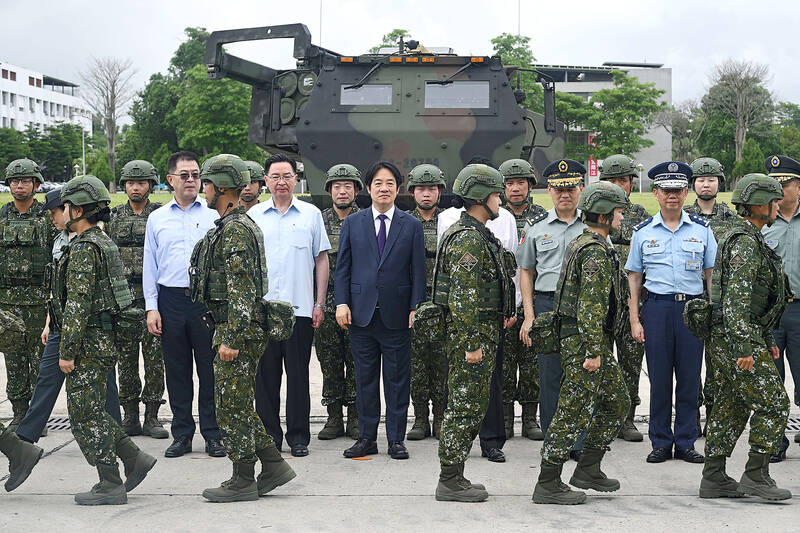
Photo: Lo Yau-tung, Taipei Times
In April of this year the PRC conducted “live fire drills” in such capabilities as “blockade and control, and precision strikes on key targets,” a PRC military spokesman said. Those at least were covered by the media.
PLAYING INTO PRC HANDS
It has become obvious to most observers that the PRC uses high profile visits by the US as an excuse to ramp up its military activities around Taiwan. It then normalizes the new, higher levels and waits for the next excuse it can find in the public US-Taiwan relationship. Or it simply ramps things up, knowing that outsiders will either blame Taiwan or ignore the new, higher level of threat.
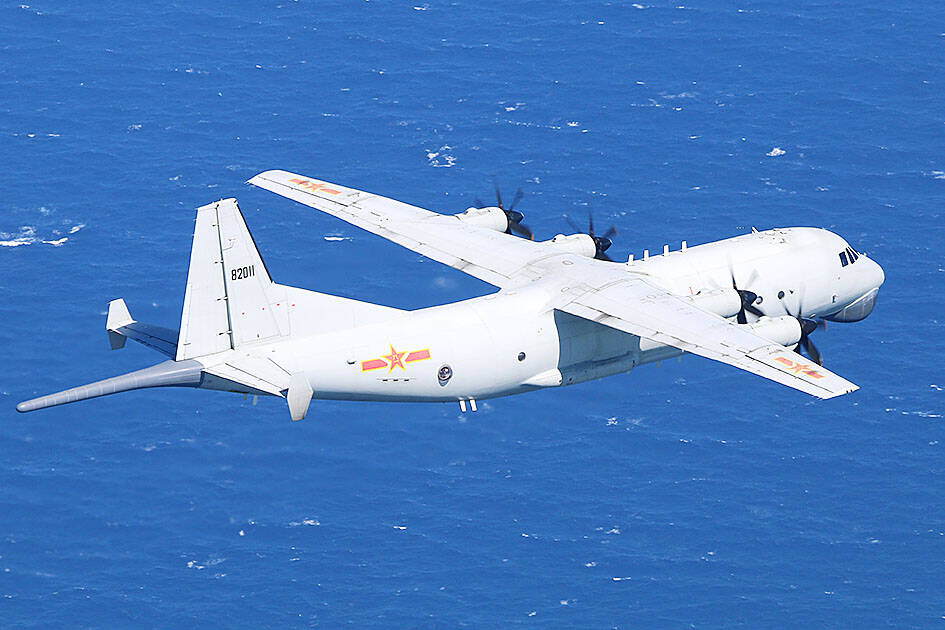
Photo: Ministry of National Defense
What is omitted in this off and on threat discourse is also important. The international media, which loves clickbait headlines, enthusiastically played into PRC hands with its hyping of the military drills during the Pelosi visit. Subsequent, much larger exercises have been ignored. Nobody took note that the PRC did not ramp up its military activities in response to public revelation of the presence of US troops in Taiwan. Media commentators warned us for years that placing US troops in Taiwan would cross a PRC red line. But not even military exercises were held. Similarly, US military sales are responded to with boilerplate rhetoric, not troop movements. The regular flow of legislators and officials from Europe and Japan also stimulates no expansion of PRC military activities around Taiwan.
In short, the military activities that the PRC blames on US officials are clearly intended to refocus tensions from the China-Taiwan relationship to the US-Taiwan relationship, a key thrust of PRC rhetoric, with the long-term goal of separating the US from Taiwan. The international media publicity helps reinforce the PRC propaganda claim that it is merely responding to Taiwan-US provocations.
The PRC propaganda campaign trains observers to start searching the US-Taiwan relationship, or “something Taiwan is doing,” for the pretext, which is then presented as the “reason” for the PRC’s threats and aggression. Sure enough, a few commentators on social media immediately wondered whether the PRC activities were in response to President William Lai’s (賴清德) speech campaign. The PRC engages in aggression because it wants to, not because its agency is controlled by the words of Lai, or any other action of Taiwan.
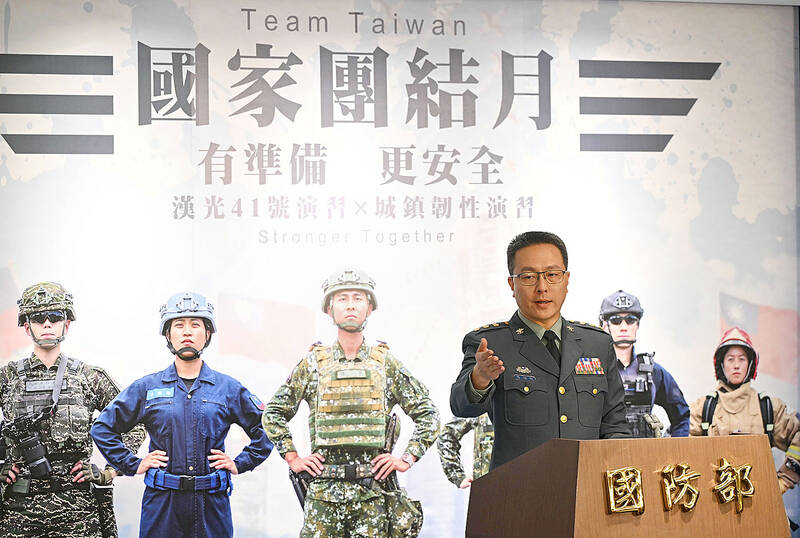
Photo: Chang Chia-ming, Taipei Times
HIDDEN SIDE OF THE CAMPAIGN
The regular flow of officials from other countries through Taipei exposes the hidden side of the PRC propaganda campaign: it also trains observers to ignore Taiwan’s relationships with other nations. An important component of PRC rhetoric is the claim that Taiwan is related only to the US and the “Taiwan issue” could be solved if the US would stop supporting Taiwan. This perspective, frequently reflected in commentary, treats Taiwan as a vassal state of the US with no agency of its own.
In April, the Philippines lifted a ban on official travel to Taiwan. On Thursday, Philippines officials were in Taipei attending the Taiwan International Ocean Forum. No one, PRC spokesman or international media, connected this visit to the increased sorties around Taiwan by PRC ships and aircraft. Yet, this visit by Philippines, the first since the ban was lifted, was arguably the most important event in Taiwan’s foreign relations last week. Naturally, the PRC didn’t bring it to the attention of commentators by using it as a pretext for military intrusions.
The PRC’s game with Philippines is instructive. The PRC follows the same playbook with its territorial claims against the Philippines that it does with Taiwan, dating them to ancient times. It accuses Manila of being provocative. It demands that “outside powers” (read: the US) not get involved. Of course no one in the international media takes this seriously, and the PRC is always presented as the aggressor it actually is.
Alas, not so with Taiwan, about which one can print any blithering orientalist idiocy, as Bloomberg did last week in complaining about Lai’s rhetoric: “What remains to be seen is how far China is willing to escalate in asserting its rights to the democratic territory.” The PRC has no rights to Taiwan. Imagine the uproar if the paper had argued for America’s or Spain’s rights to the democratic territory of Philippines!
HELPING THE KMT?
Could it be that the PRC is in its inept, self-defeating way, trying to help the KMT in the recall campaign? Bizarre as that may seem, remember that in March 1996, just prior to the presidential election in Taiwan, the PRC military fired missiles into the sea off the ports of Keelung and Kaohsiung. This action was intended to intimidate the Taiwanese into voting against candidates Lee Teng-hui (李登輝) and Peng Ming-min (彭明敏), who the PRC said were “absolutely identical in attempting to divide the motherland.” No one appears to consider this possibility when the PRC ramps up military exercises around Taiwan.
Another victory of the PRC’s anti-Taiwan propaganda campaign is that no one ever asks whether increased exercises are meant as a distraction from PRC screw-ups. For example, the Tuesday-Wednesday round of PRC intrusions took place immediately after news broke that the PRC had put together a comic-opera plot to ram Vice-President Hsiao Bi-khim’s (蕭美琴) car during her visit to Prague last month. It must have delighted planners in Zhongnanhai to learn that all the PRC has to do is fly some aircraft near Taiwan, and commentators will immediately shift the focus to what President Lai is doing.
Indeed, perhaps the oddest thing about the international media response to the planned attack on Hsiao is that nobody blamed something Lai did for the PRC’s actions.
Notes from Central Taiwan is a column written by long-term resident Michael Turton, who provides incisive commentary informed by three decades of living in and writing about his adoptive country. The views expressed here are his own.

This is the year that the demographic crisis will begin to impact people’s lives. This will create pressures on treatment and hiring of foreigners. Regardless of whatever technological breakthroughs happen, the real value will come from digesting and productively applying existing technologies in new and creative ways. INTRODUCING BASIC SERVICES BREAKDOWNS At some point soon, we will begin to witness a breakdown in basic services. Initially, it will be limited and sporadic, but the frequency and newsworthiness of the incidents will only continue to accelerate dramatically in the coming years. Here in central Taiwan, many basic services are severely understaffed, and
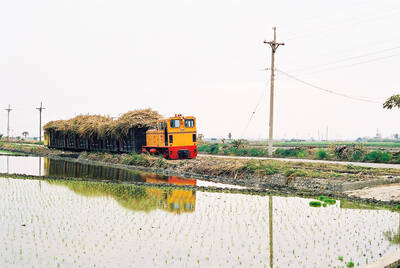
Jan. 5 to Jan. 11 Of the more than 3,000km of sugar railway that once criss-crossed central and southern Taiwan, just 16.1km remain in operation today. By the time Dafydd Fell began photographing the network in earnest in 1994, it was already well past its heyday. The system had been significantly cut back, leaving behind abandoned stations, rusting rolling stock and crumbling facilities. This reduction continued during the five years of his documentation, adding urgency to his task. As passenger services had already ceased by then, Fell had to wait for the sugarcane harvest season each year, which typically ran from

It is a soulful folk song, filled with feeling and history: A love-stricken young man tells God about his hopes and dreams of happiness. Generations of Uighurs, the Turkic ethnic minority in China’s Xinjiang region, have played it at parties and weddings. But today, if they download it, play it or share it online, they risk ending up in prison. Besh pede, a popular Uighur folk ballad, is among dozens of Uighur-language songs that have been deemed “problematic” by Xinjiang authorities, according to a recording of a meeting held by police and other local officials in the historic city of Kashgar in

It’s a good thing that 2025 is over. Yes, I fully expect we will look back on the year with nostalgia, once we have experienced this year and 2027. Traditionally at New Years much discourse is devoted to discussing what happened the previous year. Let’s have a look at what didn’t happen. Many bad things did not happen. The People’s Republic of China (PRC) did not attack Taiwan. We didn’t have a massive, destructive earthquake or drought. We didn’t have a major human pandemic. No widespread unemployment or other destructive social events. Nothing serious was done about Taiwan’s swelling birth rate catastrophe.


 RSS
RSS