


The Himalayan village of Samjung did not die in a day.
Perched in a wind-carved valley in Nepal’s Upper Mustang, more than 3,962m above sea level, the Buddhist village lived by slow, deliberate rhythms — herding yaks and sheep and harvesting barley under sheer ochre cliffs honeycombed with “sky caves” — 2,000-year-old chambers used for ancestral burials, meditation and shelter.
Then the water dried up. Snow-capped mountains turned brown and barren as, year after year, snowfall declined. Springs and canals vanished and when it did rain, the water came all at once, flooding fields and melting away the mud homes. Families left one by one, leaving the skeletal remains of a community transformed by climate change: crumbling mud homes, cracked terraces and unkempt shrines.
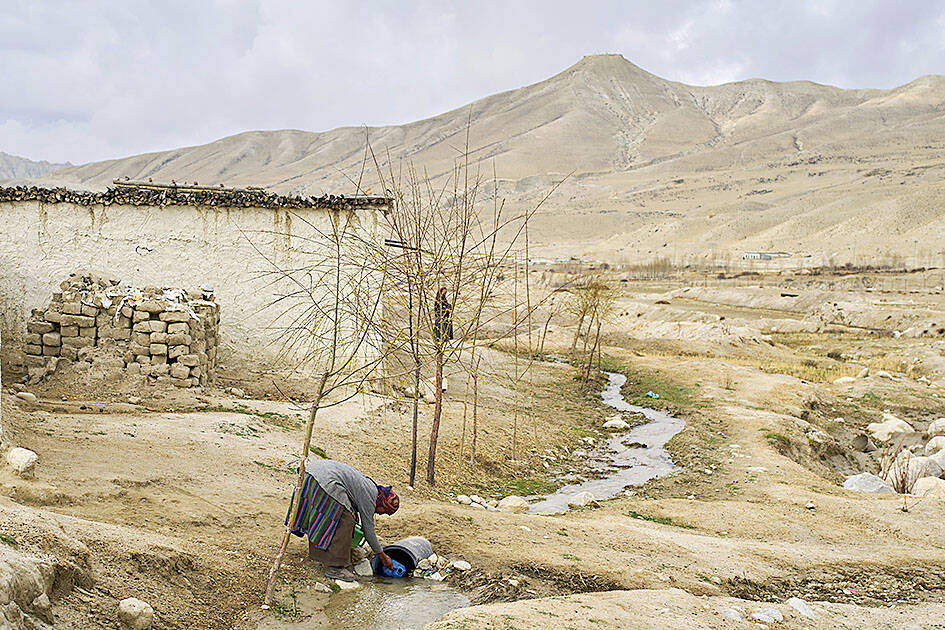
Photo: AP
A CHANGING CLIMATE
The Hindu Kush and Himalayan mountain regions — stretching from Afghanistan to Myanmar — hold more ice than anywhere else outside the Arctic and Antarctic. Their glaciers feed major rivers that support 240 million people in the mountains — and 1.65 billion more downstream.
Such high-altitude areas are warming faster than lowlands. Glaciers are retreating and permafrost areas are thawing as snowfall becomes scarcer and more erratic, according to the Kathmandu-based International Centre for Integrated Mountain Development or ICMOD.
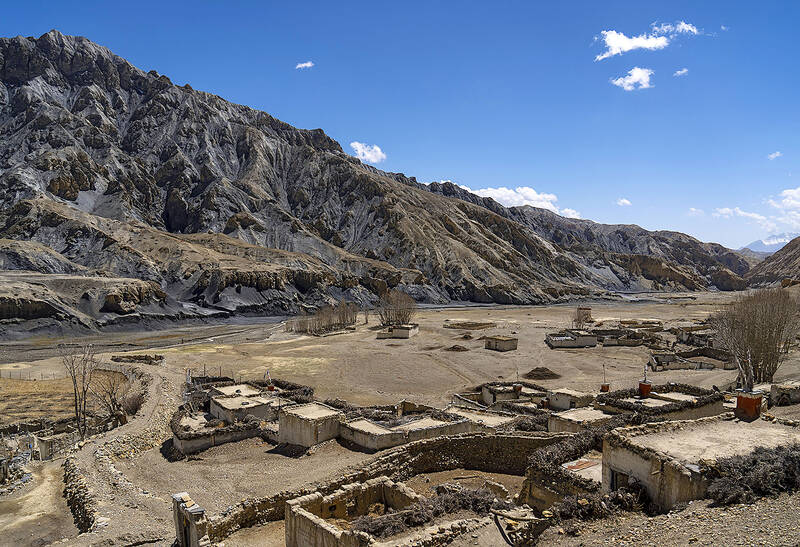
Photo: AP
Kunga Gurung is among many in the high Himalayas already living through the irreversible effects of climate change.
“We moved because there was no water. We need water to drink and to farm. But there is none there. Three streams, and all three dried up,” said Gurung, 54.
Climate change is quietly reshaping where people can live and work by disrupting farming, water access, and weather patterns, said Neil Adger, a professor of human geography at the University of Exeter. In places like Mustang, that’s making life harder, even if people don’t always say climate change is why they moved. “On the everyday basis, the changing weather patterns ... it’s actually affecting the ability of people to live in particular places,” Adger said.
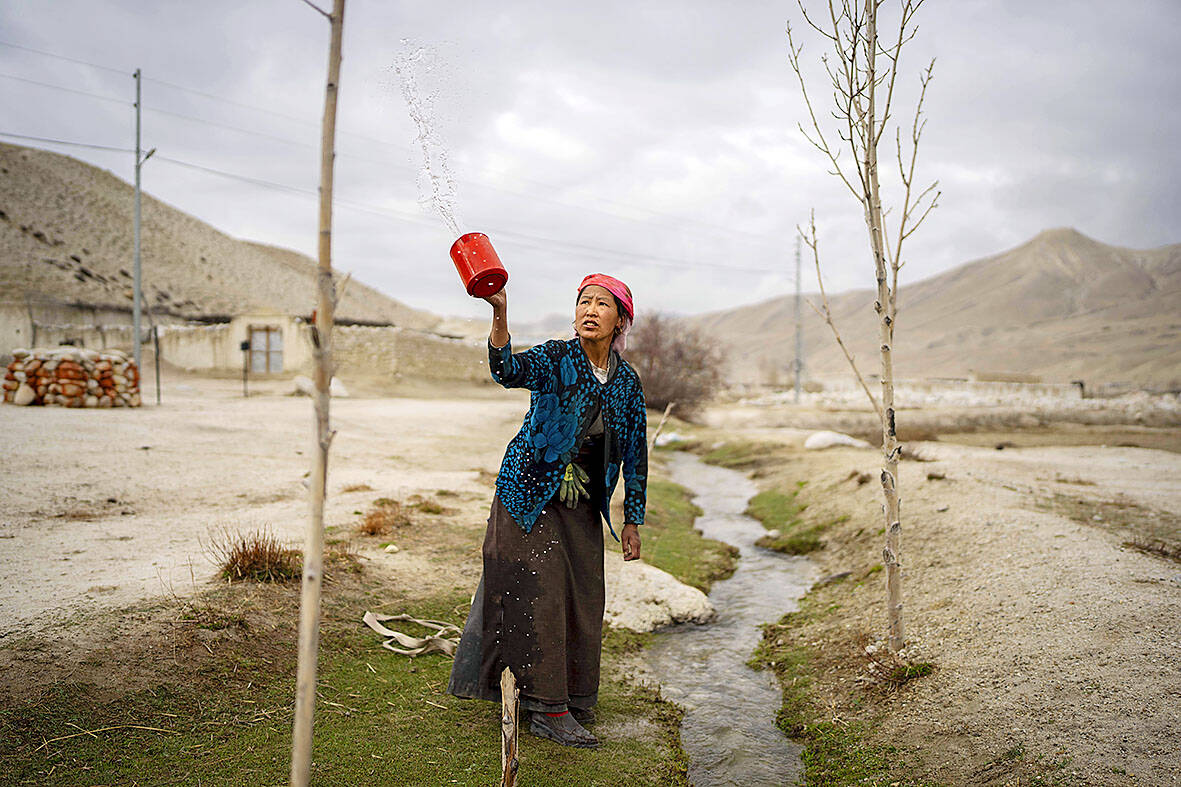
Photo: AP
COMMUNITIES FORCED TO MOVE
Around the globe, extreme weather due to climate change is forcing communities to move, whether it’s powerful tropical storms in The Philippines and Honduras, drought in Somalia or forest fires in California.
In the world’s highest mountains, Samjung isn’t the only community to have to start over, said Amina Maharjan, a migration specialist at ICMOD. Some villages move only short distances, but inevitably the key driver is lack of water.
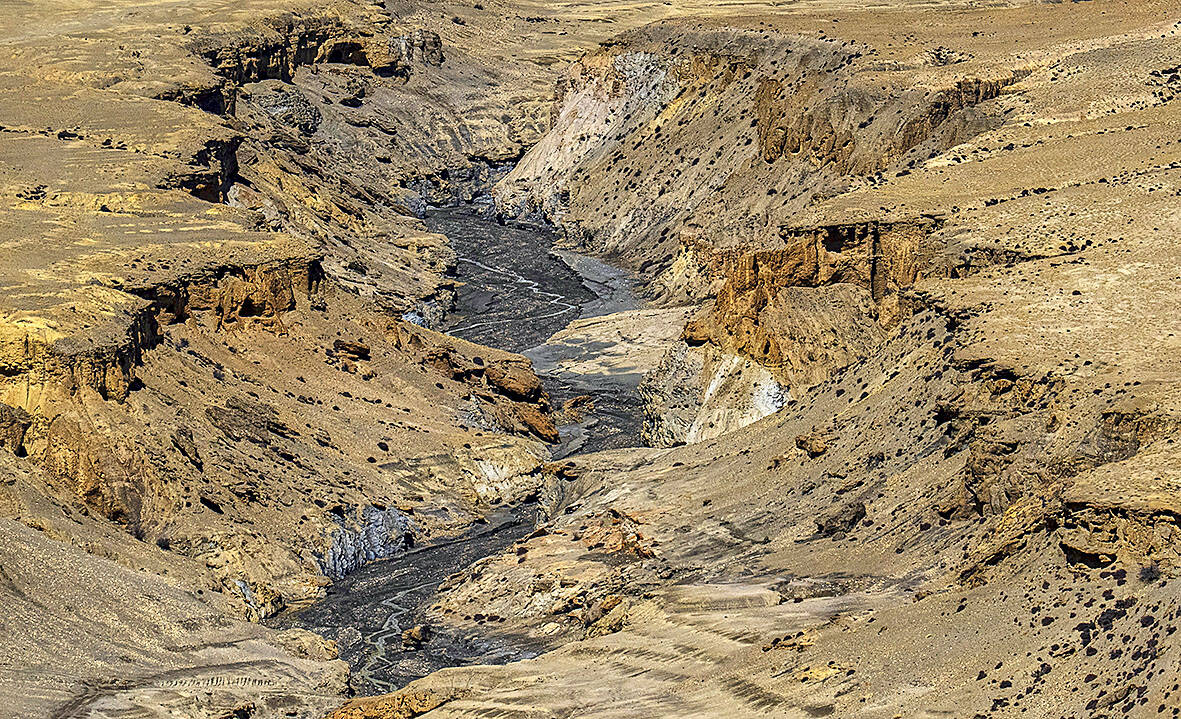
Photo: AP
“The water scarcity is getting chronic,” she said.
Retreating glaciers — rivers of ice shrinking back as the world warms — are the most tangible and direct evidence of climate change. Up to 80 percent of the glacier volume in the Hindu Kush and Himalayas could vanish in this century if greenhouse gas emissions aren’t drastically cut, a 2023 report warned.
It hasn’t snowed in Upper Mustang for nearly three years, a dire blow for those living and farming in high-altitude villages. Snowfall traditionally sets the seasonal calendar, determining when crops of barley, buckwheat, and potatoes are planted and affecting the health of grazing livestock. “It is critically important,” Maharjan said.
For Samjung, the drought and mounting losses began around the turn of the century. Traditional mud homes built for a dry, cold mountain climate fell apart as monsoon rains grew more intense — a shift scientists link to climate change. The region’s steep slopes and narrow valleys funnel water into flash floods that destroyed homes and farmland, triggering a wave of migration that began a decade ago.
FINDING A SITE
Moving a village — even one with fewer than 100 residents like Samjung — was no simple endeavor. They needed reliable access to water and nearby communities for support during disasters. Relocating closer to winding mountain roads would allow villagers to market their crops and benefit from growing tourism. Eventually, the king of Mustang, who still owns large tracts of land in the area nearly two decades after Nepal abolished its monarchy, provided suitable land for a new village.
Pemba Gurung, 18, and her sister Toshi Lama Gurung, 22, don’t remember much about the move from their old village. But they remember how hard it was to start over. Families spent years gathering materials to build new mud homes with bright tin roofs on the banks of the glacial Kali Gandaki river, nearly 15km away. They constructed shelters for livestock and canals to bring water to their homes. Only then could they move.
Some villagers still herd sheep and yak, but life is a bit different in New Samjung, which is close to Lo Manthang, a medieval walled city cut off from the world until 1992, when foreigners were first allowed to visit. It’s a hub for pilgrims and tourists who want to trek in the high mountains and explore its ancient Buddhist culture, so some villagers work in tourism.
The sisters Pemba and Toshi are grateful not to have to spend hours fetching water every day. But they miss their old home.
“It is the place of our origin. We wish to go back. But I don’t think it will ever be possible,” Toshi said.
If one asks Taiwanese why house prices are so high or why the nation is so built up or why certain policies cannot be carried out, one common answer is that “Taiwan is too small.” This is actually true, though not in the way people think. The National Property Administration (NPA), responsible for tracking and managing the government’s real estate assets, maintains statistics on how much land the government owns. As of the end of last year, land for official use constituted 293,655 hectares, for public use 1,732,513 hectares, for non-public use 216,972 hectares and for state enterprises 34 hectares, yielding
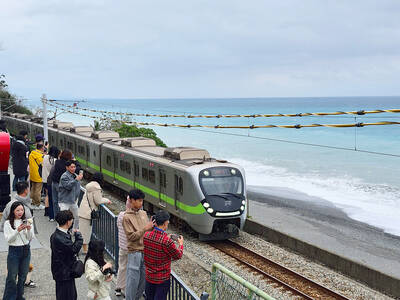
The small platform at Duoliang Train Station in Taitung County’s Taimali Township (太麻里) served villagers from 1992 to 2006, but was eventually shut down due to lack of use. Just 10 years later, the abandoned train station had become widely known as the most beautiful station in Taiwan, and visitors were so frequent that the village had to start restricting traffic. Nowadays, Duoliang Village (多良) is known as a bit of a tourist trap, with a mandatory, albeit modest, admission fee of NT$10 giving access to a crowded lane of vendors with a mediocre view of the ocean and the trains

The March/April volume of Foreign Affairs, long a purveyor of pro-China pablum, offered up another irksome Beijing-speak on the issues and solutions for the problems vexing the People’s Republic of China (PRC) and the US: “America and China at the Edge of Ruin: A Last Chance to Step Back From the Brink” rang the provocative title, by David M. Lampton and Wang Jisi (王緝思). If one ever wants to describe what went wrong with US-PRC relations, the career of Wang Jisi is a good place to start. Wang has extensive experience in the US and the West. He was a visiting

One of the challenges with the sheer availability of food in today’s world is that lots of us end up spending many of our waking hours eating. Whether it’s full meals, snacks or desserts, scientists have found that it’s not uncommon for us to be mindlessly grazing at some point during all of our 16 or so waking hours. The problem? As soon as this food hits the bloodstream in the form of glucose, it initiates the release of the hormone insulin. This in turn activates a switch present in every one of our cells, which is responsible for driving cell


 RSS
RSS