


The recent decline in average room rates is undoubtedly bad news for Taiwan’s hoteliers and homestay operators, but this downturn shouldn’t come as a surprise to anyone.
According to statistics published by the Tourism Administration (TA) on March 3, the average cost of a one-night stay in a hotel last year was NT$2,960, down 1.17 percent compared to 2023. (At more than three quarters of Taiwan’s hotels, the average room rate is even lower, because high-end properties charging NT$10,000-plus skew the data.) Homestay guests paid an average of NT$2,405, a 4.15-percent drop year on year.
The countrywide hotel occupancy rate fell from 50.86 percent to 50.44 percent. That of homestays also headed downward, from 26.62 percent to 24.67 percent.
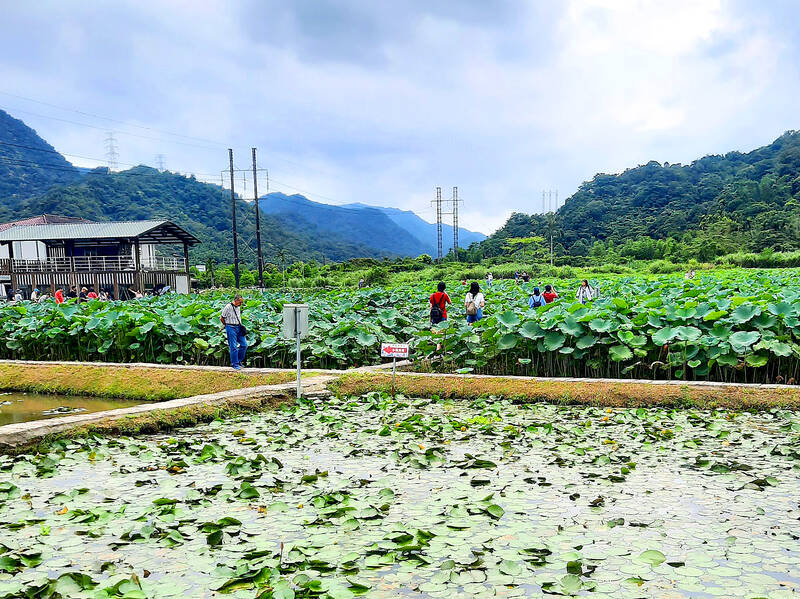
Photo: Steven Crook
The situation is especially dire in Hualien, where the tourist trade is continuing to suffer from the closure of much of Taroko Gorge after last year’s earthquake. On the day the TA released the latest room-rate data, Hualien County Hoteliers Association Chairperson Chang Ying-han (張琄菡) told PTS that occupancy levels are “far from the break-even point” for many hotel operators.
For Taiwanese who enjoy traveling around their country, the drop comes as welcome relief after prices surged during and after the pandemic. Between the first half of 2022 and the first half of 2023, room rates at hotels supervised by the TA rose by an average of 14.14 percent, by 8.08 percent at hotels overseen by local governments, and by 1.44 percent at homestays.
‘HARD LANDING’
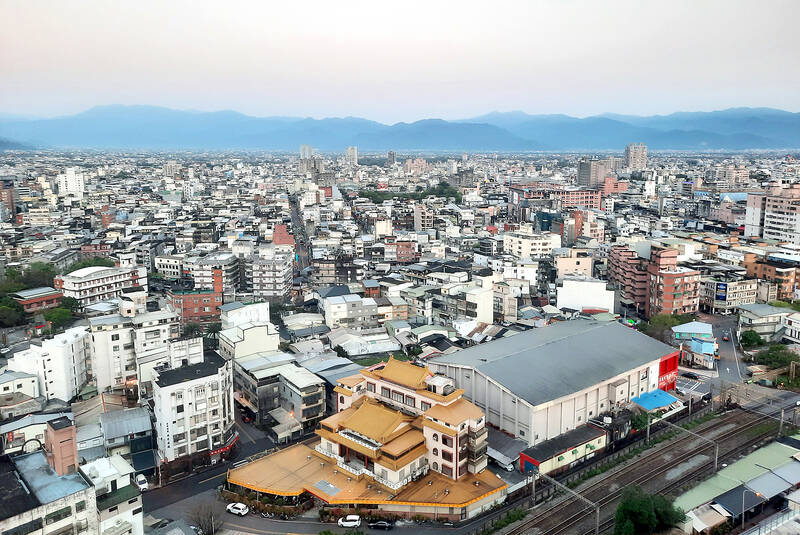
Photo: Steven Crook
On Sept. 15 last year, the Chinese-language Business Today magazine quoted Lin Yi-shun (林義順), chief convener of the domestic travel committee of the Travel Agents Association of ROC Taiwan, as warning that the hotel industry could soon experience a “hard landing.”
Business Today said one of the reasons why local accommodation providers shouldn’t assume the future will be rosy: For some time, many have complained that few hotels and B&Bs represent good value for money, especially during bottleneck periods like the recent Feb. 28 to March 2 long weekend.
This reporter has talked with several local residents who say room rates are a very real deterrent when contemplating excursions to different cities or counties. They’d rather save up their money and vacation days and take a single trip to Japan or Southeast Asia than enjoy three excursions within Taiwan.
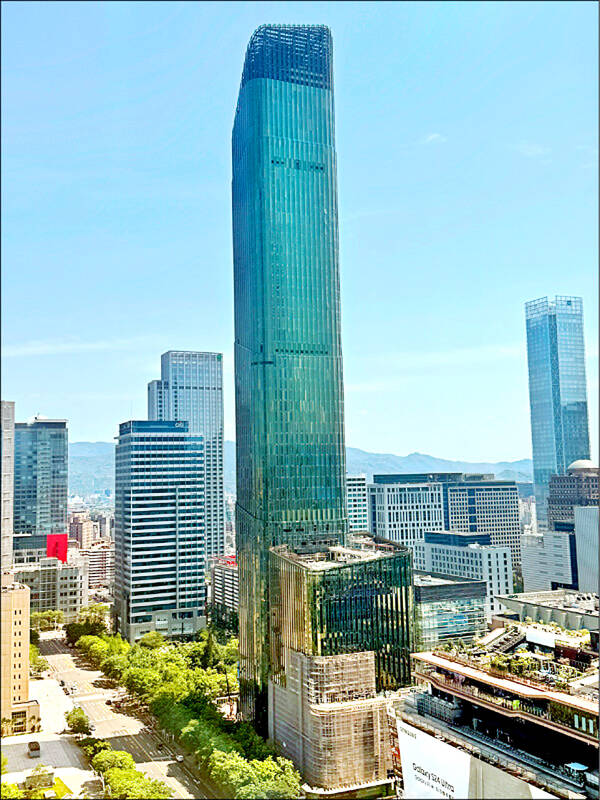
Photo: Taipei Times file photo
For some, it’s not just a matter of expense. Because of the pandemic, Gerald Hsieh (謝文雄) didn’t go abroad for almost five years. During that time, the government employee took his family to every part of Taiwan.
“I certainly don’t need to see another ‘old street.’ Now I’d much prefer to get on an airplane,” he says.
To encourage people like Hsieh to spend their vacations in Taiwan, in October last year the TA launched the “Taiwan Tourism 100 Spotlights” campaign (100spotlights.taiwan.net.tw, Chinese only) in conjunction with all 22 of the country’s city and county governments.
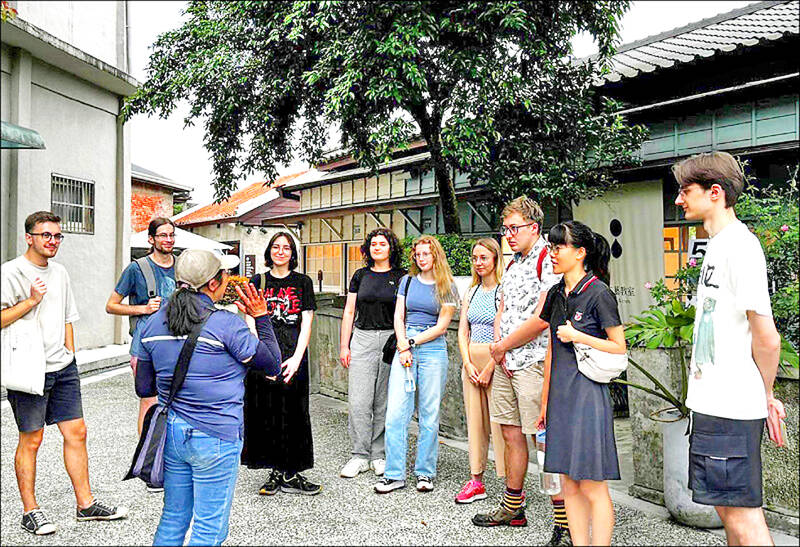
Photo courtesy of Huang Shu-chun
Contrasting the high cost of domestic travel with the abundance of budget-friendly group tours to Asian destinations, some Taiwanese have joked that “we’re so poor we can only travel abroad.”
“It’s cheaper to go to Liuqiu [琉球, the Chinese name for Japan’s Okinawa] than Siaoliouciou Island [小琉球, part of Pingtung County],” is another quip.
One Siaoliouciou resident who isn’t in the least bit surprised by falling room rates is Taiwanese-American freediving instructor Raymond Ko (高力文).
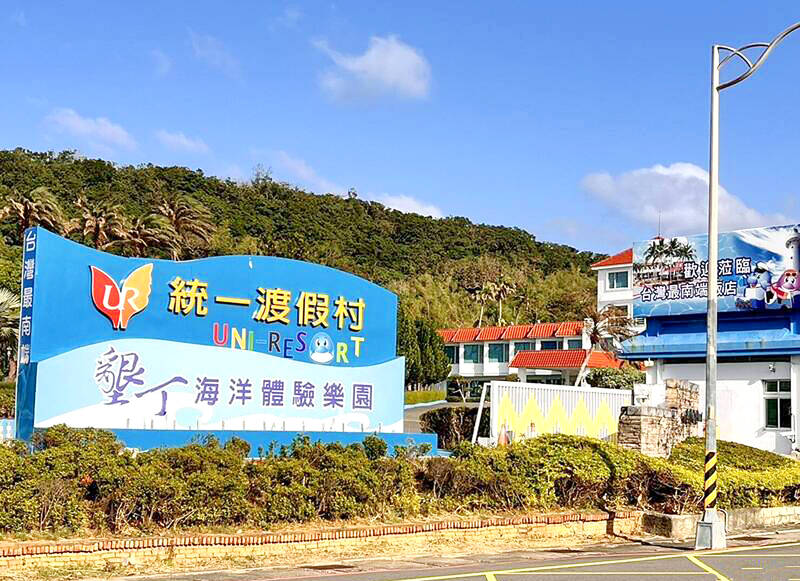
Photo: Tsai Tsung-hsien, Taipei Times
The number of visitors is flatlining, but “there’s been a surge in the number of guesthouses opening up, perhaps 15 to 20 percent in the past two years,” Ko says.
And it’s not like the destination previously lacked accommodation options. According to a 2022 investigation into the consequences of overtourism on Siaoliouciou by Chinese-language online media The Reporter, the island (population 12,200) had 429 guesthouses, of which just 152 were licensed.
“There’s a feeling of saturation here. Before it seemed you could open anything and make money. Not so now,” laments Ko.
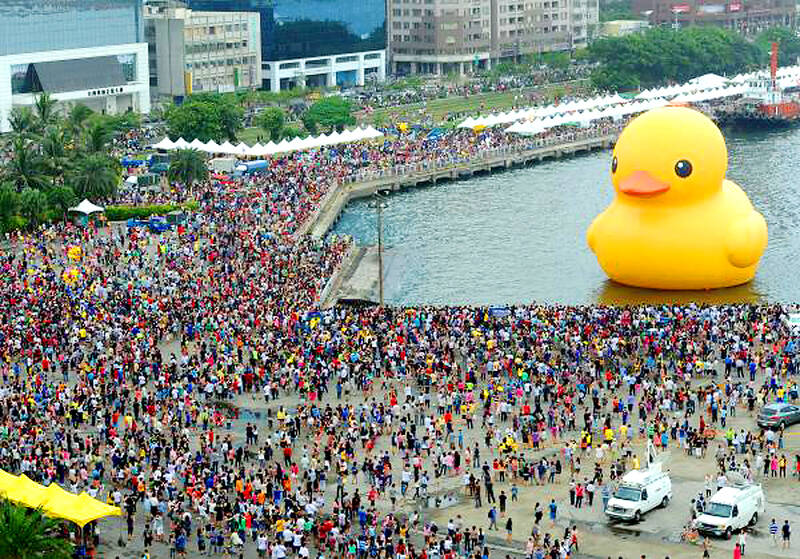
Photo: Chang Chung-yi, Taipei Times
Saying that many guesthouse owners appear to have a “build it and they will come” attitude, Ko argues that a lack of effective marketing is hurting not just individual entrepreneurs but also the local tourism industry as a whole.
He and his wife are very active on social media and often cooperate with influencers to promote both their own business and Siaoliouciou as a destination, he says.
“But more effort could be made into bringing people to the island,” he adds.
In Ko’s opinion, positioning Siaoliouciou as a place for digital nomads and other long-stayers would go a long way to helping accommodation providers escape the feast-or-famine cycle.
A MILLION MISSING GUESTS
The law of supply and demand would seem to explain falling room rates.
Accommodation providers included by the Tourism Administration’s statistics last year sold 78.796 million room nights, down 1.30 percent from 79.833 million the previous year. (In 2019, the last “normal year” before the pandemic, the total was 79.874 million.)
Last year, the number of licensed hotels and homestays reached 15,573, up from 14,901 in 2023 and 12,798 in 2019.
In terms of rooms, total capacity grew 6.63 percent between 2019 and last year, from 234,994 to 250,575. But not all of these rooms are available all of the time.
According to a report in the Chinese-language China Times in March last year, “many hotels are unable to provide all of their rooms due to insufficient housekeeping staff. The cost of hiring new employees and paying overtime has continued to increase, pushing up the industry’s operating costs.”
Licensed homestays continue to complain about unfair competition from unlicensed homestays. The latter typically enjoy cheap electricity (many pay the residential tariff, which is lower than the commercial tariff) and lower insurance costs.
Enforcement of regulations is uneven. City and county governments inspected 5,972 properties last year, and issued 946 fines totaling just over NT$136 million. The cities of Taipei, Taichung and Tainan accounted for more than half of the penalties imposed, yet the places with the greatest number of illegal homestays appear to be Pingtung County and Nantou County.
Foreign visitors accounted for 18.928 million room nights last year, up from 15.998 million in 2023. But this type of growth won’t necessarily help the industry’s bottom line, as many independent travelers seek out bargain-basement beds.
FUTURE PROOFING HOTELS
Benjamin Liao (廖炳燿), chair of Forte Hotel Group and board director of Howard Plaza Hotel Group, says that Taiwan’s hotel industry “is on the edge of a transformation.”
The properties he oversees will face “rising competition, more globally-savvy customers and increasing costs,” he says.
These conditions will force them to maintain high prices, but at the same time it’s becoming even more essential to “future proof our value propositions” — in other words, ensure that what each hotel delivers is consummate with its room rates.
Brands need to strengthen their operations through internal process reviews while sharpening their focus on professional training, he says, adding that “fluctuating markets require innovative and agile thinking.”
Liao expects that “strong market leaders will show continually rising room rates and better service.” At the same time, however, he worries that hotels which don’t “carefully evolve” in accordance with market demand will find their existence threatened.
Addressing the shortage of labor and talent, he says: “Recruiting is not easy. We need to slow down, so as to communicate better with potential employees, showing passion and empathy.”
“I’m both deeply concerned and excited about how human resources are evolving. But I think AI assistants can inspire new management strategies and personal skills development, by inspiring managers to ask better questions,” says Liao.
Steven Crook has been writing about travel, culture and business in Taiwan since 1996. He is the author of Taiwan: The Bradt Travel Guide and co-author of A Culinary History of Taipei: Beyond Pork and Ponlai.

Taiwan’s English education system is being pulled apart by three opposing forces. Bilingual Nation 2030 pulls students toward English and global communication. Artificial Intelligence (AI) readiness pulls them toward digital judgment, verification and AI-mediated work. But Taiwan’s old exam culture pulls them back toward memorization, grammar drills, timed reading and correct answers. If the education system keeps using old exams to define success, it risks producing graduates who are neither genuinely bilingual nor genuinely AI-ready, but trained for tasks machines can already perform. The first force is Bilingual Nation 2030. Launched in 2018, the policy aimed to “help Taiwan’s workforce connect
It seems every few days one bumps into one of those “real man” comments in which Taiwan is urged to “face reality” or similar, and “make a deal,” with the speaker implying that soon it will be too late. “Deal” advocates always present themselves as having a superior grip on reality, and the manly ability to make the “hard choice.” Their testosterone-laden language often echoes that of Taiwan sellout advocates. Note that such commentary always specifies a process (“make a deal, work with, make progress”), never the end state of what occupation by a violent authoritarian colonialist state will entail. In

There are shadowy cabals plotting to sell out Taiwan to be annexed by China, by invasion if necessary. Fortunately, they are buffoons. In 2019, former Bamboo Union gangster and founder of the China Unification Promotion Party (CUPP), Chang An-le (張安樂, colorfully known as “White Wolf”), led a protest at the Legislative Yuan against comments made by then-premier Su Tseng-chang (蘇貞昌) that in the event of an attack by China, he would never surrender, but would protect the nation by fighting to the end, even if he only had a broom. Chang had party members bring a wooden casket that they
June 1 to June 7 "If all Taiwanese were as afraid of dying as you, then what would happen?” Physician Shih Chiang-nan (施江南) reportedly said this to his wife Chen Chiao-tung (陳焦桐) after she urged him to stop intervening on behalf of Taiwanese soldiers stranded overseas after serving in the Japanese Army during World War II. Shih had clashed with high-ranking officials over the issue, engaged in several heated arguments with Taiwan governor-general Chen Yi (陳儀) and allegedly shouted at general Ko Yuan-fen (柯遠芬), chief of staff of the Taiwan Garrison Command, over


 RSS
RSS