


With the inauguration of the Democratic Progressive Party’s (DPP) William Lai (賴清德) today, the DPP has already announced plans for increased social spending. Meanwhile the Chinese Nationalist Party (KMT) is pushing east coast infrastructure spending bills through the legislature, in part to feed and water its local patronage networks. The KMT plan is old: the first planning studies for it were done in 2012 under the Ma Ying-jeou (馬英九) administration. Even then the head of the highway administration, Wu Meng-feng (吳盟分), pointed out that on a typical weekday only 20 percent of the capacity of the east coast highways 9 and 11 was being used.
The KMT’s east coast transport infrastructure bill, calls for NT$2 trillion (US $61.9 billion) in spending over the next few years, according to this paper. A recent and excellent report by Commonwealth Magazine (“Can Taiwan Afford to Rescue Its Middle Class?” May 2) on the DPP’s planned spending on social, defense, and government-owned business programs calculates that the new programs and spending will require an additional US$30 billion, equivalent to roughly a third of the current government budget.
A couple of weeks ago I observed that one crowding-out effect of the spending on the insane KMT-proposed set of highways and a high speed rail system through the most beautiful areas on the island is that it would reduce funds available for spending on defense. It will also crowd-out planned social spending by the DPP.
Photo: CNA
The Commonwealth piece focused on the government’s low tax take, the lack of taxes on the wealthy and on land, and on the shrinking middle class. These are problems that the DPP could have addressed during its eight years of legislative control. Now it faces the legislature engendered by its failures on these issues.
The low tax issue is one with low rates for water and electricity: the public has become used to low rates, and changes —even changes everyone deems necessary — will only call down the voters’ wrath on the parties that make them. This will tempt governments to reach for public debt to pay for ambitious social and infrastructure programs.
PUBLIC DEBT
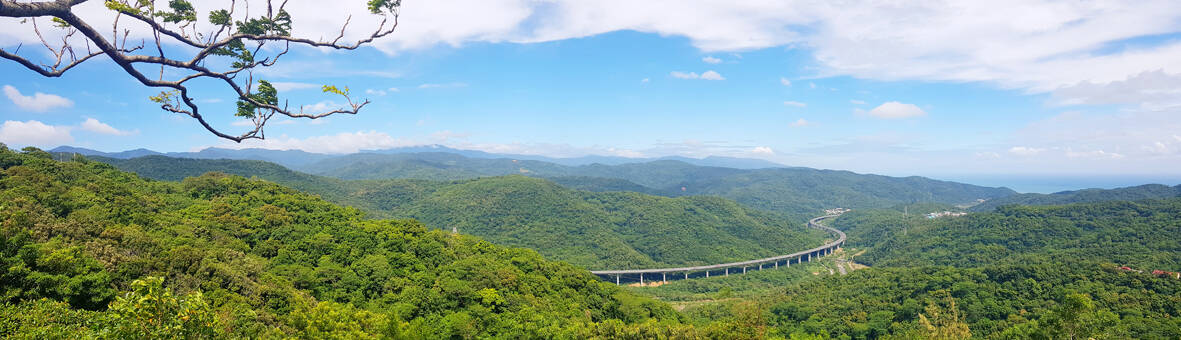
Photo: Noah Buchan, Taipei Times
Taiwan’s public debt is usually rated highly by ratings agencies. Taipower, whose debt is predicted to reach as much as NT$1.75 trillion this year — compare that to the NT$2 trillion the KMT wants to spend on the east coast infrastructure program — is probably the worst debt offender among the 17 state-owned enterprises. Over the last couple of decades Taiwan’s public debt has averaged around 30 percent of GDP, a little higher the last couple of years. This suggests that it will not be difficult for Taiwan to borrow money.
At present the Public Debt Act (公共債務法) limits debt to 40.6 percent of average GDP over the previous three years. Taiwan thus cannot acquire public debt levels similar to those of Japan, China or the US. Taiwan’s external debt remains low.
If both major parties are going to shove their respective programs through the legislature and fund them over the next four years, then at some point legislators will start talking about revising the debt limit. Indeed, I expect the KMT to do it because it is the obvious next move if one of the KMT’s long-term goals is to sabotage economic growth in Taiwan while looting the economy. Public debt is an excellent tool for doing both, since it lowers economic growth while transferring wealth from taxpayers to (usually wealthy) public debt holders.
ECONOMIC RELIANCE ON PRC
Recall that Ma’s Economic Cooperation Framework Agreement (ECFA) was signed on the seventh anniversary of the Closer Economic Partnership Agreement (CEPA) between the People’s Republic of China (PRC) and the Hong Kong Special Administrative Region (SAR). The signing ceremony took place in Chongqing, where peace talks between the dictators Chiang Kai-shek (蔣介石) and Mao Zedong (毛澤東) took place in August of 1945. This signaled that ECFA existed not only to reduce Taiwan to an SAR-like region of the PRC empire, but also to mirror the effects of CEPA on Hong Kong.
In 2011, National Sun Yat-sen University published a report on the effects of CEPA and ECFA. Ma’s Executive Yuan had commissioned the report in order to understand why southern Taiwan so vociferously objected to ECFA. The reasons were obvious and well known to Taiwanese businessmen at the time. CEPA, the report observed, had lead to outflows of Hong Kong’s manufacturing and services from the city-state into southern China. The result was increases in the number of workers making HK$5,000 and longer working hours. The unrest of the late 2010s is hardly surprising, given the economic and social effects of PRC rule.
The overarching malign intent of Ma’s economic policies is usually underappreciated. Their long-term purpose was to help the PRC achieve its goal of hollowing out Taiwan’s economy, on which the island’s independence relies. Ma’s plan envisioned a triple whammy: first, free economic zones that would bring in PRC labor and products, including vast amounts of smuggling, that would displace local labor and manufacturing. Second, ECFA to reduce Taiwan’s trade surplus with the PRC and displace Taiwanese manufacturing by flooding the island with cheap PRC products.
Finally, the flip side of this was the tourism boost, which would provide the economic anesthetic for this set of operations, providing a pretense of industry that would actually drive up the value of the New Taiwan dollar as tourists purchased local currency (reducing exports), while moving investment from manufacturing with its positive effects on living standards, to tourism. CEPA had similarly removed restrictions on tourists from the PRC mainland to Hong Kong and Macao.
The follow-on services pact was intended to assure eventual PRC dominance over Taiwan’s financial sector and the transfer of its services and extensive staff to Taiwan. In sum, Ma’s program was economic hollowing accompanied by ethnic flooding.
The east coast infrastructure program was first proposed under Ma. In the recent election, the KMT candidate became little more than a sock puppet for Ma. Whatever status within the KMT Ma might have, it is clear that the KMT has adopted the goals of his policy program, even though the public has rejected many of Ma’s tactics.
Watch for KMT moves to alter the public debt limit. It’s the logical next step of big public spending programs, and one of the few remaining arrows in the KMT quiver, since the public wisely rejected so many others.
Notes from Central Taiwan is a column written by long-term resident Michael Turton, who provides incisive commentary informed by three decades of living in and writing about his adoptive country. The views expressed here are his own.
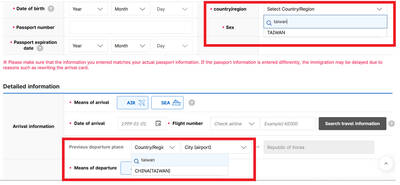
Jason Han says that the e-arrival card spat between South Korea and Taiwan shows that Seoul is signaling adherence to its “one-China” policy, while Taiwan’s response reflects a reciprocal approach. “Attempts to alter the diplomatic status quo often lead to tit-for-tat responses,” the analyst on international affairs tells the Taipei Times, adding that Taiwan may become more cautious in its dealings with South Korea going forward. Taipei has called on Seoul to correct its electronic entry system, which currently lists Taiwan as “China (Taiwan),” warning that reciprocal measures may follow if the wording is not changed before March 31. As of yesterday,
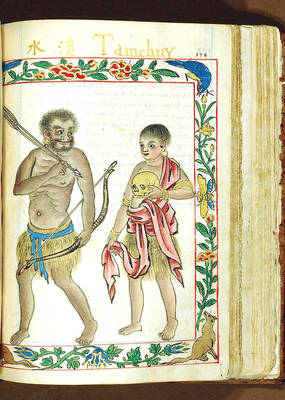
The Portuguese never established a presence on Taiwan, but they must have traded with the indigenous people because later traders reported that the locals referred to parts of deer using Portuguese words. What goods might the Portuguese have offered their indigenous trade partners? Among them must have been slaves, for the Portuguese dealt slaves across Asia. Though we often speak of “Portuguese” ships, imagining them as picturesque vessels manned by pointy-bearded Iberians, in Asia Portuguese shipping between local destinations was crewed by Asian seamen, with a handful of white or Eurasian officers. “Even the great carracks of 1,000-2,000 tons which plied
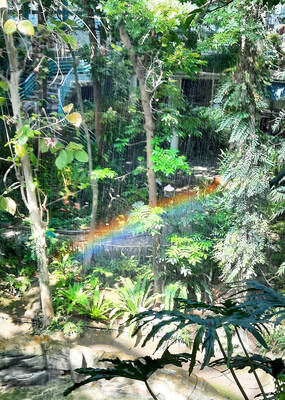
It’s only half the size of its more famous counterpart in Taipei, but the Botanical Garden of the National Museum of Nature Science (NMNS, 國立自然科學博物館植物園) is surely one of urban Taiwan’s most inviting green spaces. Covering 4.5 hectares immediately northeast of the government-run museum in Taichung’s North District (北區), the garden features more than 700 plant species, many of which are labeled in Chinese but not in English. Since its establishment in 1999, the site’s managers have done their best to replicate a number of native ecosystems, dividing the site into eight areas. The name of the Coral Atoll Zone might
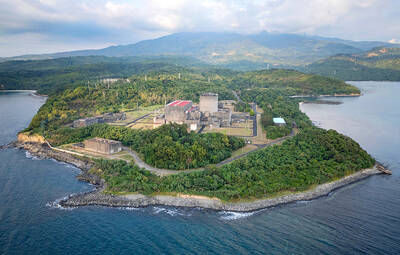
Nuclear power is getting a second look in Southeast Asia as countries prepare to meet surging energy demand as they vie for artificial intelligence-focused data centers. Several Southeast Asian nations are reviving mothballed nuclear plans and setting ambitious targets and nearly half of the region could, if they pursue those goals, have nuclear energy in the 2030s. Even countries without current plans have signaled their interest. Southeast Asia has never produced a single watt of nuclear energy, despite long-held atomic ambitions. But that may soon change as pressure mounts to reduce emissions that contribute to climate change, while meeting growing power needs. The


 RSS
RSS