


When news emerged that new US Speaker Mike Johnson and his teenage son monitored each other’s pornography intake, the concept of an “accountability partner” was probably unfamiliar to many people. Certainly, the Republican politician hasn’t done much to sell the idea. Rolling Stone magazine, revelling in the “creepy Big Brother-ness” of it all, detailed how the “faith-obsessed” politician used an app called Covenant Eyes. Deployed by churches and missionary groups, it sends out weekly reports flagging up all the potentially nefarious online content consumed by an individual and their appointed sin monitor.
“My accountability partner right now is Jack, my son. He is 17,” Johnson said in a resurfaced news clip from last year. “If anything objectionable comes up, your accountability partner gets an immediate notice.”
The mind boggles. For a start, define objectionable? One person’s harmless rap video might be another’s NSFW (not safe for work) nightmare. And where does this level of micro-monitoring end? Today OnlyFans, the mostly pornographic subscriber platform, tomorrow fried chicken Deliveroos and unwise athleisure purchases?
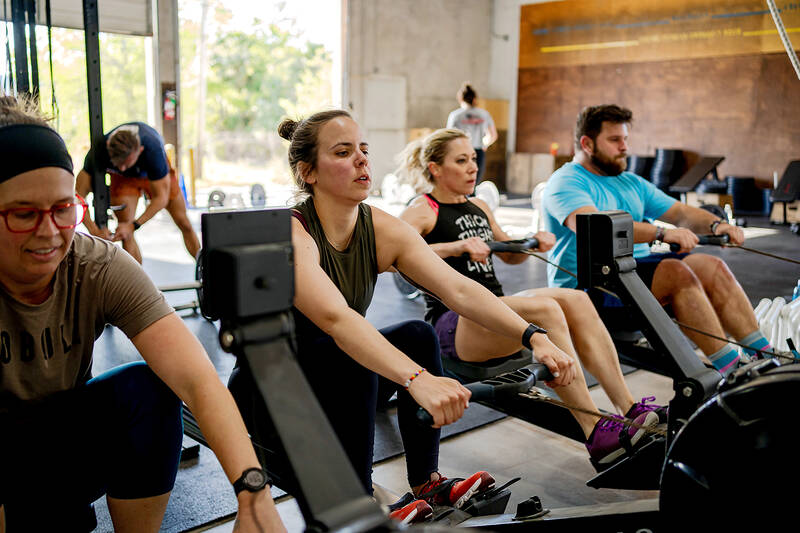
Photo courtesy of Wikimedia Commons
SPONSOR
It’s a pity that the concept of having a support buddy has hit the headlines in such a bizarre context. In other areas of life, having an accountability partner is nothing new. They can be used to help a person to get fitter or achieve career and personal goals, for example. Indeed, one US study found that you have a 65 percent chance of completing a goal if you tell someone else you’re committing to doing it. And if you have specific check-ins with a partner, your chance of success increases to 95 percent.
The practice has its origins in Alcoholics Anonymous and related 12-step addiction support groups which have always utilized the positive power of having a designated “sponsor” to help members navigate the daily path to sobriety outside structured meetings.
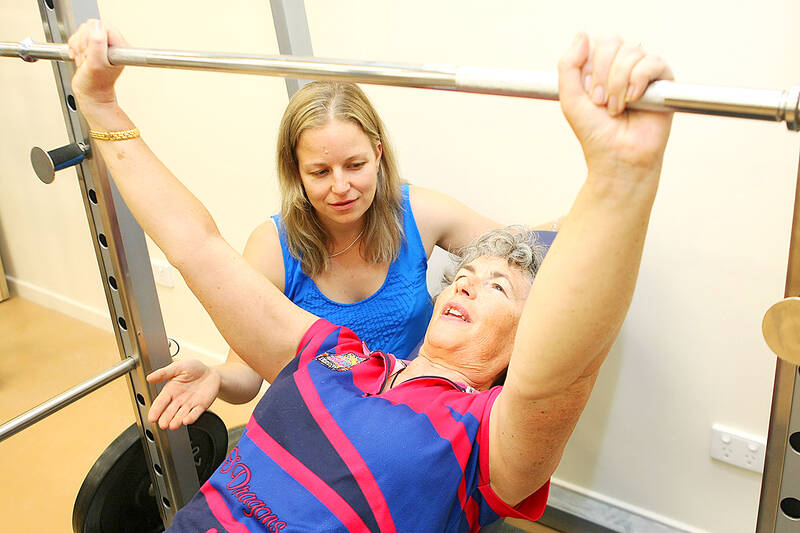
Photo courtesy of Wikimedia Commons
Psychologist Suzy Reading says that there are typically two different types of accountability partner.
“The first works more like a mentor where one person benefits from the other’s wisdom; the second is when two people are focusing on a common goal. They can both work equally well.”
Reading believes that such arrangements are currently enjoying a rise in popularity because they offer something that is in dwindling supply — ritualized intimacy.

Photo courtesy of Wikimedia Commons
“There’s a huge element here around social connection and shared experience. Having a buddy you check in with at regular times to share your progress can make such a difference, not just to your goals but to your wellbeing.”
Author Menna van Praag discovered just how effective working with a buddy can be when she was writing her latest novel, Child of Earth and Sky, the third in a trilogy. She had had no problem hitting her previous two deadlines, but then life got in the way.
“The simultaneous pressures of renovating a house, teaching creative writing and raising a young family meant that I was struggling to make progress. I teamed up with an author friend who was also looking down the barrel of a tight deadline and we committed to writing 1,000 words a day and emailing one another when we’d done it.”
The pair didn’t read each other’s work; it was the ritual of sending the completed pages that proved so helpful.
“We both kept showing up because we didn’t want to let the other person down. Also, it was such fun — everything is more enjoyable with a friend, isn’t it?”
‘ACCOUNTABILITY BUDDY’
But you don’t need to be working on as ambitious a goal as writing a book to benefit from a buddy.
“I’ve seen it work with something as simple as committing to going for a 20-minute walk every morning before work,” says coach Selina Barker. “Choose a friend or family member to hold you accountable and then send them a photo from your walk every time you do it. Bringing about any change is hard. We underestimate the energy and commitment it takes to undo even the smallest habits and create new ones. Everyone loves praise and encouragement, and this is one way of getting it.”
Barker herself is a member of a WhatsApp accountability group called Celebration Sisters to share successes with a gang of female creatives.
The benefit is amplified if you actually meet up together to work on the same goal.
Kirsten Whitehouse is a personal trainer who always suggests to clients that they bring a friend along to sessions.
“Time and again I’ve seen how people get better results by having an accountability buddy,” she says. “If you’ve arranged to meet someone else at the gym or the zumba class, you are much more likely to actually go. We are not always great at prioritizing our own needs but most people don’t want to let someone else down. Sadly, we find it easier to commit to other people than ourselves.”
She suggests that you don’t need to train with a partner all the time, maybe once a week, but you can discuss your progress in between times.
“You don’t need to be at the same level of fitness, either. For example, one person can run fast for five minutes there and back while the slower person goes the distance at their own pace. The key thing is they’re supporting each other by going out together.”
MENTOR
If someone is way better at something than you, they can take on more of a mentoring role. Jen, an administrator from Manchester, started running with a much fitter friend.
“I had done absolutely nothing exercise-wise since school and was still recovering from netball humiliation. You might as well have told me I could walk on the moon as training for a race. But then after a probably-drunken commitment, I agreed to give running a try. My friend took me out the first few times and this year, at 50, I ran my second half marathon.”
This was despite a recent diagnosis of epilepsy.
“My friend helped me to keep going and to see possibilities. I couldn’t have done any of it without her. We still go running together, including hill sprints, another thing I can’t believe I’m doing.”
So, how does one even go about finding an accountability partner in the first place?
“Maybe don’t go up to someone and ask them, ‘Will you be my accountability partner?’ because that does sound a bit weird,” says Barker. “Ask if they would like to be your cheerleader or buddy on this one thing you’re trying to do. Most people like to help.”
Is it best to ask a friend or partner, or someone more neutral? Psychotherapist Kamalyn Kaur suggests this isn’t the right question.
“What you need to consider is finding somebody that has a similar level of drive and energy. Someone who is a dynamic go-getter isn’t really going to work well with someone who always needs a push to get going. The more dynamic person will find it draining.”
She cautions against automatically thinking your partner would be the ideal buddy.
“I’ve seen it a lot in health and fitness goals, where one half of a couple makes rapid progress, the other one may feel threatened and start to sabotage them,” she says. “If both partners are very secure in themselves and not prone to jealousy then it can work. But even then, many people enjoy working on their goals with time and space away from their significant other.”
In any accountability partnership, the twin spectres of jealousy and competition can derail people’s success.
“If one person is trying to outdo the other, that undermines the purpose of mutual support. Another issue can be if one person has wildly over-ambitious goals for the two of you, usually because they set overly high standards for themselves. That can set both of you up for failure and demotivation,” says Kaur.
Belgian entrepreneur Ivan Faes was fortunate not to have encountered any of these pitfalls while working with a business buddy he met randomly on an online training seminar.
“I asked him if he would be interested in having a call to discuss some of the sales techniques we’d both just learned. From there, we agreed to call each other at 6:45 every morning. We haven’t missed a day since March, and have added in an evening call as well. I also WhatsApp him my daily progress on doing 120 sit-ups.”
MASSIVE COMMITMENT?
The commitment required to do this sounds massive.
“It does require a specific mindset to make it happen. I travel a lot so I’ve called him from airports, trains and on the road,” admits Faes. “The focus is work but inevitably other stuff comes up as well, family life for example. We’ve got to know each other very well to the point where we are planning to visit each other — he lives in Kenya. We have changed each other’s businesses and lives.”
As with any other type of partnership, however, there is plenty of scope for things to go wrong. On this, I can speak from personal experience. A few years ago, while researching a magazine feature, I joined an online life-coaching community. We were each paired with a partner to support us through the “transformational journey.” Every Monday, at 5pm, I had an hour-long call with a woman in California to discuss our progress on that week’s exercises. Trouble was, she was going through an angry divorce and mostly wanted to vent about that and her disappointing real estate career. I was too polite on the first call to set any boundaries or ground rules and only got 15 minutes to share details of my week. She was an aspiring magazine writer, and in subsequent calls, kept ranting at me.
“‘It’s all right for YOU, you’ve already got a great job,’ which wasn’t helpful.”
I’m not proud of this but in the end, I tiptoed quietly away, from the group and from her increasingly furious emails.
This scenario is precisely why experts suggest you embark on such arrangements with an initial trial period and always set an end point for how long your partnership will last.
“You can say, let’s try this out and see if it works,” suggests Reading. “That way you can find out what it is you really need, and be clear and honest about swiftly calling a halt if it isn’t working.”
Working successfully with a buddy rests as much with thinking about what you can offer the other person as what they can give you. “We ideally want to work with someone compassionate and non-judgmental who is trustworthy and is genuinely interested in our success,” says Reading. “But we must also be willing to offer that to them.”
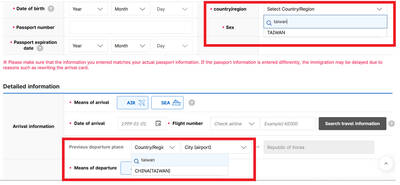
Jason Han says that the e-arrival card spat between South Korea and Taiwan shows that Seoul is signaling adherence to its “one-China” policy, while Taiwan’s response reflects a reciprocal approach. “Attempts to alter the diplomatic status quo often lead to tit-for-tat responses,” the analyst on international affairs tells the Taipei Times, adding that Taiwan may become more cautious in its dealings with South Korea going forward. Taipei has called on Seoul to correct its electronic entry system, which currently lists Taiwan as “China (Taiwan),” warning that reciprocal measures may follow if the wording is not changed before March 31. As of yesterday,

The Portuguese never established a presence on Taiwan, but they must have traded with the indigenous people because later traders reported that the locals referred to parts of deer using Portuguese words. What goods might the Portuguese have offered their indigenous trade partners? Among them must have been slaves, for the Portuguese dealt slaves across Asia. Though we often speak of “Portuguese” ships, imagining them as picturesque vessels manned by pointy-bearded Iberians, in Asia Portuguese shipping between local destinations was crewed by Asian seamen, with a handful of white or Eurasian officers. “Even the great carracks of 1,000-2,000 tons which plied

It’s only half the size of its more famous counterpart in Taipei, but the Botanical Garden of the National Museum of Nature Science (NMNS, 國立自然科學博物館植物園) is surely one of urban Taiwan’s most inviting green spaces. Covering 4.5 hectares immediately northeast of the government-run museum in Taichung’s North District (北區), the garden features more than 700 plant species, many of which are labeled in Chinese but not in English. Since its establishment in 1999, the site’s managers have done their best to replicate a number of native ecosystems, dividing the site into eight areas. The name of the Coral Atoll Zone might

Nuclear power is getting a second look in Southeast Asia as countries prepare to meet surging energy demand as they vie for artificial intelligence-focused data centers. Several Southeast Asian nations are reviving mothballed nuclear plans and setting ambitious targets and nearly half of the region could, if they pursue those goals, have nuclear energy in the 2030s. Even countries without current plans have signaled their interest. Southeast Asia has never produced a single watt of nuclear energy, despite long-held atomic ambitions. But that may soon change as pressure mounts to reduce emissions that contribute to climate change, while meeting growing power needs. The


 RSS
RSS