


If you’ve ever skipped the garlic for fear of romantic rejection, take note: You can have your date and eat garlic — provided you follow up with a spoonful of yoghurt. Research suggests that the fat and protein that yoghurt contains prevents almost all of the smelly volatile compounds in garlic from escaping into the air.
Manpreet Kaur and Sheryl Barringer at the Ohio State University in Columbus, US, tested the capacity of yoghurt — and the water, fat and protein in it — to neutralize the sulfurous compounds that give raw and cooked garlic its characteristic odor.
Their results, published in the journal Molecules, suggested yoghurt alone reduced 99 percent of the most odor-producing volatiles in raw garlic. The individual fat, water and protein components also had a neutralizing effect, but fat and protein were more effective than water, and higher-fat yoghurt was better than lower-fat yoghurt.

Photo courtesy of the Pingtung City Government
Previous research has suggested that drinking whole milk can also help to get rid of garlic breath, because the fats it contains bind to several of the smelly molecules. Barringer said the proteins in yoghurt may also serve to trap volatile molecules before they are emitted into the air.
“We know proteins bind flavor — a lot of times, that’s considered a negative, especially if a food with high protein has less flavor. In this case, it could be a positive,” she said.
She predicted that Greek yoghurt, which has a higher protein profile than the yoghurt used in the study, may be particularly effective. Fruit-flavored yoghurts will also probably work — but whatever is used, it must be consumed as soon as possible after the garlic.
Their experiments also revealed that frying garlic significantly reduces the amount of smelly volatiles it releases. Separate research by Barringer has suggested that eating raw apple, mint or lettuce immediately after consuming garlic may also help to deodorize the breath.
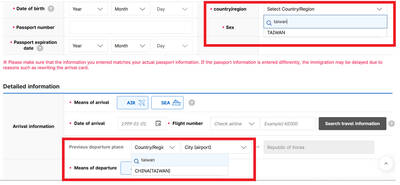
Jason Han says that the e-arrival card spat between South Korea and Taiwan shows that Seoul is signaling adherence to its “one-China” policy, while Taiwan’s response reflects a reciprocal approach. “Attempts to alter the diplomatic status quo often lead to tit-for-tat responses,” the analyst on international affairs tells the Taipei Times, adding that Taiwan may become more cautious in its dealings with South Korea going forward. Taipei has called on Seoul to correct its electronic entry system, which currently lists Taiwan as “China (Taiwan),” warning that reciprocal measures may follow if the wording is not changed before March 31. As of yesterday,

The Portuguese never established a presence on Taiwan, but they must have traded with the indigenous people because later traders reported that the locals referred to parts of deer using Portuguese words. What goods might the Portuguese have offered their indigenous trade partners? Among them must have been slaves, for the Portuguese dealt slaves across Asia. Though we often speak of “Portuguese” ships, imagining them as picturesque vessels manned by pointy-bearded Iberians, in Asia Portuguese shipping between local destinations was crewed by Asian seamen, with a handful of white or Eurasian officers. “Even the great carracks of 1,000-2,000 tons which plied

It’s only half the size of its more famous counterpart in Taipei, but the Botanical Garden of the National Museum of Nature Science (NMNS, 國立自然科學博物館植物園) is surely one of urban Taiwan’s most inviting green spaces. Covering 4.5 hectares immediately northeast of the government-run museum in Taichung’s North District (北區), the garden features more than 700 plant species, many of which are labeled in Chinese but not in English. Since its establishment in 1999, the site’s managers have done their best to replicate a number of native ecosystems, dividing the site into eight areas. The name of the Coral Atoll Zone might
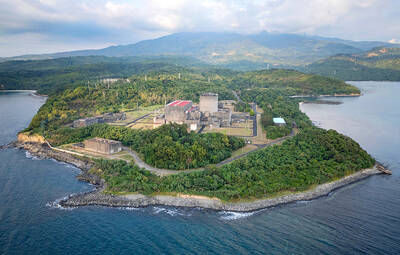
Nuclear power is getting a second look in Southeast Asia as countries prepare to meet surging energy demand as they vie for artificial intelligence-focused data centers. Several Southeast Asian nations are reviving mothballed nuclear plans and setting ambitious targets and nearly half of the region could, if they pursue those goals, have nuclear energy in the 2030s. Even countries without current plans have signaled their interest. Southeast Asia has never produced a single watt of nuclear energy, despite long-held atomic ambitions. But that may soon change as pressure mounts to reduce emissions that contribute to climate change, while meeting growing power needs. The


 RSS
RSS