


If medieval advances in the plough didn’t lift Europe’s peasants out of poverty, it was largely because their rulers took the wealth generated by the new gains in output and used it to build cathedrals instead.
Economists say something similar could happen with artificial intelligence (AI) if it enters our lives in such a way that the touted benefits are enjoyed by the few rather than the many.
“AI has got a lot of potential — but potential to go either way,” argues Simon Johnson, professor of global economics and management at MIT Sloan School of Management.
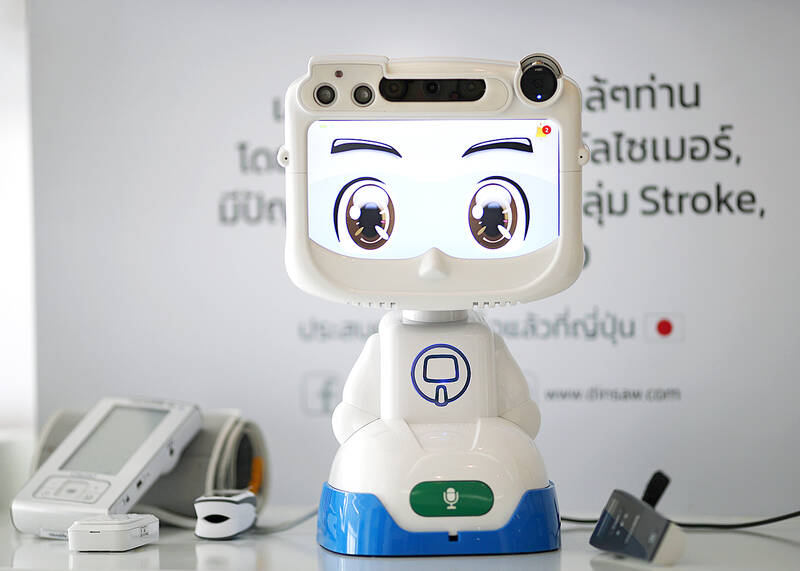
Photo: EPA-EFE
“We are at a fork in the road.”
Backers of AI predict a productivity leap that will generate wealth and improve living standards. Consultancy McKinsey in June estimated it could add between US$14 trillion and US$22 trillion of value annually — that upper figure being roughly the current size of the US economy.
Some techno-optimists go further, suggesting that, along with robots, AI is the technology that will finally free humanity from humdrum tasks and launch us into lives of more creativity and leisure.
Yet worries abound about its impact on livelihoods, including its potential to destroy jobs in all kinds of sectors — witness the strike in July by Hollywood actors who fear being made redundant by their AI-generated doubles.
WHAT PRODUCTIVITY GAIN?
Such concerns are not unfounded. History shows the economic impact of technological advances is generally uncertain, unequal and sometimes outright malign.
A book published this year by Johnson and fellow MIT economist Daron Acemoglu surveyed a thousand years of technology — from the plough through to automated self-checkout kiosks — in terms of their success in creating jobs and spreading wealth.
While the spinning jenny was key to 18th century automation of the textiles industry, they found it led to longer working hours in harsher conditions. Mechanical cotton gins facilitated the 19th century expansion of slavery in the American South.
The track record of the Internet is complex: it has created many new job roles even as much of the wealth generated has gone to a handful of billionaires. The productivity gains it was once lauded for have slowed across many economies.
A June research note by French bank Natixis suggested that was because even a technology as pervasive as the Internet left many sectors untouched, while many of the jobs it created were low-skilled — think of the delivery chain for online purchases.
“Conclusion: We should be cautious when estimating the effects of artificial intelligence on labour productivity,” Natixis warned.
In a globalized economy, there are other reasons to doubt whether the potential gains of AI will be felt evenly.
On the one hand, there is the risk of a “race to the bottom” as governments compete for AI investment with increasingly lax regulation. On the other, the barriers to luring that investment might be so high as to leave many poorer countries behind.
“You have to have the right infrastructure — huge computing capacity,” said Stefano Scarpetta, Director of Employment, Labour and Social Affairs at the Paris-based Organisation for Economic Cooperation and Development (OECD).
“We have the G7 Hiroshima Process, we need to go further to the G20 and UN,” he said, advocating the expansion of an accord at a May summit of Group of Seven (G7) powers to jointly seek to understand the opportunities and challenges of generative AI.
WORKER POWER
Innovation, it turns out, is the easy bit. Harder is making it work for everyone — which is where politics comes in.
For MIT’s Johnson, the arrival of railways in 19th century England at a moment of rapid democratic reform allowed those advances to be enjoyed by wider society, be it through faster transport of fresh food or a first taste of leisure travel.
Similar democratic gains elsewhere helped millions enjoy the fruits of technological advance well into the 20th century. But Johnson contends that this started changing with the aggressive shareholder capitalism that has marked the last four decades.
The automated self-checkout, he argues, is a case in point.
Groceries do not become cheaper, shoppers’ lives are not transformed and no new task is created — just the profit gain from the reduction of labour costs.
Worker groups, which have lost much of the clout they had before the 1980s, identify AI as a potential threat to workers’ rights as well as employment, for example if there is no human control on AI-steered hiring and firing decisions.
Mary Towers, employment rights policy officer at Britain’s Trades Union Congress, cited the importance of unions “having statutory consultation rights, having the ability to collectively bargain around technology at work”.
That is just one of several factors that will help determine how AI shapes our economic lives — from antitrust policies that ensure healthy competition among AI suppliers through to re-training of workforces.
An OECD survey of some 5,300 workers published in July suggested that AI could benefit job satisfaction, health and wages but was also seen posing risks around privacy, reinforcing workplace biases and pushing people to overwork.
“The question is: will AI exacerbate existing inequalities or could it actually help us get back to something much fairer?” said Johnson.
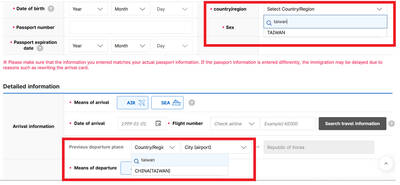
Jason Han says that the e-arrival card spat between South Korea and Taiwan shows that Seoul is signaling adherence to its “one-China” policy, while Taiwan’s response reflects a reciprocal approach. “Attempts to alter the diplomatic status quo often lead to tit-for-tat responses,” the analyst on international affairs tells the Taipei Times, adding that Taiwan may become more cautious in its dealings with South Korea going forward. Taipei has called on Seoul to correct its electronic entry system, which currently lists Taiwan as “China (Taiwan),” warning that reciprocal measures may follow if the wording is not changed before March 31. As of yesterday,

The Portuguese never established a presence on Taiwan, but they must have traded with the indigenous people because later traders reported that the locals referred to parts of deer using Portuguese words. What goods might the Portuguese have offered their indigenous trade partners? Among them must have been slaves, for the Portuguese dealt slaves across Asia. Though we often speak of “Portuguese” ships, imagining them as picturesque vessels manned by pointy-bearded Iberians, in Asia Portuguese shipping between local destinations was crewed by Asian seamen, with a handful of white or Eurasian officers. “Even the great carracks of 1,000-2,000 tons which plied

It’s only half the size of its more famous counterpart in Taipei, but the Botanical Garden of the National Museum of Nature Science (NMNS, 國立自然科學博物館植物園) is surely one of urban Taiwan’s most inviting green spaces. Covering 4.5 hectares immediately northeast of the government-run museum in Taichung’s North District (北區), the garden features more than 700 plant species, many of which are labeled in Chinese but not in English. Since its establishment in 1999, the site’s managers have done their best to replicate a number of native ecosystems, dividing the site into eight areas. The name of the Coral Atoll Zone might
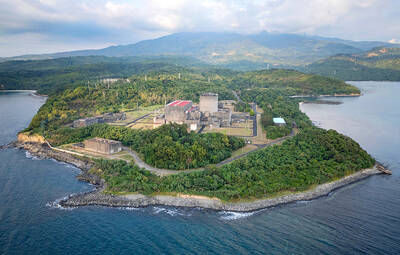
Nuclear power is getting a second look in Southeast Asia as countries prepare to meet surging energy demand as they vie for artificial intelligence-focused data centers. Several Southeast Asian nations are reviving mothballed nuclear plans and setting ambitious targets and nearly half of the region could, if they pursue those goals, have nuclear energy in the 2030s. Even countries without current plans have signaled their interest. Southeast Asia has never produced a single watt of nuclear energy, despite long-held atomic ambitions. But that may soon change as pressure mounts to reduce emissions that contribute to climate change, while meeting growing power needs. The


 RSS
RSS