


The 2024 presidential election is five months away. Polls show that Democratic Progressive Party (DPP) candidate Vice President William Lai (賴清德) is leading the field, yet in every poll his numbers remain stagnant and there is a large crop of uncommitted voters. The always interesting infighting in the Chinese Nationalist Party (KMT) is overshadowing Lai’s struggle to enlarge his vote outside the DPP base.
Typically, national level elections are thought to play out over China policy, where the DPP has a significant edge, given its commitment to mainstream political positions on cross-strait relations. But economic threats to a DPP victory loom.
Late last month the Taiwan Institute of Economic Research (TIER), in its quarterly review, forecast an overall economic growth rate for the year of 1.66 percent. TIER noted that “On Taiwan’s domestic front, both manufacturing exports and foreign export orders have declined compared to the previous month,” driving business pessimism. Interest rates are expected to remain high. “Foreign export orders, manufacturers’ imports of capital equipment, and manufacturing production index, …have continued to show a declining trend without significant improvement.”
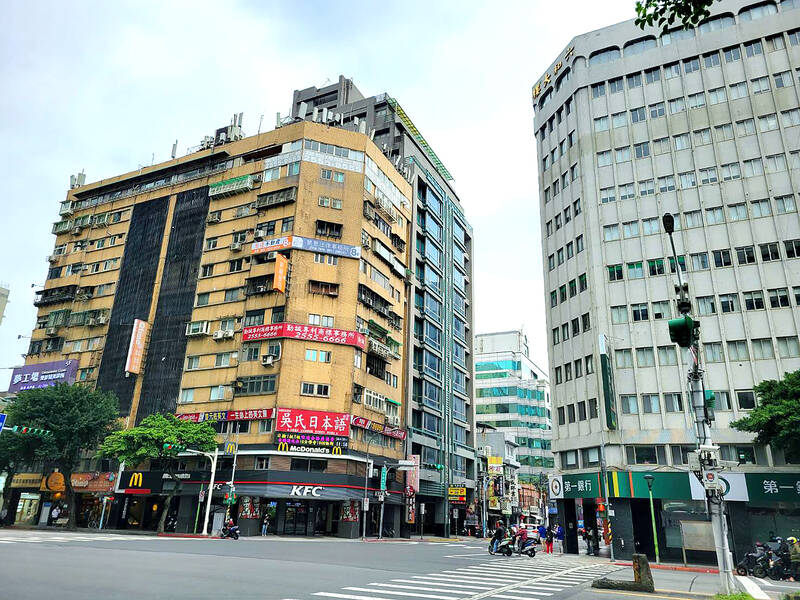
Photo: Ho Yu-hua, Liberty Times
HIGH COST OF LIVING
The anemic growth rate is compounded by the trend of gains going largely to owners of capital, with labor getting less than its share of growth. How long will workers tolerate this?
TIER did expect the GDP trend to “improve” over the remainder of the year. However, it said that the consumer price index increased 1.75 percent year-on-year in June. The producer price inflation rate fell, however, as global commodity prices are falling.
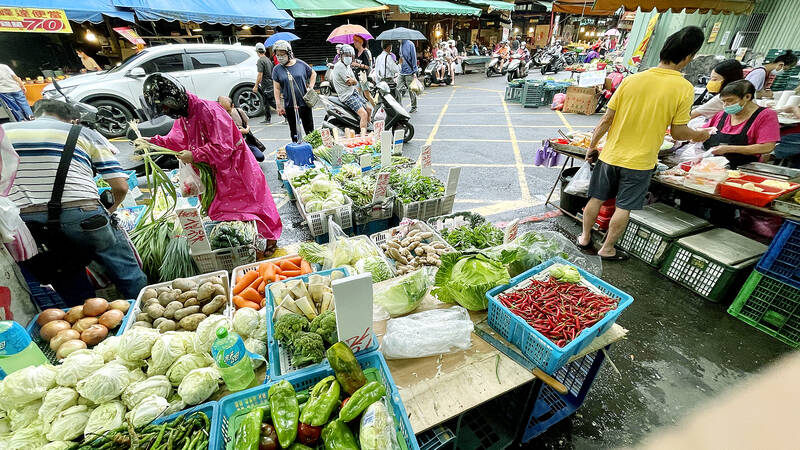
Photo: George Tsorng, Taipei Times
A Taipei Times editorial last month observed that inflation was cooling and that might help Taiwan. But on the ground it is still very obvious — food prices especially. Everywhere I go, menus have old prices scratched out or covered with stickers showing higher prices.
Oil and commodities prices shot up after Russia invaded Ukraine last year, impairing economic growth. Prices of wheat and other grains also rose.
The conflict also pushed up the price of fertilizer. This drove up the price of food in two ways. First, it cost more to grow food. Second, facing rising fertilizer prices, farmers reduced fertilizer use and yields fell.
Fertilizer prices have fallen to about 20 percent above pre-pandemic levels, because the price of inputs like urea and natural gas have fallen, and because the sanctions on Russia and Belarus, key producers, did not cover fertilizers, though they did affect the export process. Food prices remain high globally because the labor shortage in agriculture is global and because many countries, fearing food shortages and price spikes, restricted exports of food. Hence, consumers have not reaped the benefits of lower fertilizer costs.
Another problem of the war is livestock feed. Feed prices track grain prices. Taiwan does not really produce meat. Rather, it assembles pigs and chickens out of water and imported feed.
Feed prices began increasing around 2021 in the wake of the pandemic and took another jump after the war in Ukraine began. They fell after the grain deal between Russia and Ukraine in July of last year, then started rising. Since Russia left that deal last month, it appears feed prices will continue to rise throughout the election period, with concomitant effects on meat and food prices here.
Higher food prices, obvious to consumers on the ground, are an issue that could easily drive more voters into the arms of third-party candidates.
Home prices and housing are issues pushing voters away from the DPP, but for years rents have remained low. That is not true any longer. In June of this year the government’s rent index hit the highest levels since it began maintaining the index in 1981. Moreover, the monthly increase was highest in central Taiwan, the battleground area.
It’s one thing if voters can’t afford a house, but it’s quite another if they can’t afford a decent place to live. The government has implemented a tax in response to the “serious property hoarding problem” but its effects have not manifested in the market. Rising rents could also touch off a populist revolt against the DPP.
Yet another problem, almost surprising given Taiwan’s tight labor market, is long-term decline in both overtime and in jobs. According to data released by the Directorate-General of Budget, Accounting and Statistics (DGBAS) in June, outbound shipments had fallen for the previous nine months, and pacing the fall in demand, overtime hours had fallen for 10 consecutive months. Thus, slightly more people left the labor market than entered it.
There was good news as wages rose in the first quarter of the year, but inflation blunted these gains.
POPULIST REVOLT?
This snapshot of where things are shows a population that might be vulnerable to the usual ‘Change!’ slogan Taiwan politicians present, especially if any of them can come up with an appealing populist economic program.
An April Taipei Times editorial presciently observed that the nation could face stagflation this year, as slumping growth meets growing inflation, a new phenomenon for Taiwan.
One other factor could impact Taiwan’s restless working classes: China. Over 40 percent of Taiwan’s exports go to that nation, which is currently bucking the global trend by exhibiting signs of deflation. If export demand from China continues to slacken in the fourth quarter, the ripple effects on Taiwan and the election could be profound.
What would a populist revolt look like in Taiwan? There has been much recent discussion of the populist disaffection in Taiwan, but less on what economic and social forms a revolt might take. An interesting survey piece by Magnus Feldman and Mercea Popea in Post-Communist Economies shows that Taiwan has a number of affinities with eastern Europe. A populist swing in Taiwan might look something like what has happened in Poland, Hungary or Romania.
Many of the elements of populist governance found in those countries are already present in Taiwan. Feldman and Popea note that “All three target the retired, who are a key support group.” Poland and Hungary focus on “capital projects… rhetorically justified with reference to a neo-developmentalist argument for strengthening domestic business.” Romania supported public employees. These are all programs of both major parties.
The populist governments of those nations also took steps to reduce the presence of foreign banks and supermarkets. Such moves, at least in Poland, were “partly justified as a way to reduce external dependency and break out of the middle-income trap”, according to Feldmand and Popea.
No candidate is calling for such a program in Taiwan. Yet.
Notes from Central Taiwan is a column written by long-term resident Michael Turton, who provides incisive commentary informed by three decades of living in and writing about his adoptive country. The views expressed here are his own.
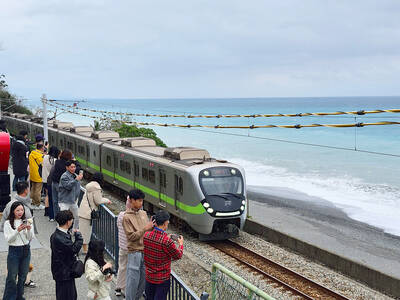
The small platform at Duoliang Train Station in Taitung County’s Taimali Township (太麻里) served villagers from 1992 to 2006, but was eventually shut down due to lack of use. Just 10 years later, the abandoned train station had become widely known as the most beautiful station in Taiwan, and visitors were so frequent that the village had to start restricting traffic. Nowadays, Duoliang Village (多良) is known as a bit of a tourist trap, with a mandatory, albeit modest, admission fee of NT$10 giving access to a crowded lane of vendors with a mediocre view of the ocean and the trains

For many people, Bilingual Nation 2030 begins and ends in the classroom. Since the policy was launched in 2018, the debate has centered on students, teachers and the pressure placed on schools. Yet the policy was never solely about English education. The government’s official plan also calls for bilingualization in Taiwan’s government services, laws and regulations, and living environment. The goal is to make Taiwan more inclusive and accessible to international enterprises and talent and better prepared for global economic and trade conditions. After eight years, that grand vision is due for a pulse check. RULES THAT CAN BE READ For Harper Chen (陳虹宇), an adviser
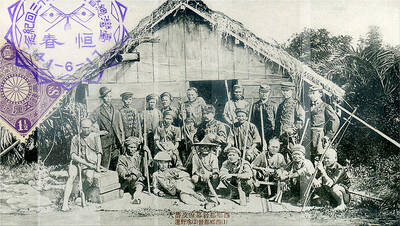
Traditionally, indigenous people in Taiwan’s mountains practice swidden cultivation, or “slash and burn” agriculture, a practice common in human history. According to a 2016 research article in the International Journal of Environmental Sustainability, among the Atayal people, this began with a search for suitable forested slopeland. The trees are burnt for fertilizer and the land cleared of stones. The stones and wood are then piled up to make fences, while both dead and standing trees are retained on the plot. The fences are used to grow climbing crops like squash and beans. The plot itself supports farming for three years.
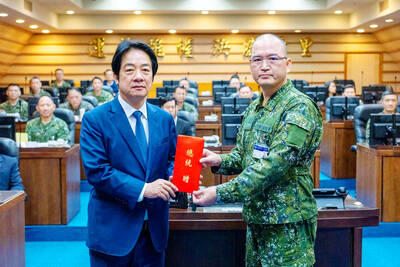
President William Lai (賴清德) on Nov. 25 last year announced in a Washington Post op-ed that “my government will introduce a historic US$40 billion supplementary defense budget, an investment that underscores our commitment to defending Taiwan’s democracy.” Lai promised “significant new arms acquisitions from the United States” and to “invest in cutting-edge technologies and expand Taiwan’s defense industrial base,” to “bolster deterrence by inserting greater costs and uncertainties into Beijing’s decision-making on the use of force.” Announcing it in the Washington Post was a strategic gamble, both geopolitically and domestically, with Taiwan’s international credibility at stake. But Lai’s message was exactly


 RSS
RSS