


Goodbyes don’t tend to mean much in the Hollywood franchise system. Death isn’t a reliable end for characters or, lately, even actors. Technology, nostalgia and the often-inflated value of brands and IP have created a nightmarish cycle of resurrection and regurgitation, curdling what we love most.
And yet when someone like Harrison Ford says he’s hanging up Indiana Jones’ fedora, for better or worse, you believe him. Indiana Jones producer Frank Marshall has also said that they won’t recast the character, which seems more dubious and, though well-intentioned, something he won’t be able to guarantee. All it takes is a new executive demanding a reboot.
Not that it would ever really work, though. Any self-respecting movie fan knows the truth: The magic of Indiana Jones belongs wholly to Harrison Ford. Apparently, he doesn’t even necessarily need Steven Spielberg behind the camera, though, to be fair, the foundation was well-laid for a veteran like James Mangold to step in. But there is no Indy — none that we care about anyway — without Ford.

Photo: AP
In this way, it’s hard not to go into Indiana Jones and the Dial of Destiny, in theaters today, without a sense of melancholy — not exactly the ideal state of mind for what should be, and mostly is, a fun summer blockbuster. But it certainly adds a poignancy to the whole endeavor whether the film merits it or not.
If only it didn’t start with that pesky de-aging technology (the best it’s ever looked but it remains unsettling), giving us a 45-year-old Indiana Jones doing some of the wildest stunts we’ve ever seen our beloved archeology professor attempt — atop a speeding train to boot.
This sequence is ostensibly there to introduce the film’s MacGuffin, Archimedes Antikythera, a real celestial calculation machine with extraordinary predictive capabilities that in the film is bestowed with some otherworldly powers.
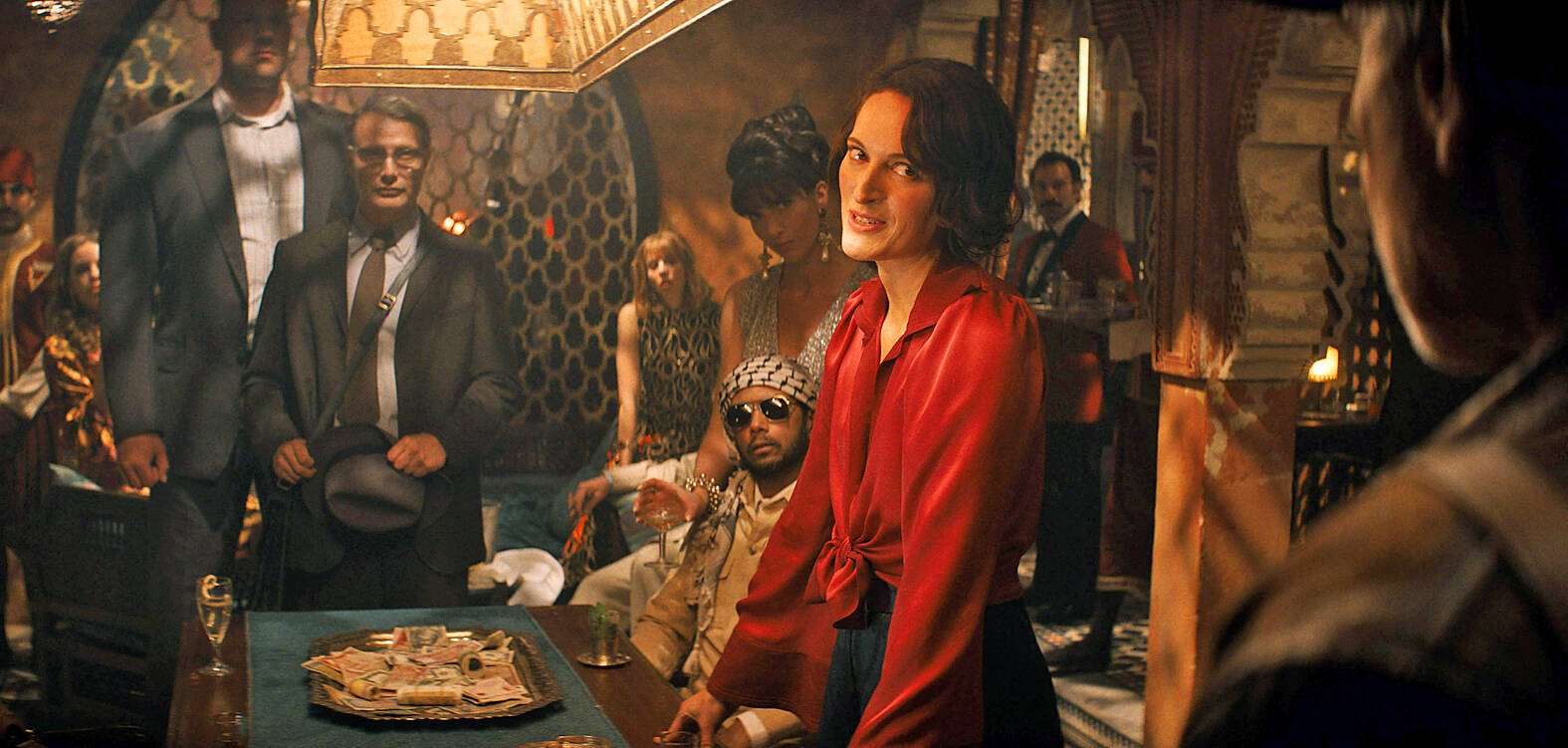
Photo: AP
But we know the real reason: It’s there to let us gaze at that familiar face and to go on one last adventure with the Indy we grew up with, before being thrust back reality with a nearly 80-year-old Ford (he’s 81 in July) playing a 70-something Indy.
This isn’t inherently sad, but Dr. Jones is certainly reintroduced in the most unglamorous way possible: Sleeping on a reclining chair in a sad New York apartment, a glass of something alcoholic in his hand and threadbare boxer shorts on his person. He’s depression personified, retiring from the university where the kids barely pay attention to him anyway (long gone are the “I love you” eyelids), estranged from Karen Allen’s Marion and watching the world go space crazy around him.
We’ll have to see him work back up to his adventuresome self. No training montages required, thankfully, just a plane ticket, his classic uniform (still fits!) and his old improvisational spirit. The cumbersome plot strains to justify and give meaning to the search for the Antikythera: The FBI is on the hunt for it, as is Nazi scientist Jurgen Voller (Mads Mikkelsen) for whom the war hasn’t ended, and the daughter (Phoebe Waller-Bridge) of Indy’s late partner Basil (Toby Jones) who was driven mad by the gadget. It’s a bit much, as are many of the overly elaborate and strangely murky-looking action sequences from the train in 1944 to a deep-sea diving sequence with killer eels. The movie hits its action high notes when it sticks to the tactile classics, like a brilliantly executed rickshaw chase in Tangier.

Photo: AP
Waller-Bridge’s Helena is an enormously enjoyable character, too — a brilliant archeologist herself who chosen a more glamorous, dangerous and decidedly black market kind of existence, selling stolen antiquities to the world’s wealthiest and working her way out of debt. She’s introduced as a wild card and a lot of the tension is derived from whether Indy should trust her. It’s a very good non-romantic pairing of sharp-witted old souls, a generation apart. But you’d think in an almost two-and-a-half-hour film there might have been more time for one of our returning favorites, like John Rhys-Davies Sallah (he does get a few good moments).
I’m not sure anyone had an especially burning need to know what Indiana Jones was up to lately, but at least it gives everyone a chance to end on a higher note than Kingdom of the Crystal Skull. Or maybe Ford just needed some closure on one of his iconic characters so that everyone will stop asking him about them.
Indiana Jones and the Dial of Destiny might not be Raiders or The Last Crusade but it’s solid, swashbuckling summer fare and a dignified sendoff to one of cinema’s most flawless castings.

Photo: AP

Photo: AP

Taiwan’s English education system is being pulled apart by three opposing forces. Bilingual Nation 2030 pulls students toward English and global communication. Artificial Intelligence (AI) readiness pulls them toward digital judgment, verification and AI-mediated work. But Taiwan’s old exam culture pulls them back toward memorization, grammar drills, timed reading and correct answers. If the education system keeps using old exams to define success, it risks producing graduates who are neither genuinely bilingual nor genuinely AI-ready, but trained for tasks machines can already perform. The first force is Bilingual Nation 2030. Launched in 2018, the policy aimed to “help Taiwan’s workforce connect

“Taiwan’s Opposition Leader Comes to US With a Message Straight Out of Beijing” read a May 31 headline in the Wall Street Journal. Top US administration officials and members of Congress almost certainly read the WSJ, and if there was a bullet point takeaway that people in Washington should absorb ahead of Chinese Nationalist Party (KMT) Chair Cheng Li-wun’s (鄭麗文) arrival in DC on June 9, that headline is it. The last few columns have discussed this very topic, and the timing is not coincidental. While those top officials likely do not read the Taipei Times, judging by the number

With weighty, anxiety-inducing geopolitical topics dominating the headlines, checking in on the wild and weird state of local politics can take some of the edge off. This November’s elections will determine who will be in charge of fixing potholes in your neighborhood, not the potholes in Taiwan’s complicated geopolitical space. Recently, after an online interview with a Taipei-based journalist, I commented that Taipei journalists never go further than the MRT can take them. He laughed and agreed. Naturally, the Taipei mayoral race is eating up much of the press attention. TAIPEI CITY Democratic Progressive Party (DPP) candidate Puma Shen (沈伯洋) has
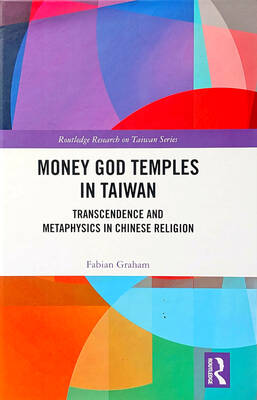
As someone who normally steers clear of books with “transcendence” or “metaphysics” in their subtitles, this reviewer — a casual observer of local belief systems since the 1990s — found Fabian Graham’s Money God Temples in Taiwan a challenging read. Those who’ve only dipped their toes into temple culture will likely need to parse several sections with special care if they’re to keep up with the author, a British ethnographic researcher whose previous books have investigated religious practices among ethnic Chinese in Southeast Asia. This scholarly volume examines a facet of Taiwan’s religious landscape that didn’t exist a century ago, and


 RSS
RSS