


When I told friends and family I was reporting on the first chicken meat grown from animal cells, their first comment was “Eww.” Their second comment was: “How does it taste?”
The short answer (you’ve probably heard this sentence before in other contexts): Tastes like chicken.
The longer answer, which folds in the “Eww” response, is more nuanced. Yes, it’s strange to think of eating a totally new kind of meat — chicken that doesn’t come from a chicken, meat that will be sold as “cell-cultivated” chicken after the US Agriculture Department on Wednesday gave the green light to two California firms, Upside Foods and Good Meat.
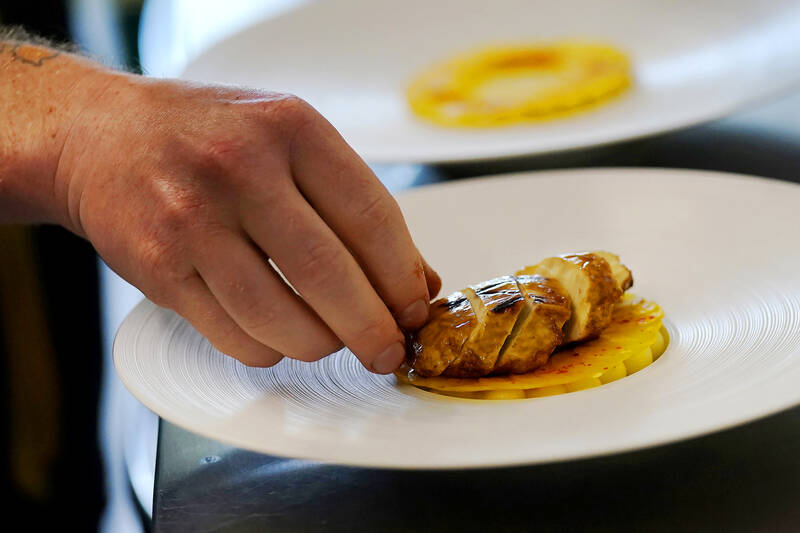
Photo: AP
But it’s also interesting (and exciting!) to taste test the first offerings of a new era in meat production, which aims to eliminate harm to billions of animals slaughtered for food — and to dramatically reduce the environmental effects of grazing, growing feed for those animals and dealing with their animal waste.
FACING UP TO THE ‘MEAT PARADOX’
I’m a lifelong meat eater. I’m also a victim of the “meat paradox,” a term scientists use to describe the psychological conflict that occurs in people who like to eat meat but don’t like to contemplate the animals that died providing it.
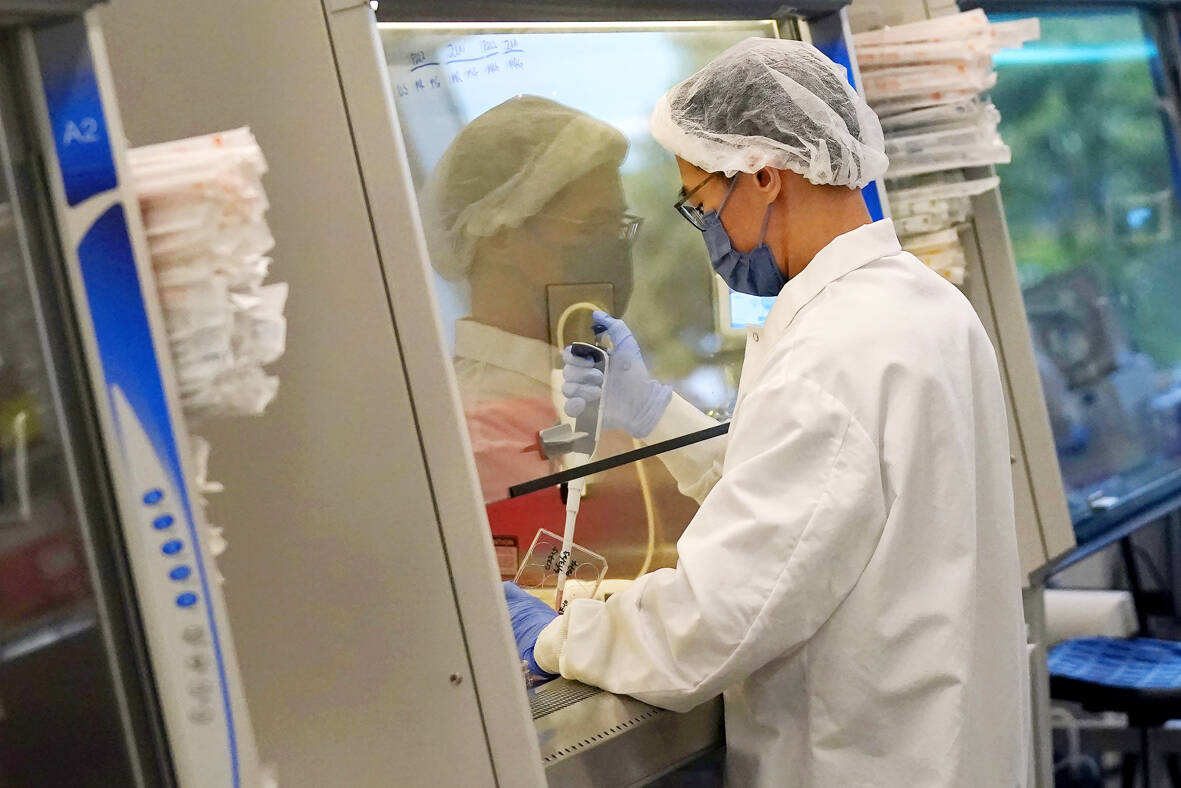
Photo: AP
As someone who has reported on food-borne illness outbreaks and slaughterhouse safety, I’m keenly aware that the chicken on my dinner plate probably suffered to get there. And that fact makes me uneasy if I dwell on it too much.
So I was open to trying a different kind of meat — and also curious to see if it would taste like the real thing.
I’ve tried plant-based options like the Beyond Meat sausage and the Impossible Burger and liked them, even though I didn’t think they were perfect substitutes. To be honest, the Beyond Meat sausage tasted good, but a little mealy. And the Impossible Burger was dry, although I may have cooked it too long. In both cases, I enjoyed the taste of the products but was still aware that I wasn’t actually eating pork or beef.
What about the artificiality of it all? It didn’t bother me that this new cultivated meat is made from cells that grow to epic proportions in big steel vats, only to be shaped and formed — “extruded” is the somewhat unfortunate verb that came to mind — into familiar cutlets, filets and nuggets that would look right at home on the dinner table.
But as with all food, in the end it would come down to taste. And in this case, to the larger question behind it: Is this new material in fact chicken, or is it an impostor?
MOUTH TEST
In January, I traveled to the Upside Foods manufacturing plant in Emeryville, California. There, chef Jess Weaver sauteed a cultivated chicken breast in a white wine butter sauce with tomatoes, capers and green onions.
The aroma was enticing, just like any filet cooked in butter would be. And the taste was light and delicate with a tender texture, just like any chicken breast I’d make at home — if, that is, I were a chef trained at the Culinary Institute of America.
Last week, I visited the Alameda, California, plant where Good Meat is poised to begin production of its chicken products. Chef Zach Tyndall was ready with a smoked chicken salad with mayonnaise, golden raisins and walnuts. He followed it with a chicken “thigh” dish — darker meat served on a bed of potato puree with a mushroom-vegetable demi-glace, golden beets and tiny purple cauliflower florets.
The taste was richer than a chicken breast, more like the dark meat of a thigh. And the texture was both tender and chewy, like a well-cooked chicken thigh should be.
That, says Tyndall, is the whole point.
“It needs to be as lifelike as possible for it to catch on,” he said.
While “lifelike” is an interesting word, from my side of the fork I think this will catch on. There are still huge hurdles — how to scale up manufacturing and pare back costs, experts say, and the lingering question of whether chicken without the bird is, in fact, chicken — but if you’re basing it on authentic taste, I’ll leave you with this:
Please pass the “chicken.”

The Portuguese never established a presence on Taiwan, but they must have traded with the indigenous people because later traders reported that the locals referred to parts of deer using Portuguese words. What goods might the Portuguese have offered their indigenous trade partners? Among them must have been slaves, for the Portuguese dealt slaves across Asia. Though we often speak of “Portuguese” ships, imagining them as picturesque vessels manned by pointy-bearded Iberians, in Asia Portuguese shipping between local destinations was crewed by Asian seamen, with a handful of white or Eurasian officers. “Even the great carracks of 1,000-2,000 tons which plied

It’s only half the size of its more famous counterpart in Taipei, but the Botanical Garden of the National Museum of Nature Science (NMNS, 國立自然科學博物館植物園) is surely one of urban Taiwan’s most inviting green spaces. Covering 4.5 hectares immediately northeast of the government-run museum in Taichung’s North District (北區), the garden features more than 700 plant species, many of which are labeled in Chinese but not in English. Since its establishment in 1999, the site’s managers have done their best to replicate a number of native ecosystems, dividing the site into eight areas. The name of the Coral Atoll Zone might

Nuclear power is getting a second look in Southeast Asia as countries prepare to meet surging energy demand as they vie for artificial intelligence-focused data centers. Several Southeast Asian nations are reviving mothballed nuclear plans and setting ambitious targets and nearly half of the region could, if they pursue those goals, have nuclear energy in the 2030s. Even countries without current plans have signaled their interest. Southeast Asia has never produced a single watt of nuclear energy, despite long-held atomic ambitions. But that may soon change as pressure mounts to reduce emissions that contribute to climate change, while meeting growing power needs. The

On Monday morning, in quick succession, the Chinese Communist Party (CCP) and the Chinese Nationalist Party (KMT) released statements announcing “that the Central Committee of the Communist Party of China and General Secretary Xi Jinping (習近平) have invited KMT Chairwoman Cheng Li-wun (鄭麗文) to lead a delegation on a visit to the mainland” as the KMT’s press release worded it. The KMT’s press release added “Chairwoman Cheng expressed her gratitude for the invitation and has gladly accepted it.” Beijing’s official Xinhua news release described Song Tao (宋濤), head of the Taiwan Work Office of the CCP Central Committee, as


 RSS
RSS